I am done with the B2B course and I really enjoyed it. I wish Josh would come out with follow up courses because I really enjoy his teaching method. I have been looking at talking bass but I’m trying to figure out which course there is a logical next step from B2B. Any of you go to talking bass after B2B?
11 Likes
Hi @vlopez,
Just my opinion but:
I have found doing what @JoshFossgreen suggests, going through the course again really useful as well as going through the additional workouts and full songs.
The full songs are a really good test, the easy ones give you confidence that you can do it, the medium ones give you focus and the hard ones give you something to work on in stages.
I really never thought I would say this but I even think a logical step would be to find other musicians to play with as the final jamming with the band section is so much fun!
At the end of the day it’s your decision on where you go based on your goals and aspirations but at the end of the day have fun and if you like @JoshFossgreen style of teaching go again and master EVERY workout perfectly then see where it takes you.
5 Likes
The best thing to do after B2B is find other people to play with. Join/form a band or just a group of folks to jam with.
This will show you how much you’ve learned so far and really put it into practice. It will give you an opportunity to reinforce the great fundamentals that B2B has taught you (more than you realize), before you add more complex techniques or ideas. It will show you what skills you will benefit most from focusing on.

3 Likes
This question has been asked and answered here countless times over the years.
Your best bet is to search the forum for the hundreds of replies.
Here is one for those interested in building on B2B learning and understanding, to learn proper technique, theory, and much, much more. Mark Smith is an excellent teacher who can guide players on how to play to the max:
6 Likes
If you can grok him, Scott has great lessons. Or join a band and get some sound in your life. That is the real answer.
Me being in a band is a joke, I gotta have a tab. But I do work with a band laying down good, solid basslines for them.
I pay to be there and do it, even though I’ll never get to do it for real.
If you love this, if it’s in you, you’ll find where you are meant to be.
1 Like
The training wheels are off now my man, find you some others players and get after it. You’ll learn as much if not more from playing with other musicians as you will in another course and playing is a lot more fun.
3 Likes
That’s an overstatement.
Playing with others acclimates one to play with others. Familiarity with playing a set number of songs is just that.
As a B2B grad, what a player doesn’t know about technique, theory and music in general remains unknown until it’s learned. And the fastest way to learn properly is to study from great teachers. Buddies can get one only so far.
The way to become a much better player in the long run is by combining the two: playing with others AND continuing education.
4 Likes
I would say playing with others is one possible route and works well for many. It’s not the only route or necessarily the best for everyone.
I’ve done it a lot in the past. These days it’s less of my thing.
1 Like
Thanks to everyone. Yeah playing with other people helps but there’s not much going on at least with the people i know. If an opportunity comes up of course i will do it. For now Ive been learning songs. Ive got Sultans of swing about 85% down. Plus a bunch of other songs Im playing around with.
2 Likes
You have talkingbass.. where most people go to after B2B.
Musora(company that owns Drumeo) now also has a bass section that is interesting. I am currently doing that as I needed a break from the music theory course from Mark.. my brain is too old of all that information 
3 Likes
I keep waiting, and hoping, Josh will create a B2B and Beyond course. Unfortunately when I saw the new Guitar Buzz my hopes diminished.
I love Josh’s teaching style and have not been able to find another course that suits my learning style.
My brain is too old too
2 Likes
We are in the same boat with old brains!
2 Likes
We’ve definitely al been there in the past. However, over time I came to think that he probably should not. Josh has a superpower for teaching beginners and it is a niche that no other course does well. He should keep playing to his strength here.
5 Likes
It’s also a very different sort of game.
The fundamentals are the fundamentals. Every new bassist effectively has the same foundational skills they need to learn and develop (and every experienced musician needs to revisit and refine). The B2B course was very cleverly crafted to provide the information that everyone needs.
But once you have that foundation, the skills to develop next will vary a lot person to person based on individual strengths, weaknesses, tastes, and goals. The best way to effectively communicate that information will need to be more personalized. You simply can’t create a universal intermediate skills program the way they did for a fundamentals program like B2B.
(Having taught dance for many years, I dislike the terms “beginner” or “basic”. I believe “fundamental” or “foundational” are far better descriptors.)
6 Likes
You make some very good points.
There is much truth to that.
Congrats on finishing the course. I went through it a second time specifically because new stuff was added after I had finished. After the second time through I found a band to join. A mostly covers band with a few originals thrown in to keep things interesting, but I’m still on my bass journey and want to keep progressing. I bought a couple of TalkingBass courses and they are really good, but I really liked the BassBuzz way of learning. I like going through lessons in a systematic progressive way like Josh’s lessons were presented. After a lot of free 2 week type of memberships I ended up going with Pickup Music. I started with the beginner intermediate lessons. It felt similar to B2B in its setup. After each lesson there are 3 levels of exercises that are built around that lesson. I finished the Beginner Intermediate and am now going through the rock focused lessons. Then I’ll probably start working on more of the intermediate lessons.
With that being said… I am now very curious about the new bass lessons at Musora.
1 Like
If one is to be so lucky and play with others, even casually. Best thing to do is to start learning songs. Start with your favorite songs then you can expand to what’s popular. You’ll learn plenty of new stuffs, some you may not be able to identify but the immediate goal is to be a better player and not knowing more.
For example, this is the song on my setlist for the longest time, I spent weeks learning and transcribing this song before the invention of YouTube, decades later I learned what they are called. I made a cover but it’s blocked because you know who is an A-hole.
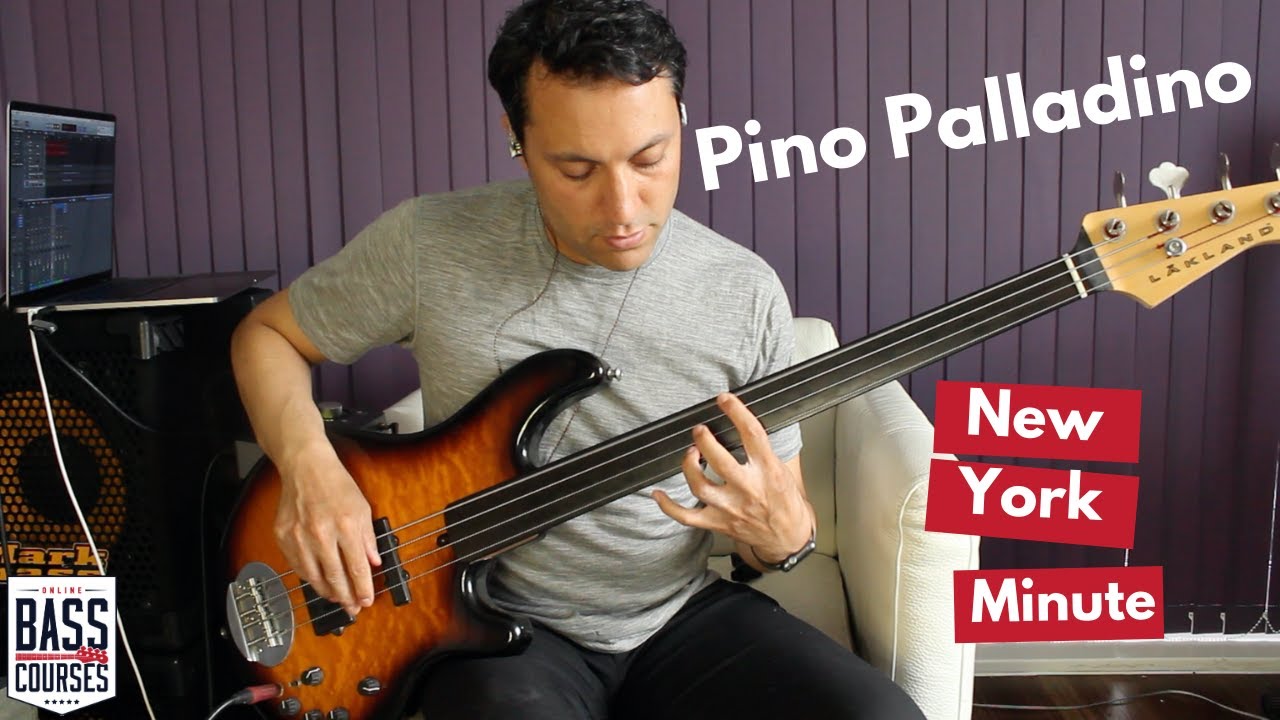
I’ve been gigging for quite sometime now, I can tell you that as much as I love Dan, talking like that at rehearsal or worse at a gig will get you beat up, senselessly 
I sometimes would pick a song to learn specific “lesson” because, you know “Artist”? we are so creative, Lemme give you a few good example of my favorites.
Lydian by Norman Brown, Lydian mode.
How about odd time signature
SeveNate by Nathan East 7/8 time sig
EleveNate Nathan East you guess it 11/8 time sig.
you name it Dorian, Mixolydian, tons of 5/4 yeah we are creative like that.
Imma steal a wonderful concept from Victor Wooten, you don’t need to learn all of the grammar as well as reading and writing before you can start speaking, you just start speaking and learn from imitation.
Here’s me playing Ionian mode fancy way of saying Standard Major scale
Same Ionian mode and pushing the envelope a bit with the Secondary Dominant and Chromatic approach.
How about something a bit more exotic like a Dorian raised 6th
My point is just play don’t worry so much about learning theories before you can play. Growing up in Asia, my parents put me through music school very early and the rigorous reading and schooling before playing is just over the top. When I picked up the bass for the first time I promised myself to play before learning and that’s what I did for decades. Play it first then Nerd Sh!t out later. Served me well.
Have fun.
The thing is that you had some formal training as a foundation before you picked up a bass, @Al1885. Sure, it wasn’t learned for bass specifically, but it most certainly came in handy as you learned songs on bass.
The majority of bass beginners are likely not that fortunate. Many come to bass never having had any music instruction or experience before.
That’s where B2B shines: It introduces newbies to the value in playing AND in quality instruction in technique and theory. That combination is the magic: the shortest distance between knowing nothing and knowing HOW to learn in the fastest, most efficient way.
Now, there’s absolutely nothing wrong with just learning songs in addition to B2B. That’s where the fun is! But the best way to learn something is to have a foundation for learning it — which is where quality education from teachers does the most good.
Personally, like you, I had some foundational music training in technique and reading. I played in the school band. I also sang first tenor in an a cappella ensemble, where we were taught harmony, chord tones, individual lines and theory. That was a great experience, especially when we won several competitions.
But when it came to learning guitar at 14, I taught myself. And, yes, I learned as many songs as I could because that’s why I wanted to play. But I got frustrated by not knowing proper technique, chord fingerings, scales and knowledge of song structure (theory).
Man, I wish to hell and back that there had been the new guitar sibling course like B2B back then! It would have made learning so much easier and faster than just beating my head against the guitar or fumbling around with my clueless buddies who also didn’t know anything about how to play properly.
Bottom line: I believe there’s value in learning a lot of songs and playing with others. But there’s actual, real power in learning from quality music instruction presented by great teachers.
That’s not about nerding out on theory. It’s about knowing how and why the music a player wants to play was made and played the way it was by artists — and how to learn to play it with intention instead of solely with blunt force repetition and imitation. That knowledge is invaluable power.
3 Likes