This is the key. So true. I think it’s fascinating how the ear gets trained over time.
1 Like
Actually Molly Gebrian is a violist and music teacher. She wrote a book Josh recommended in one of the course modules: Learn Faster, Perform Better. I read it and it is good, warmly recommend it!
She has an YouTube channel, in which she demonstrates some of her studying techniques: https://youtube.com/@drmollygebrian
Her website: https://www.mollygebrian.com/
Ps: I forgot to mention her background with neuroscience, and how she applies this to teaching music. A quote from her website:
Dr. Molly Gebrian is a professional violist with a background in neuroscience. Holding degrees in both music and neuroscience from Oberlin College and Conservatory, New England Conservatory of Music, and Rice University, her area of expertise is applying the science of learning and memory to practicing and performing. Given this expertise, she is a frequent presenter on the neuroscience of practicing at conferences, universities, and music festivals in the US and abroad. Her book, Learn Faster, Perform Better: A Musician’s Guide to the Neuroscience of Practicing was released in July 2024 by Oxford University Press.
2 Likes
I went a couple of decades without even seeing my bass after my wife and I started dating. It sat in the case in my basement along with the Fender twin I made into a dedicated practice cabinet along with my Randall head. Sold all the big heavy gear I used that took up way too much space and one day not long ago I got the desire to play again. I spent a few days wet sanding the black paint job to get it back to the factory colors and put it away again. My nephew wanted to learn to play so I gave it to him and he pretty much did nothing with it after getting into gaming so it ended up here again. It hangs in my bedroom and reminds me of days gone by. I don’t have the fire like I once did but it is definitely coming back. Once I get the recent purchase set up I am going to put the time into regaining as much of what was to what will be. And that will be more enjoyable, no matter how much practice I can manage. After rotator cuff surgery and a recent trigger finger problem there is finally light at the end of the tunnel.
4 Likes
Nope. I do not practice every day. It is good to take a day off at least once a week to let things settle and sink in. Recovery time for your brain.
Your brain doesn’t really learn during the time when you practice. It learns in the recovery from practice. So frequent breaks while learning to give things time to sink in before learning more are important.
I prefer to not take off more than 1 day, and actively try to not take more than 3 days off (except vacations).
Early in B2B I would do a lot of lessons in a day, but I already had musical knowledge, so the early portions of the course most of the content was review, so I could do 2-3x what an absolute beginner would.
Also, spend a decent amount of time just playing or plinking around, which is not the same as practicing.
2 Likes
@TheMaartian
Oh. I’ve been wrong before.  . Been a while since I read it. But yes, it’s some cool points.
1 Like
Ah, that explains all of the tips related to bowing. Being in bass land, I just assumed double bass. 
And thanks for the links!
1 Like
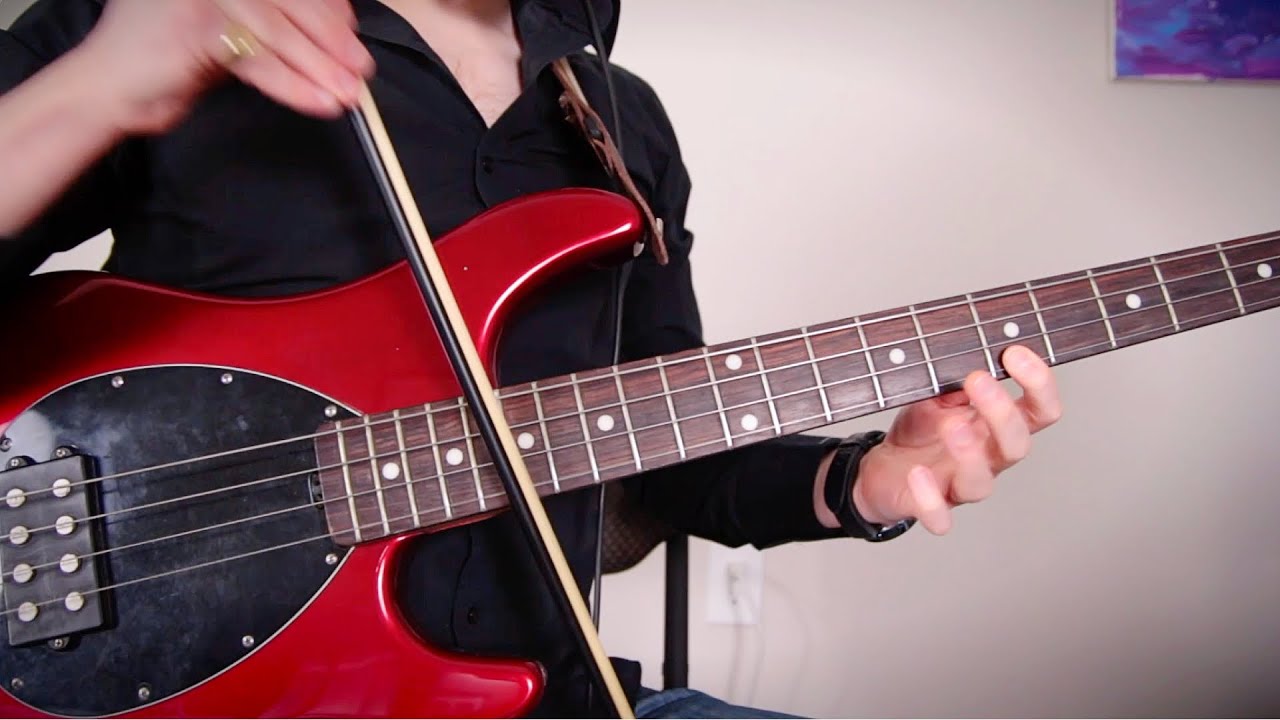
Since my bass playing has a ways to go I tend to look for novelties to stay interested and possibly find something I can use to channel creativity while working on more typical technique. There are some interesting techniques using a bow on electric.
Haven’t procured a bow yet but watching garage sales.
5 Likes
At least 10 minutes every day, working on what I’ve learned in the course and some other ideas I get online or from watching other bass players. Today I’m finishing module 10 and going to go through all the fretboard notes.
I’ve missed a day or two in there, but I don’t linger on it or let it bother me. I just pick back up the next day and go on. It doesn’t help me if I beat myself up for it, and makes it harder for me to keep going, which is the main goal.
3 Likes
I practice 6 days a week ( about 1 to 1,5 hours ), and give myself a NBD once a week .
I know NBD means new bass day , for me it’s a no bass day 
just to keep thing fun…
4 Likes
every day!
i don’t keep track anymore. the bass has become a part of my everyday life! i have a bass in multiple rooms that i can just pickup and play. make it easy, fun, and convenient to play and just keep at it. the learning hurdles will come, don’t give up!
also, i love my musician’s glove - i can play hours daily with minimal discomfort! not to mention it helps with my focal dystonia issues.
i just wanted to add, its good to take breaks too, especially when you feel discomfort/pain. i’ve taken week long and up to a month long break, good for brain and long term learning. sleep is also very important!
4 Likes
I just started, so yes. I’m hoping that moving forward, I’ll be able to keep up practicing at least 30-60 minutes 5 times a week. This is a great mental health hobby.
5 Likes
I’m in the hyperfixation phase of my new hobby cycle, so even after finishing B2B I’m still practicing, reviewing lessons, drilling fingerings or technique for at least 2+ hours every night. My biggest issue is knowing when to put it down for the evening. I have a habit of practicing to frustration and then trying to force it so I can end on a “feel good” note. I’m learning to quit when those initial “to failure” issues pop up.
Right now the big thing I’m trying to do is use the metronome for everything. My timing is so wonky, the groove training needs extra support for my brain to get it.
4 Likes
Keep at it @Phenn !!
I want through a similar experience, especially the not being able to put it down and dealing with frustration of learning (when your hands don’t want to listen to your brain)
Also, finishing on a positive note is key, pun intended 
2 Likes
I heard about this condition the first time watchings Scott Devine’s videos. I’m sorry to hear you have to deal with that, but it’s awesome a musician glove can help with this issue! 
These are very good points. I’ve read about the importance of sleep and taking breaks and how it affects learning. It is very good to keep in mind really. Probably we all have had the experience of struggling with something one day, and the next morning after a good night sleep, it suddenly clicks! I read new knowledge is first stored in the frontal lobe, in the short-term memory, but during sleep, the brain creates new connections and the data will be stored in the long term memory.
1 Like
Hello Cat and welcome!
It really is! I’m amazed at how well it can reduce stress. And it keeps the brain active and young.
3 Likes
This is so familiar to me! I get so hyperfixated on a new hobby, and I’ll practice it all the time, talk about it all the time, and often make a collection of items related to the hobby. It is really surprising I only have 2 bass guitars so far, considering I started last year.  I have a family history of hyperfixation with hobbies, and it is hard to fight genes.
Ending on a positive note is a very good strategy, as long as you don’t fight until getting frustrated. When I feel it isn’t working, or something is too difficult, I end the practice by playing something I know and like, and then I go and do other things.
That’s a great pun indeed!
5 Likes
In try to practice everyday, but if I’m sleep deprived I’m sloppy and stop practicing. A good nights sleep makes all the difference.
I try for at least 15 min per day, but general do about 45.
4 Likes
I try to. Probably do 6 days out of the week, about 45 minutes to an hour.
3 Likes
Oh my goodness yes. I managed to hold off long enough to figure out what I actually liked about my starter bass to get 5-string that fit just right.
The pedals on the other hand have gotten a bit out of control.
3 Likes
I go back and forth. I’m currently at 2 but have been up to 5 at once (about 6 years in).
1 Like