Only the skin was plywood.
1 Like
Yeah, no. The Mosquito was pretty amazing for the time. The fuselage was two halves (frameless monocoque shell) that they made in a mold and glued together and the wings were made all out of wood. The wing cross section is a mix of plywood, birch, walnut for the ribs, skin etc.
I’ve sat in one at the RAF museum. It’s really cool.
5 Likes
One of them just flew into town here last week, i think its one of the few left with original wood.
https://www.kfaero.ca/press-release/kf-welcomes-historic-mosquito-warplane-to-kelowna/
4 Likes
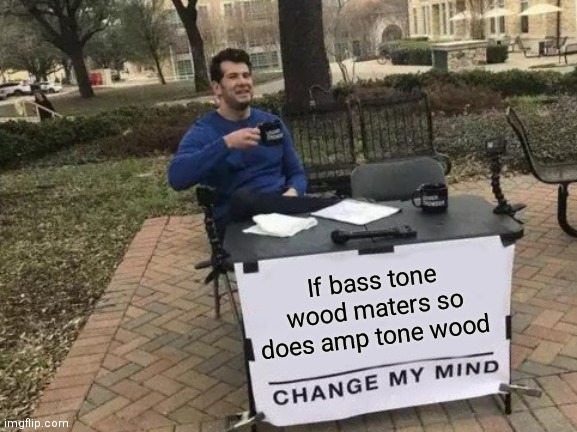
And because there are a lot of “funny” people here, that means combo amp or speaker enclosure 
3 Likes
The only way this guy would attract people is if he shared his coffee. And it would have to be damn good coffee. And hot. In clean cups.
With free donuts.
2 Likes
in fact the wood used to make a cab does make a difference. for example the old Fender combos are made out of solid pine. if you build a cab with the exact same dimension with plywood, it won’t sound the same. the pine will sound more “focus”, lively but not evenly in the frequency spectrum.
of course there is not much difference with a closed cab filled with acoustic foam or similar material.
7 Likes
Actually I could believe the wood used in the cab makes more of a difference than the wood in the guitar body. You can make a really bad sounding cab if you try hard enough.
That said, the speaker enclosures we made were made out of MDF and sounded fine 
5 Likes
I believe that a very dull sounding material is what is suitable for a neutral sounding cab. all high end 4x12s are made out of plywood, and a lot of cabs are made out of MDF !
on my Line6 1x15 bass cab, the sides are plywood but the top and bottom are MDF, I find it’s a funny construction but it works pretty fine.
I myself am building a cab (open back Fender-style small tube combo) and I’m not afraid to say that I chose plywood for it. first time I’m making a finger joint, by the way.
5 Likes
I would be very interested in seeing the progress you make with this @terb .
I have been mulling over the idea of making a bass cabinet myself the past couple of weeks.
3 Likes
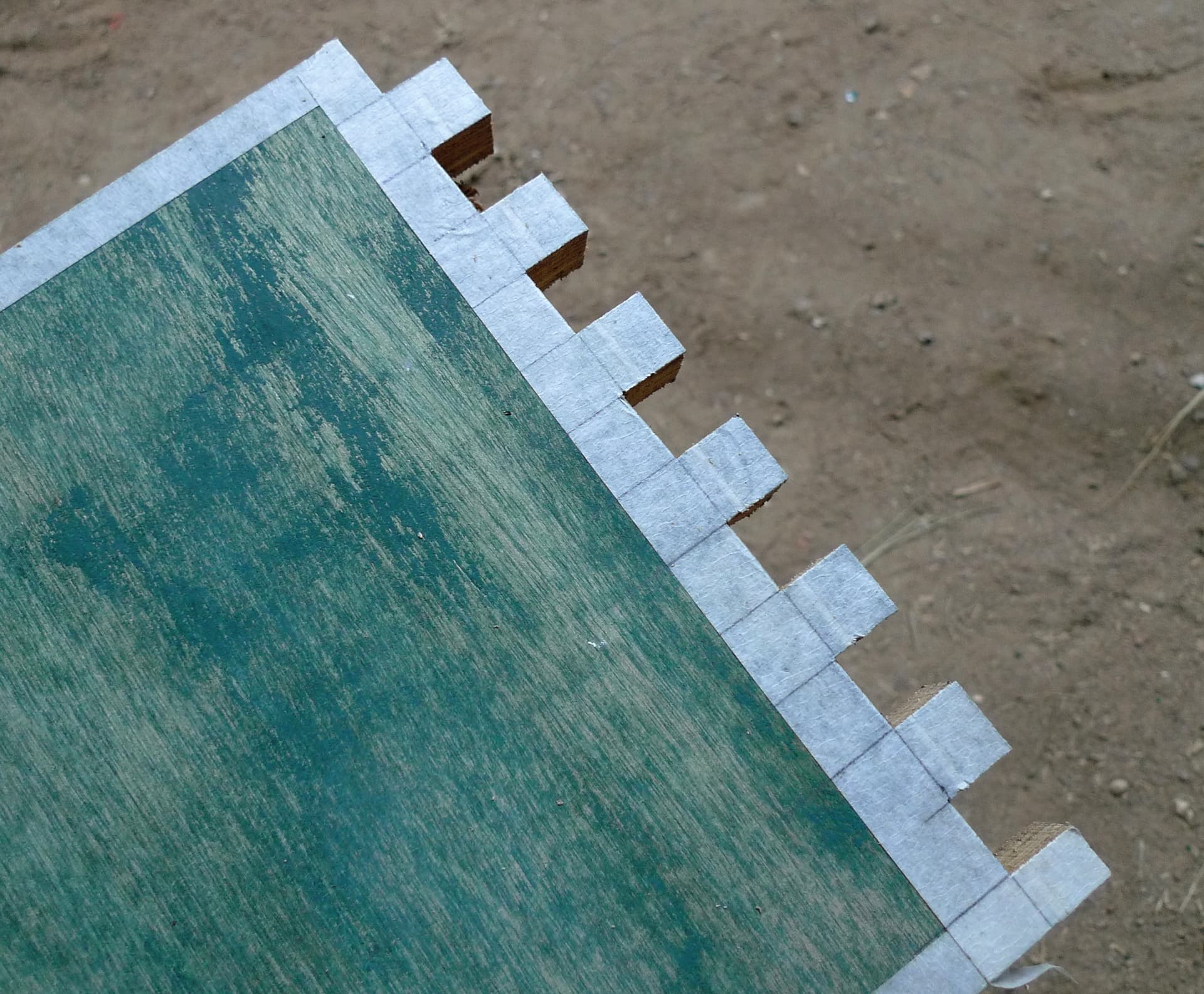
well it’s just about doing a “square” pattern, here is my first cut after I draw the pattern on some masking tape :
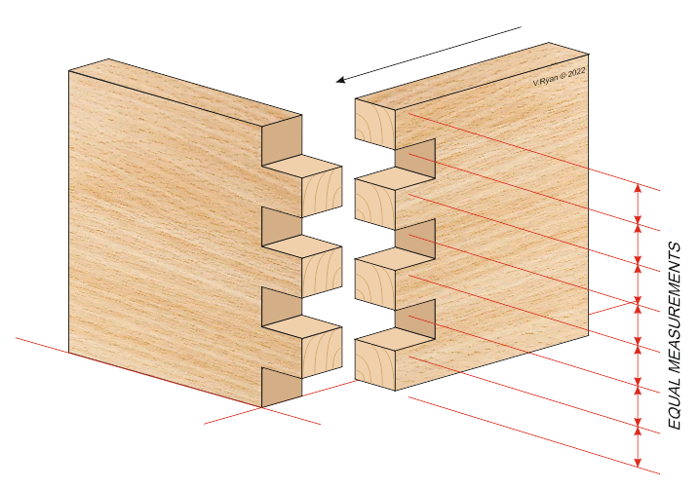
… and then assembling and gluing the panels together like this :
about my project : I plan to build a custom tube amp with a Fender Vibro Champ XD chassis that I have (with the transformers). 5w pure class A, 1x12" open back combo (with a vintage Oxford speaker that I already have). my idea is to make some kind of Blackface Vibrochamp with more tonal options. it’s a long term project, I’m not in a hurry at all. anyway, as usual I have way too much projects running at the same time …
8 Likes
You definitely have more woodwork talent than me there @terb !
I was thinking 25mm batons along the edges of the sides and screw into them 
1 Like
You can screw your panels but in my opinion you should also glue them together to get a tight and solid fit
2 Likes

1 Like
Do you play Minecraft? 
3 Likes
Tell you one thing…my homemade hardwood bass has sustain like a mofo compared to my fender squire
Throwing wood on the fire, why not…
The guy I just brought some basses to for some warranty and above my pay grade work is in Cold Spring, NY. He is the owner and inventor of the iGuitar (USB synth guitar tech) and builds guitars with Brian Moore.
Turns out he used to work for good old Gibson, under the Gibson Labs (now defunct) sub-division, which is where Steinberger and some other things were brought into.
Very interesting, experienced and knowledgeable dude, with lots of stories and 'pinions.
His take on tonewood - - - - assuming all things are equal (components and shape & setup), density does matter, not type of wood. Type is marketing. He and his staff used to sort wood by density and know what woods would make great guitars. He swears by it.
I in no way endorse this opinion, only throwing out one more opinion.
I’ve heard the same thing, the density of the wood affects how much of the vibration is absorbed/stifled by the wood. Less dense absorbs more.
Historically, the type of wood that was chosen was determined by availability.
Some types of wood tend to be more dense on average, and others less. But each piece of wood is an individual with its own properties
A downside of dense wood is it weighs more.
Everything in life is a trade off.
1 Like
Ironically the metal parts like the bridge probably outweigh the wood here by like 2:1. Want it to ring longer? Get a Gotoh or Hipshot.
1 Like
Ever pluck on a G&L bridge? Sustain for days. Why would you ever need that much sustain? Why indeed 
2 Likes