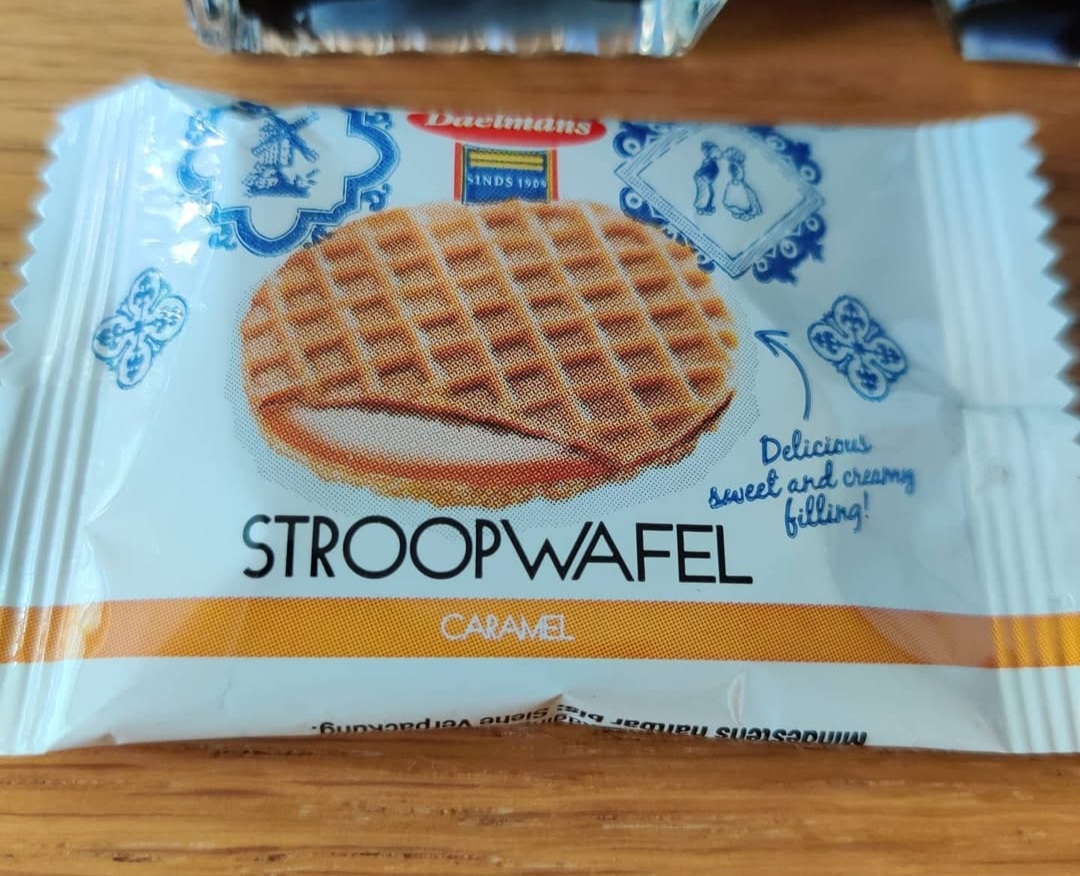
Whaaaat? There is a band with this name? I thought you were joking, but there is really a band with this name! Stroopwafels are really amazing, so why not name a band after it? So far the Swedes haven’t (as far as I know) named a band as Amazing Meatballs, but perhaps it’s just a matter of time
I got stroopwaffels every time I ordered a fountain pen from the Netherlands. I miss them!
It sounds even funnier like that! Köttbullar is already the plural form, so the S at the end is unnecessary, but let’s leave it there for comic effect.
No. In German it would sound like schötbülar, or something like that.
In Swedish K sounds like sh depending on the vowel following it.
The ö is like an o that is formed at the front of the mouth, or oe. Like the German ö in König.
Of course, when one doesn’t know that, and listens to a recording, one could easily imagine the ö sounded like i (from sh#t) because it is pronounced so fast. But to give a better example, if you open Google Translate and look at the Swedish word for kitchen (kök), it will be easier to listen to the sound, because in kök the ö is a long vowel (in köttbullar the ö is a short vowel). It is pronounced like schök, or schoek.
German can be like that. “Stadt” (city) and “Staat” (state) are pronounced the same, except that the “a” is longer in “Staat”. I’ve heard that Finnish is similar, with doubling the same vowel (aa) and consonant (nn) being pronounced a bit longer than single vowels (a) and consonants (n). True?
In real life, Stadt and Staat sound pretty much the same to me, but the context and case differentiates them (die Stadt and der Staat).
Swedish and German have a lot in common. I was told Swedish used to have in the past a grammar similar to the German one, but it was simplified at some point. It is much easier to learn as a foreign language than German. It is between English and German. It is easy to learn if one has a basic understanding of German and speaks English. And, if you learn Swedish you can understand Norwegian as well.
In Swedish the long vowels can be recognised by being followed by a single consonant. Here’s a funny example:
Glas: long vowel. In English it means glass.
Glass: short vowel. In English it means ice cream!
Yes. Finnish has lots of words with double vowels, and they are pronounced as a single but longer vowel. Double consonants sound like a hard consonant, like there was a little pause on front of them. For instance, in mustikka (blueberry) we don’t pronounce two Ks, but there’s a very short ‘pause’ before pronouncing K.
The double vowels and consonants can be a challenge when a person is starting to learn the language, because if you pronounce it wrong, it means something different.
Tuli (fire)
Tuuli (wind)
Tulli (customs)
Tuulinen (windy)
Tulinen (hot, spicy)
And suddenly the For Dutch only -thread became a grammar class for Swedish and Finnish! My apologies to the Dutch. Wait… the Dutch started it! @Whying_Dutchman
Well, if you grow up speaking a Germanic language, you’ll notice the difference quite easily, even to the point of noticing the difference of pronounciation of ‘dt’ and ‘t’. But it sure can be tricky sometimes, especially when regional dialects mess everything up
This seems to be the same for Germanic and Nordic languages.
Lol, the history of English is one of those weird things I’m into.
English is derived from Old English, which was brought over by the Angles, Saxons, and Jutes (from the low countries) at the end of the Romano-British period. The west Saxon dialect mostly won out after the Scandinavian invasions in the 9th century and reconquest by Alfred and his children and grand children. After the Norman invasion in 1066, it started to pick up words from old French. The closest modern language to English still in use today is Frisian.
Yes, and that has a lot do with the fact we often have multiple words for the same thing, which in turn can be quite useful when abroad. For example if I’m in a Germanic country I’ll likely be understood saying ‘begin’ whereas if I’m in a Latin country I’ll likely be understood saying commence.
An interesting tangent from that is that in certain parts of England you’ll often hear people saying ‘you know’ scattered in their speech a lot. In certain parts of Scotland that shifts to ‘ye ken’ and when I lived in the Shetland Isles it would be ‘du kenst’.
 So far the Swedes haven’t (as far as I know) named a band as Amazing Meatballs, but perhaps it’s just a matter of time