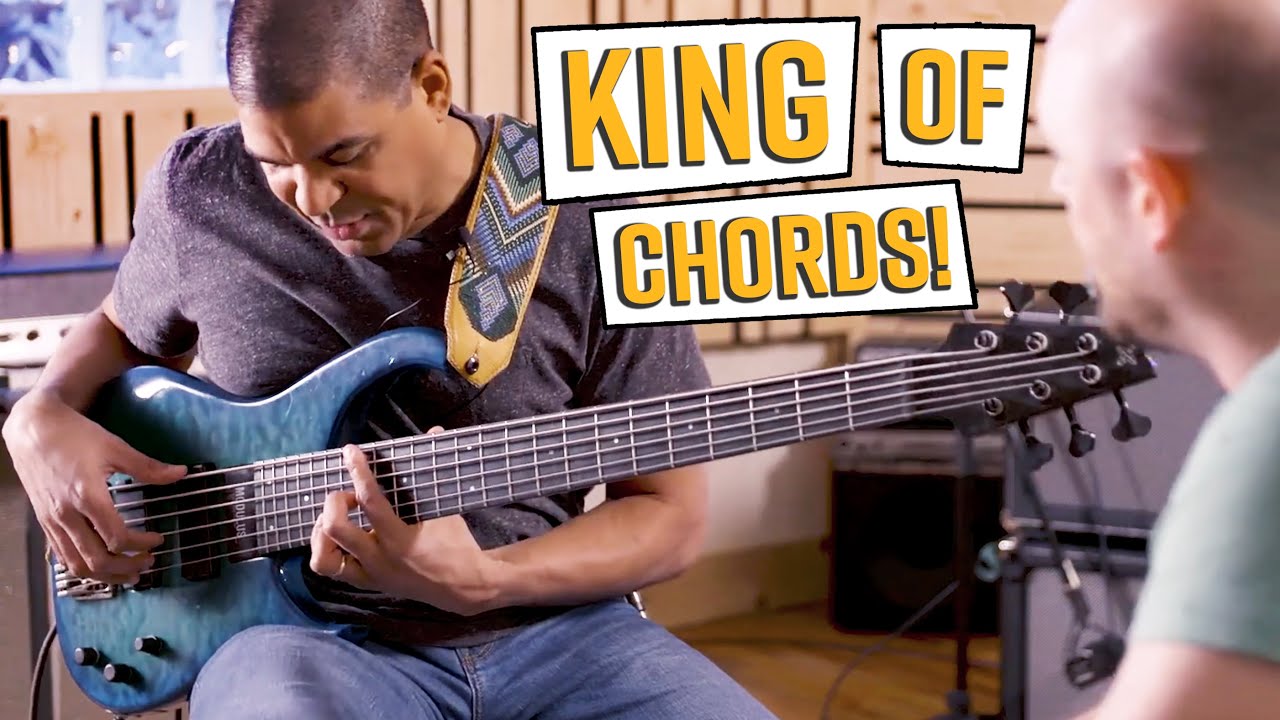
Whatever you do don’t bring your 6 string to the gig before you bring it to your rehearsal first.
A band is like a ship and everyone is a skipper, you need a permission to board, we are bunches of insecure egomaniacs, and a bassist who can solo is like fire,
Very few songs require a 5 string, even fewer require a 6
If by “legacy” you mean “required for the vast majority of songs one will ever play” then yes
It’s more difficult playing a 5 and significantly more playing a 6, that’s one or 2 more strings to mute and a neck that’s a lot wider; people complain that a pbass neck is too fat so… new guitar players don’t play 4 strings because we don’t have 4 string guitars and music isn’t written for them; why aren’t they all starting on 8 string guitars? You can get a cheap 8 string guitar for about the same price as a cheap 6 string bass.
sure floating anchor is good and one might even say required but it also produces slightly different sound and it could makes some things harder to play like fast octaves.
a range that most people don’t require
No.
Sure, you can get a cheap fairly limited 6st for $300 but if you want a good one it’ll be more than a 5 st and significantly more than a 4 string and the selection of models is very limited. In Canada, a sire m7 ash 4 string is $1670 and a 6 string is $2000. On the used market, 6st bases are pretty rare, locally i’ve seen 1 in the last 2 years.
It’s not THAT hard to transition from a 4 to a 5 or 6, it’s probably easier to move from a 5 to a 6 than a 4 to a 5… but most people will never need to buy a 5 or 6 string for the music they play. I think it took me about 20 mins to figure things out on my 5st and it wasn’t much worse the 1st time than it was now when i haven’t played it for months. If you have good technique on a 4 string, it’s not that hard.
Yes, i love the 6 string for it’s tone, chords and soloing but the vast majority of people don’t do those things.
6 string bases are great as are 5 strings and fretless… but unless you play music that requires one like musical theatre or church, they’re just not necessary and it’s tough to suggest that they’re something new players should begin on.
Last thing first. It’s true. Ef you are a beginner everything is hard muting 2 more strings on the grand scheme of things are not that much more difficult than 4. It does require more of your left hand muting techniques.
5 string and 6 string are not a next step from 4 string. It’s for the piece of music that requires more range. Beginners can certainly benefit from learning full chords and harmonies.
Regularly using 6 string however probably not the most efficient way to learn bass simply because almost all of the songs sheet music and tabs were made for 4 strings. And the ones that were made specifically for a 6 string piece are not approachable yet and not for a while. Think John Myung and Andrew Gouche, they have such craft on their 6 string it’s crazy.
I love this song. It’s playable on a 5 string. It’s not the note played it’s how much control he has on those notes duration and the syncopation on the outtro, whew off the charts.
I bought my first 6 string because I want to play this song and quickly realized that I could never be Chaka Khan musical director not in this life time
Well the traditional notation wouldn’t change at all, which is a big advantage of it over tab. I’m addition to telling you the key of the song and making sense without transcription if you want to experiment with playing the same bassline on a synth.
For those thoroughly confused by what we’re on about, Bass and Guitar are transposing instruments:
With bass and guitar, sheet music is notated an octave higher than it would be for concert pitch instruments (like the piano or other keyboard instruments). So, for example, the note E1 on a bass guitar is notated at E2 (one ledger line below the bass clef). This makes bass sheet music easier to read by avoiding all of it existing down way below the staff.
We’re lucky it’s an even octave, because many instruments - Trumpet, French Horn, etc are not, and their notes are shifted just a bit in notation. For example, with a standard Bb Trumpet, it’s notated off by just one step; so, playing a notated C on a Trumpet actually produces the Bb below it.
This is maddening for people that came to Trumpet from other instruments
My mistake! For the C string, I think the added half steps are less important than the 6’s ability to cover both the low and low- and high-end without as many shifts up and down the fretboard.
It’s fine. Many people view it the same way you do me included. When I own one, my view changed and I shared my thoughts on it. You are now own one, I’m sure you can give your input on it too in a bit.