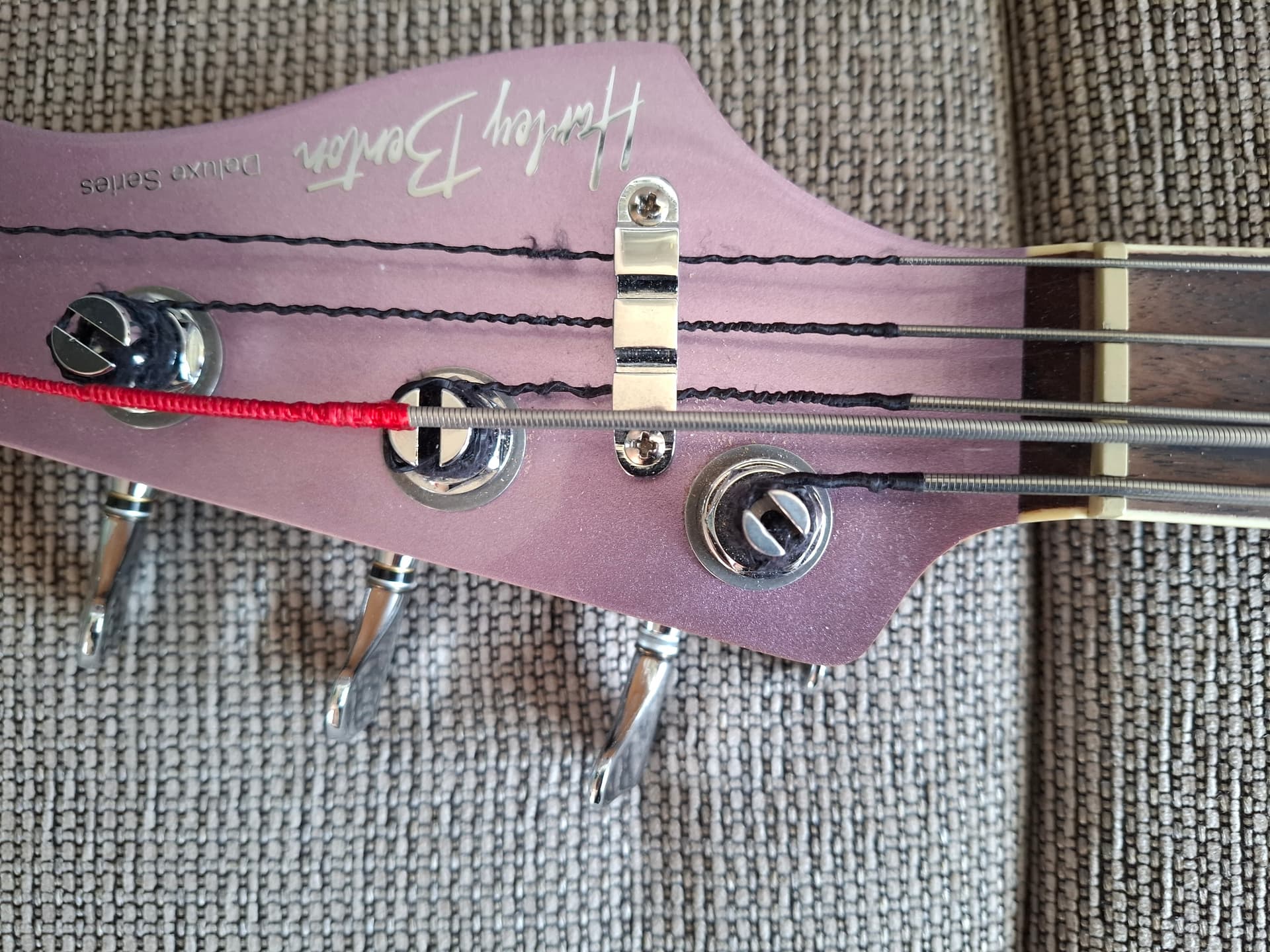
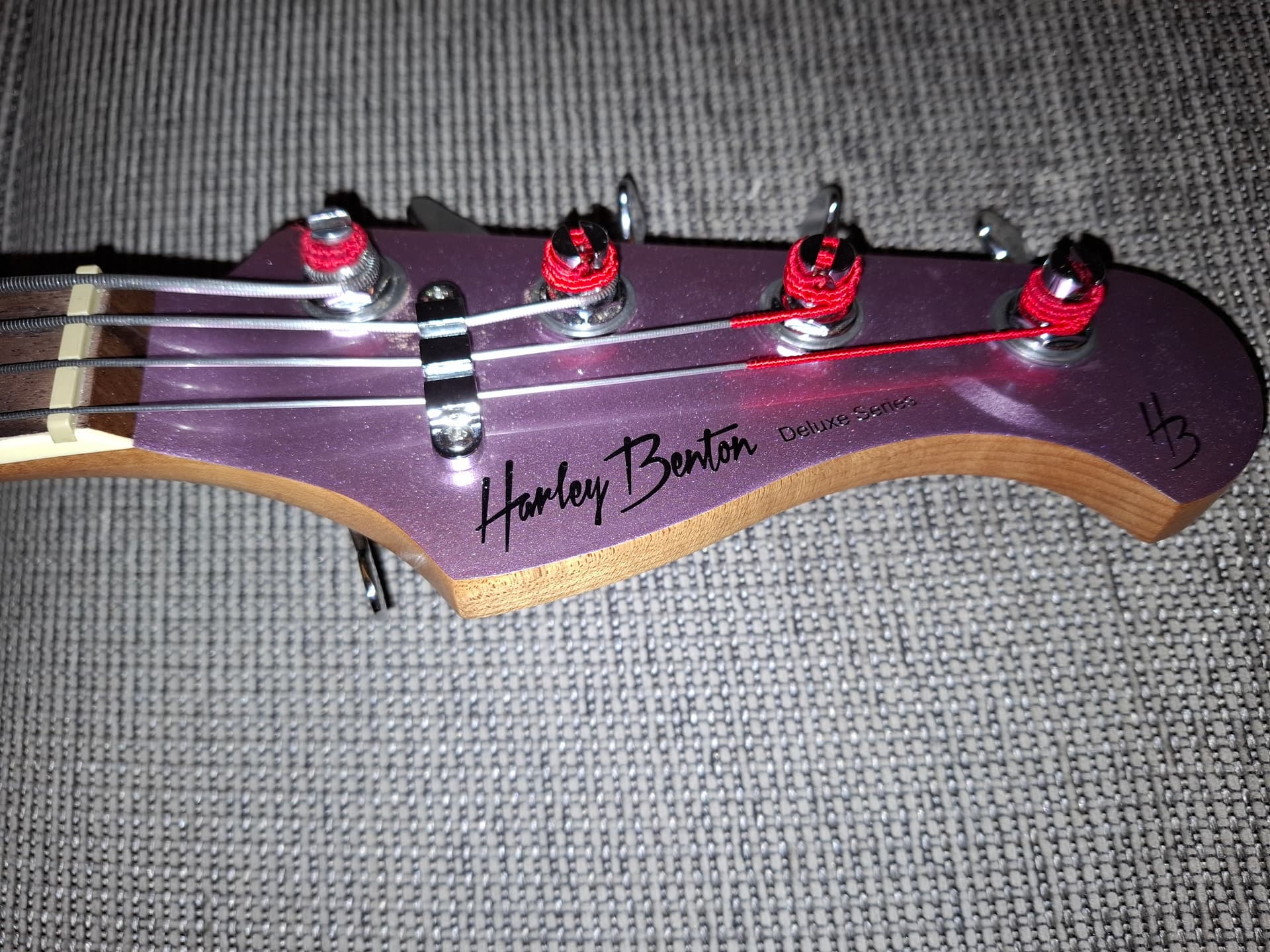
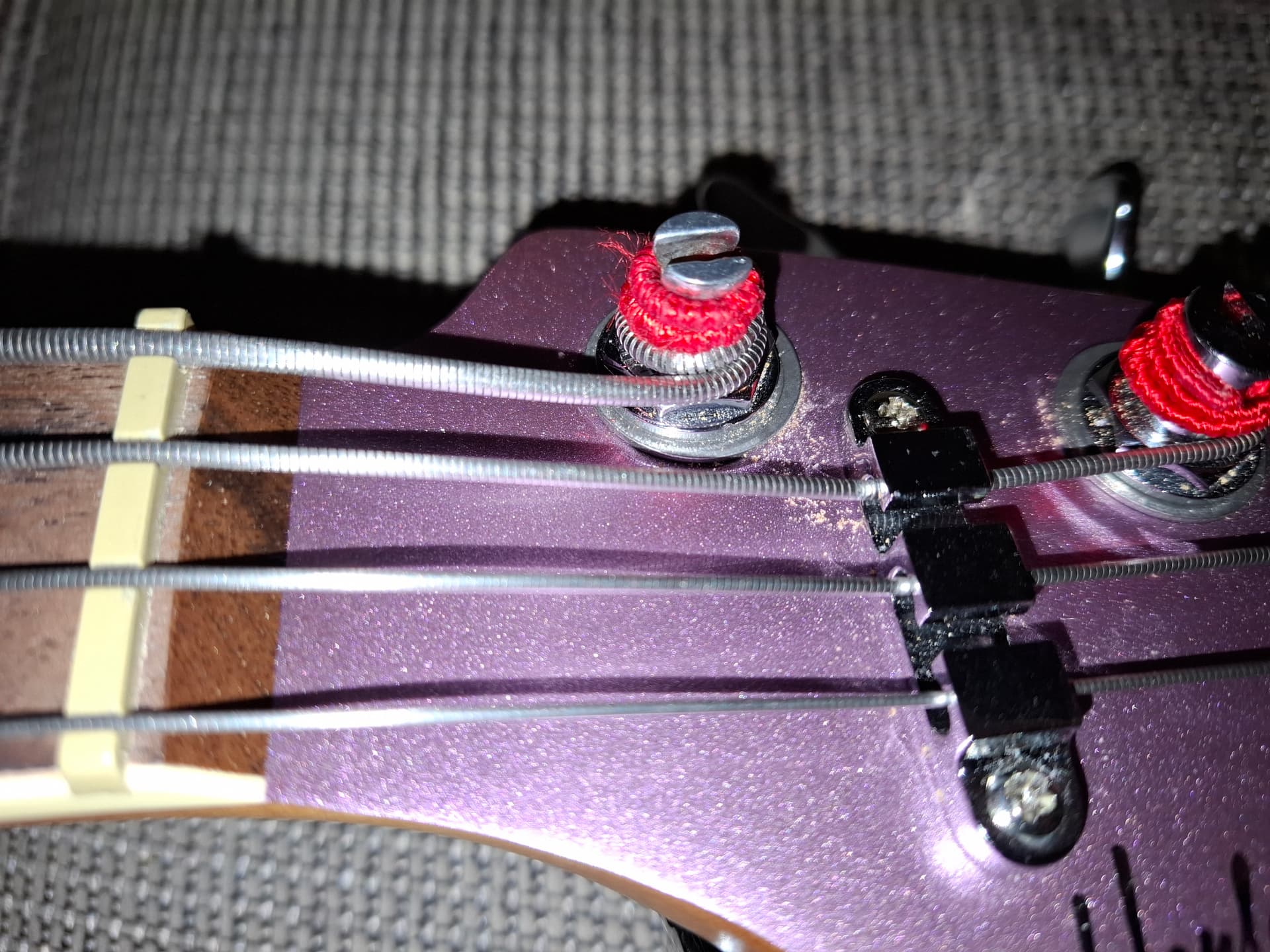
I asked the same question on zzzeee Zzzermaann forum, and got a looooong answer (translated to English with Google translate, so it could be funny!):
Unfortunately, the subject is extremely complex. It’s generally known that steel strings sound brighter than nickel… But what? There are mainly nickel-steel (Alembic CX-3), nickel-iron (GHS’ “Alloy 52”, Thomastik-Infeld “Superalloy”), nickel-plated steel (D’Addario NYXL, XL), and pure nickel (Pyramid, the old Rickenbacker strings). Listed here in descending order… potential for brilliance, but the former also produces slightly hollow mids. Which isn’t necessarily a bad thing, because a little more midrange can be good for a better fit in the mix.
(I’m omitting decadence like gold-plated strings and synthetics here.)
The effects of winding (roundwound, compressionwound, groundwound, flatwound) are also well known. And yes, to my ears, the vibration behavior of roundwound and compressionwound strings is already clearly distinguishable. The former vibrate more “freely.” Nevertheless, before 2025, I indulged my snobbery uninhibitedly with Alembics because they’re well-made and durable, and attack like a shark… 
Then there’s the string gauge. Thinner strings are usually wirier, slimmer, more elegant, and have more harmonious overtone structures (important for chord playing), while thicker ones sound fatter, but also sound more like metal plates (not so good for chords).
Regarding the mass ratio of core to windings: For example, a string with a diameter of .048" can consist of a core with a diameter of .018" and a wound wire with a diameter of .015", or a core with a diameter of .014" and a wound wire with a diameter of .017". Even smaller variations arise from the tension with which the winding is pulled onto the core, as well as from the interlocking layering when using multiple layers of winding. Lower core masses result in more brilliance and elasticity, but also in a loss of sustain, volume, tuning stability, and resistance to breaking. The mass ratios are also crucial for the playing feel, which is determined by objectively measurable (in lbs or kp) string tension and elasticity. A more massive core makes the string stiffer and thus more resistant than a string of the same gauge but with a greater Winding mass.
A well-known exception are LaBella Deep Talkin’ Bass (Rounds and Flats), with thin round cores and below-average tension for their diameters, which nevertheless feel considerably stiffer than most other strings, almost like steel tubes 
Assuming medium gauges, soft strings would be Thomastik-Infeld Jazz Rounds and Flats; medium would be D’Addario NYXL, XL, Halfrounds, DR Sunbeams, Hi-Beams, Lo-Rider (a bit stiffer), and Warwick Black Label. Hard strings would be Alembic CX-3s, D’Addario Chromes, GHS Boomers, LaBella Super Steps, Rotosound 66 Swing Bass, and Thomastik-Infeld Power Bass. Extremely hard would be Thomastik-Infeld Superalloy.
The finish is determined by the diameter of the last wound wire and its material. A thick steel wire can be unpleasant and cause unnecessary wear on fretless fingerboards.
Ground wounds that aren’t polished after finishing are also unsightly (D’Addario Halfrounds, GHS Brite Flats, as opposed to LaBella Round Polished). However, you can remedy this with a conditioner (e.g., GHS Fast Fret).
Pay attention to the winding length (the length of the outermost winding). For a 34" scale, you need at least 36.5", for 35" at least 37.5". Two-piece bridges and those with through-body strings require correspondingly more.
In general, hexagonal cores are good for increased brilliance and ensure a stable fit of the windings, as the corners press into the wound wire. With hexcore strings, sweat and dirt collect in the relatively large voids beneath the windings, which only touch the core at six points, significantly shortening the string’s lifespan. With round-core strings, the windings rest on the core all the way around, limiting voids to the inevitable ones between the wound cores and minimizing the aforementioned problems. They also contain more metal and therefore produce more tone. The problem is keeping the windings firmly in position on the round wire. DR, for example, solves this problem with a flattened section about 15" from the head end, which anchors the wire but still allows it to roll slightly when played, making the string more elastic and brighter.
There’s been a lot of hype and conflicting statements about geometries like taper wound and exposed core. It’s true that the setup is a bit more complex. But I see little reason to buy one type or not the other 
What’s not stated on the packaging, of course, is the balance of the set, both in terms of sound and feel. Unfortunately, there’s also been quite a bit of hype surrounding “balanced tension,” which doesn’t necessarily live up to its claims.
A note on winding speed and pressure: If the wound string is wound closer to the core, the string is stiffer and produces fewer overtones. A slower winding speed exerts less pressure and compacts less. Sometimes such strings seem more durable (a standard example is DR Fat Beams).