I see people on YouTube hammering/pressing in frets w/ out gluing them and then I think about “fret sprout” and that wood doesn’t just shrink in one dimension
(and before someone mentions it, yes, I bet it does shrink more in one direction than another because of the grain/wood type/voodoo/the moon on the night the mother of the luthier that installed them had their child/etc)
It has happened, under extreme conditions, e.g., very prolonged high-heat/low humidity storage conditions can cause the fretboard to be desiccated beyond simple repair. Of course, in such an extreme situation, other issues are pretty much inevitable. This would constitute downright musical instrument negligence and abuse.
Well the plek machine isn’t going to do anything without a person telling it to which is why they require skilled operators to make decisions about how to best correct an issue.
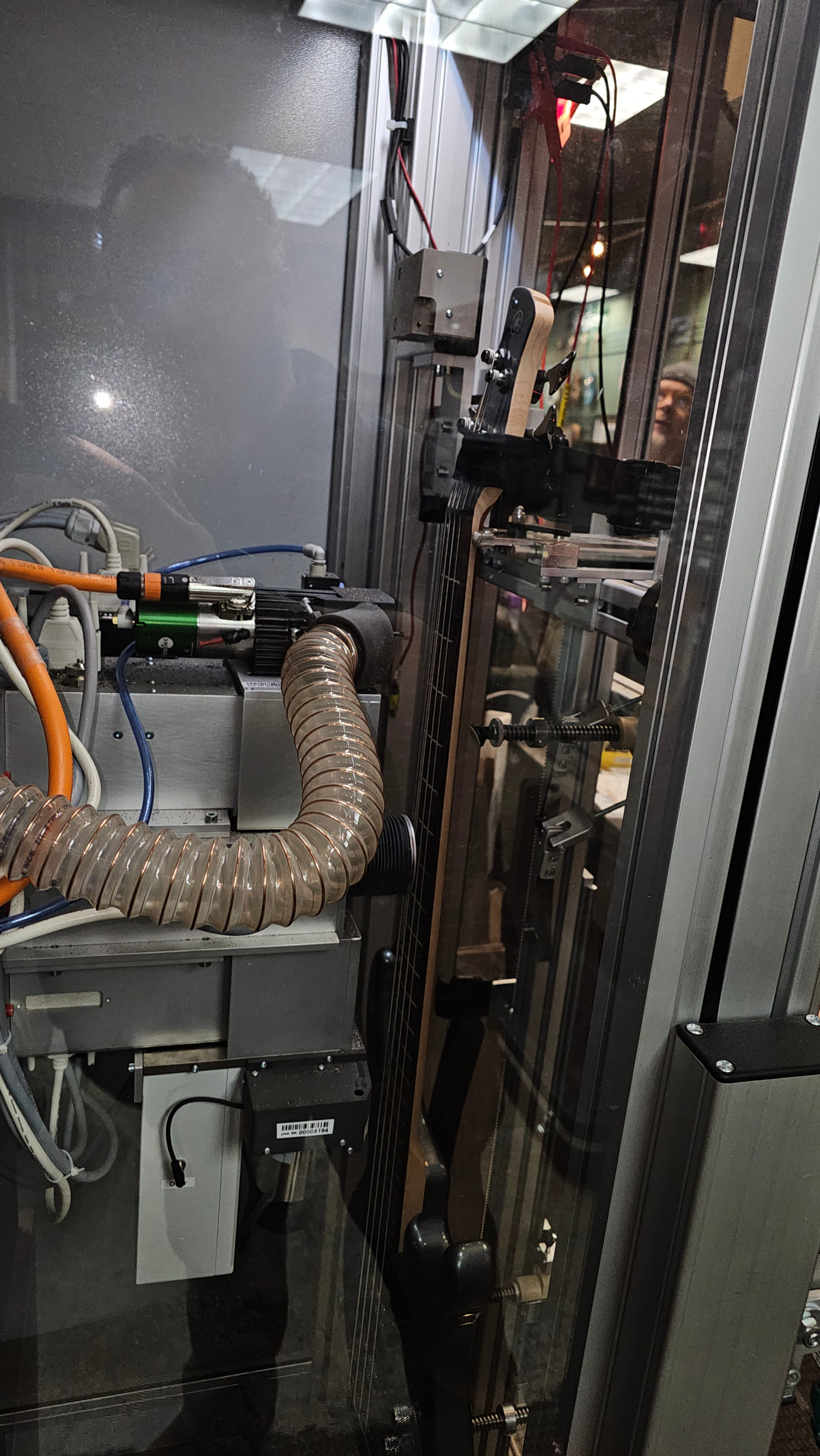
The local shop (5 Star Guitars in Beaverton, OR) I have my Yamaha TRBX304 in for a setup had a Plek event this afternoon. I went down to check it out and see where my bass was in queue. This shop doesn’t upcharge for Plek anyway, and since my bass was already there, I got to see them put it in the Plek and show me the whole process!
My Yamaha is only about a month old, but after a truss rod adjustment, the upper frets fell in near perfect line with parameters, but the lower frets are pretty high. It was neat to be able to see the change between readings. They’re going to do the fret adjustment along with the other work I asked for.
Talking with the luthier, who did setups before the Plek, one of the advantages is the feedback mechanism for the luthier themselves. The Plek affirmed where they would be accurate in their own assessments, and sometimes shows them some unexpected things. I think I would think of it as another check, not the sole check, at a good shop with experienced people.