This has been a lively and informative conversation. I have really learned much from it. Thank you everyone for your contributions.
I do not agree it is a cop out but I do agree that to get an absolute beginner playing a song as soon as possible TAB is a quick cheat win.
Beginners have to start somewhere and TAB is easiest choice possible I have found.
How else would you do it and keep their interest in learning?
Keeping a beginners interest up, and getting them to practice are two of the hardest things I have found to accomplish from a teaching aspect.
My instruction is for Guitar and Ukulele NOT Bass…
I look at Bass differently and don’t look at it as a stand alone instrument to play songs by yourself, without some form of a backing track.
1 Like
I agree 
2 Likes
@Celticstar we agree on something! Halleluiah 
2 Likes
Agreed but that is what beginners need to get started and keep their enthusiasm up. 
1 Like
That same thought crossed my mind. 
1 Like
It’s what I started with on with B2B. But I recognized early on that tab is just training wheels, and got rid of them midway through the course. My struggles with Billy Jean ended when I decided to play it by notes, rather than tab. Major improvement.
Does a piano have more than one key that can play any note that’s on the staff? If I tell you to play middle C, is there more than one key that will play it?
1 Like
The piano has 88 keys, in case you didn’t know that. My point is, there is not “just one fingering” to play a note, as you stated. There are various ways to finger any given key on the keyboard, depending on what else is going on with the tune.
Your question is silly and not even relevant to this conversation. There is only one middle C, and anyone who knows anything about piano knows that.
1 Like
That’s not what i was talking about and i think you’re being intentionally obtuse here… i mean you can also play a key with your forehead if you want. I was referring to the 1:1 mapping of notes on the staff to keys on a piano which is not true on a guitar.
1 Like
I don’t know what you find so obtuse about what I said. Can I make it a bit clearer for you?
On a Grand Stave, there can be a C noted in several different places, either on the Bass clef part (lower) or the Treble clef part (upper). Where these notes appear on the stave determines which ( C ) key to play on the keyboard.
Your contention that there is only one fingering to play any of these notes is what I’m contending. Whether you strike the key with 1,2,3,4, or 5 finger is dependent on what notes came before, or after. It’s a bit more complicated than that, but since this is a bass player forum and not a piano forum, I won’t get into it.
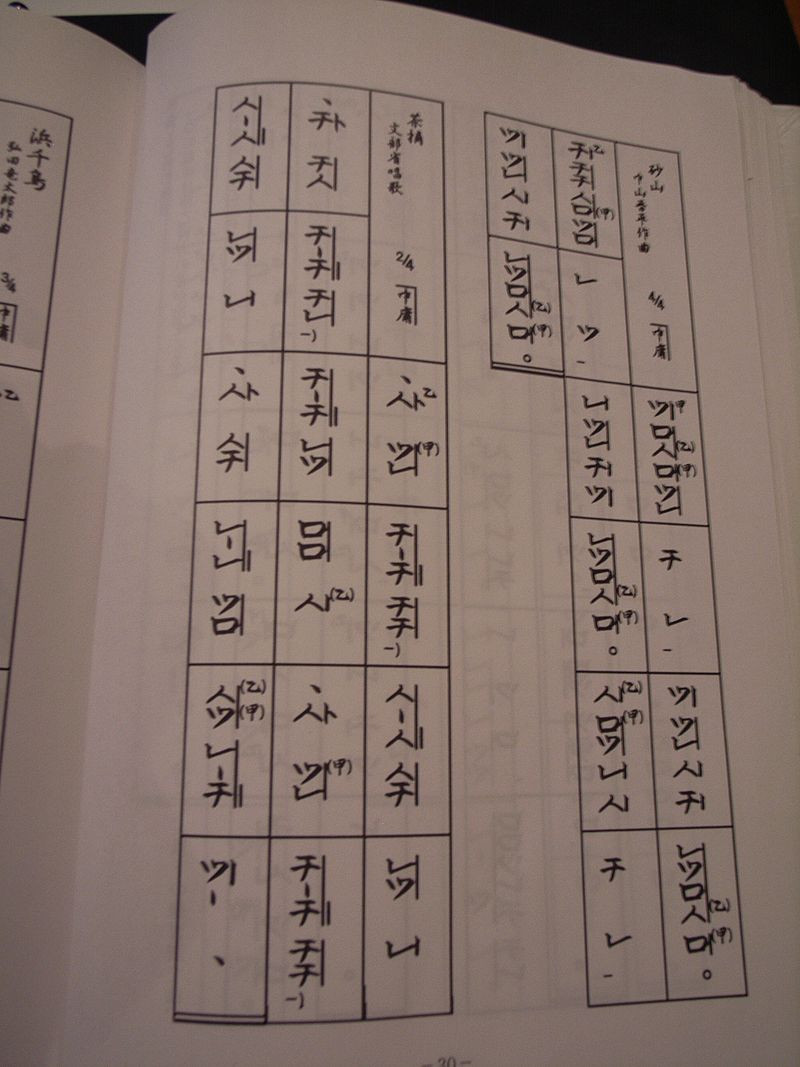
It’s always interesting how people see so many thing clouded by the history of classical European music…
" In contrast to Western staff notation, shakuhachi playing instructions commonly indicate multiple fingerings resulting in various timbres for a given pitch, and microtonal slides between semitones."
1 Like
2 Likes
LOL that GIF makes about as much sense as the other things you’ve posted.
Have a good night. I’m going to go and be obtuse offline for now. 
How do they manage on every other instrument known to man?
1 Like
Or like the legendary Celestine!
1 Like
But it’s damn funny
1 Like
Perhaps this is what Josh is saving for his follow up course?
I am just having fun, btw.
2 Likes
Well, that’s interesting LOL
That’s funny too.
This thread has gotten way off course