Naa statistically you have a better chance of making any money with music. Just less people to contend against. Now I didn’t say “good” money but I imagine based on odds someone with an acoustic guitar and a voice can probably do better…
This is an interesting topic I’ve thought about and discussed with people before. Here’s my take and 2 cents.
In my mind, talent refers to innate ability one is born with. Skill is learned ability earned through practice.
Sometimes talent is important and will give one an edge, especially as a beginner, but usually (always?) skill skill will overshadow talent, especially as one gets more advanced.
I’ll compare two instruments I’ve learned that are quite different in this regard: bass and trumpet.
Trumpet doesn’t require talent, but it’s a huge help in the beginning. I have an innate talent for trumpet. When I first started playing in 6th grade, I had the best tone of all the trumpet players in my class out the gate. None of us knew what we were doing at that point, none of us had any skill yet. My talent not only made my sound better right away, but it also made learning the instrument (in the beginning) a lot easier. I didn’t have to work as hard to get the same results as someone with less talent.
However, the benefits of talent diminish (and I’d argue eventually disappear) as you get more advanced. I had a friend in school who didn’t have as much talent as a trumpet player as I did. But she worked harder, and practiced more, and by high school she’d caught up to me as far as ability.
Once you get to the college level, and after that the pro level, talent basically disappears. All that matters at that point is skill, which is to say how much you practice, how hard you work, and how dedicated you are. You could have a very talented trumpet player and a trumpet player who is less talented. If they both practice the same amount and work as hard, in 10 years they’ll both be basically at the same level. If the person without as much talent practices more and works harder, in 10 years they’ll be farther ahead than the player with more talent who doesn’t work as hard.
The same is true for bass, but to a much lesser degree, I think. Having some innate talent on bass is far less of a leg-up than it is on trumpet, and is relevant for even less time (really only at the very beginner level. by the time you’ve finished B2B, you’ve passed the point where talent matters much). There are physiological variables that can affect your talent and ability on trumpet–the shape of your mouth, your teeth, the musculature of your embouchure. E.g. I used to have very crooked teeth, and now they’re straight, and just that improved my tone and made playing trumpet easier.
This is much less the case with (electric) bass. Unless you have some kind of physical disability, anyone can play bass. Anyone can pickup a bass and get good sounding notes out of it. The same isn’t true for trumpet, or any other wind instrument. So yeah, having some innate talent in bass will help you out for the first leg of your journey, but anyone can get to the same level through practice, i.e. skill.
Sure, most professional musicians have talent, but I think that has more to do with the fact that you tend to love to do things you’re talented at (because you’re good at them out the gate, and they’re easier to do, learn, and improve). But what separates those who make it to the pro level and those who don’t has nothing to do with talent. It’s all about skill–how hard they work, and how dedicated they are.
So you can have zero talent and still become a top tier bass player if you put in the work and the hours.
And I actually find this more impressive 
2 Likes
I think they had their artist friend make that for them. I am sure the German girl did have something to do with it though.
1 Like
Yeah E-Sports are a multibillion dollar business. One that I have worked in, in fact (from the game company side).
1 Like
East German girls were known for their love of bananas (Google it, I’m not joking and it’s nothing ambiguous).
Maybe she is east German?
EDIT proof: Zonen-Gaby – Wikipedia
You’ll need to Google translate it.
2 Likes
Köln, apparently.
1 Like
But it’s very much like pro sports. Think about how many kids want to grow up to play pro sports and don’t realize it takes a lifestyle to do it. I’ve been playing games for 35 years vigorously but I’d get smoked playing competitively.
It’s encouraging too. It means anyone can do it if they really want to.
1 Like
Hmmmmmmmm. I lived in Köln for quite some time. Best city in Germany!
The city is very “fruit” minded, but I haven’t encountered any specific love for bananas.
I did not focus on that topic though…
3 Likes
Yeah, the funnel is steep, but that’s not the comparison you made - you said more people made money in music than games, and I actually am not so sure. You don’t have to be a top tier player to make money, and there’s a lot of Twitch streamers making money from subs of people watching them play, even outside of eSports.
1 Like
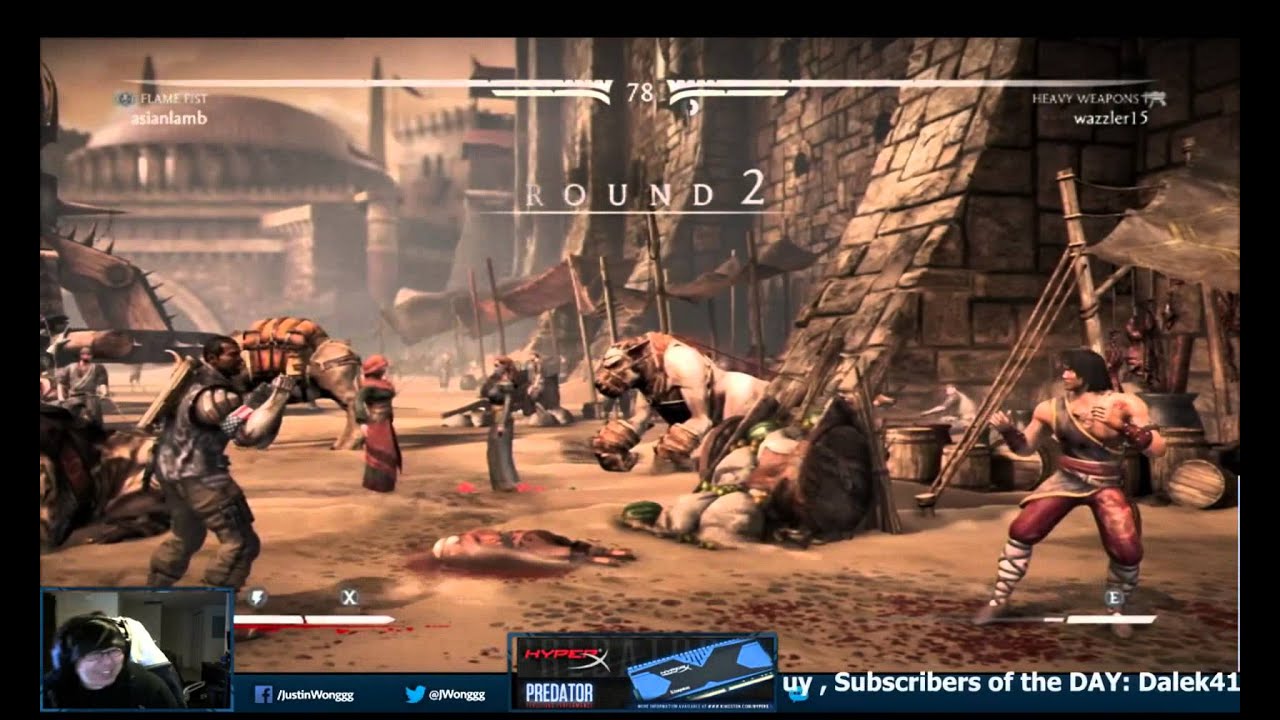
E-sports may be in my retirement plan. I’ll be doing this in my dotage:
1 Like
I find I have to put a lot of effort into being lucky.
1 Like
I’ve been hanging out on a couple of Stoic enewsletters and remembered reading this a bit ago…
“Luck is what happens when preparation meets opportunity” is a quote attributed to Roman philosopher Seneca.”
One of my past-life music buddies roomed with Al Di Meola at Berklee where it was said… “Al practiced eight hours a day.”
Guess Al was “lucky” Chick Corea asked him to replace Return To Forever’s guitar player 
I’d like to see the paperwork on that. 
It’s really easy to say, but in reality it’s a hell of a lot harder to pull off.
1 Like
Yeah those are wise words (I’m a stoic myself ). I can’t think of anyone who made it big, whether musician, writer, actor, athlete, whatever, who didn’t work their ass off to get there. That’s the preparation for opportunity. 
Yep, that’s exactly what I was getting at. My favorite trumpet play, Chris Botti, says he does the same. 8 hours a day, every day, no matter what. In addition to performances, while on tour. He’s been doing it for decades. No amount of talent is going to trump that without an equal level of effort.
So yeah. Skill > Talent.
We all may not have the talent. But we all can develop the skill.
2 Likes
this is BRILLIANT @mgoldst !!
4 Likes
I dislike the word “talent” though maybe it’s ok as a concept but i see so many people in comments saying how talented someone is and it leads to a belief that someone achieved the level they did because of what they were born with and that’s not the case in 99.999% of the cases. People are “talented” because they did a huge amount of work!
Sure, there are some traits that make it easier to learn and some people are put together in a way that that makes things easier to understand because of how they think but in the grand scheme of things, those benefits are small. My daughter excelled at dance from a young age but she wasn’t driven the way many of the other “less talented” girls were and i explained to her that although she’s naturally good and things come easy to her, there will be a point that the girls who find things harder but work harder will be better than her. Sometimes being naturally good at things is an impediment because nothing is all that hard so there’s no challenge. Some people are extremely driven by the challenge and a need to be the best at a thing.
I’m good at a lot of things because i can easily understand them and it doesn’t take me a lot of effort though it does take a considerable amount of time and I spend a huge amount of time every day learning new things. I’m a generalist, i like to know something about everything and i’m not compelled to know as much as i possibly can about one thing or be the best i possibly can be at one thing either though i’m usually better than most.
Several years ago, we did a “growth mindset” thing at work and although it’s hard for me to relate to it, there are a lot of people who don’t learn new things because they think they don’t have the “talent” for it so they can’t do it. I just talked with a young guy last week about 3D modelling because he was interested in jewelry design… i asked him “Have you ever tried blender? It’s free and there are lots of tutorials on YT about it” and he told me “I’m not talented enough for that”. Which is unfortunate because he has an interest in it but doesn’t try because he thinks he wasn’t born with something that’s necessary to learn it.
In the creative world (which encompasses almost everything) there is almost nothing that requires “talent” and almost everything necessary can be learned, the biggest problem with adult humans is that they’re afraid to fail and that leads to a great many people using the word “try” because they’re setting themselves up to feel better when they fail… and you never truly fail at something until you give up on it: i played French horn for a bit, gave up on it for about 40 years and still haven’t failed at it yet 
In his lifetime, Van Gogh was considered a failure… he only painted for 10 years but in that time, he created over 900 paintings plus more drawings and sketches, about one every day and a half… Did he have a “talent” for painting? He had something most people don’t have, most people who excel have some kind of personality trait that lets them see something others don’t or it allows them to spend a lot of time or do a lot of work that most people would be unable to commit themselves to. There are probably millions of people in the world who have undiscovered “talents” or unfulfilled potential because they either weren’t introduced to their “thing” or they just couldn’t commit to it or afford to do it. For the vast majority of people, “talent” gets you nowhere that work won’t take you, at best it makes the trip just a bit easier/faster.
"we stay far below our own possibilities in almost everything that we do….not because proper practice would not improve us further, but because we do not take the training or because we take it with too little zeal.” - Edward Thorndike, the founder of educational psychology
2 Likes
This is one of the top 3 things i appreciate in people and possibly the most important thing in new hires where i work. This is something that almost every child has, that most humans lose in their mid teens, partly because the education system hasn’t rewarded it adequately. One of my favourite ted talks will always be Sir Ken Robinson’s “Do Schools Kill Creativity”
This past summer i had an engineering student doing a time study and I explained to her why we do things the way we do even though it might seem suboptimal, because I thought that might be of interest to her (it would have been to me) and she replied “I don’t really care, that’s not going to help me do what I’m doing” and i thought “well, that’s the last time I help you with anything”. I thought about telling her that she should probably never say that ever again if she wanted to have a good career in engineering because being interested in the “why” of things is critical to developing good processes/procedures and continuous improvement.
3 Likes
“Ahh, so you want to be a technician and not an engineer, then? Ok.”
1 Like