Hi there. I’m looking for some ideas to get that clear synthie 80s bass sound wich was played of course by a keyboard or even completely programmed. A good example is that bass line (F#, D, F#, B, F#…) of “Mit Dir” in the extended version ( Spotify ). Envelope with Wah, Octaver goes in that direction but I miss some punch. Someone in that?
1 Like
You’ve got great taste! Everything DAF-related is cool.
I am struggling with something similar (playing 80s underground electro with bass):
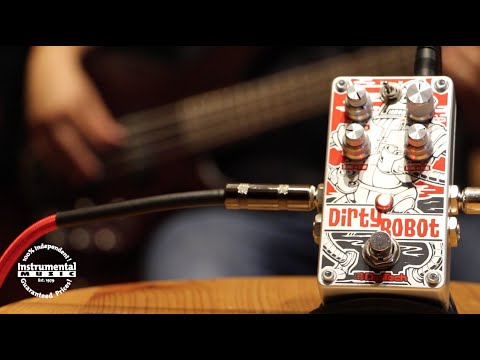
The right answer is: get a MXR MB301 Bass Synth
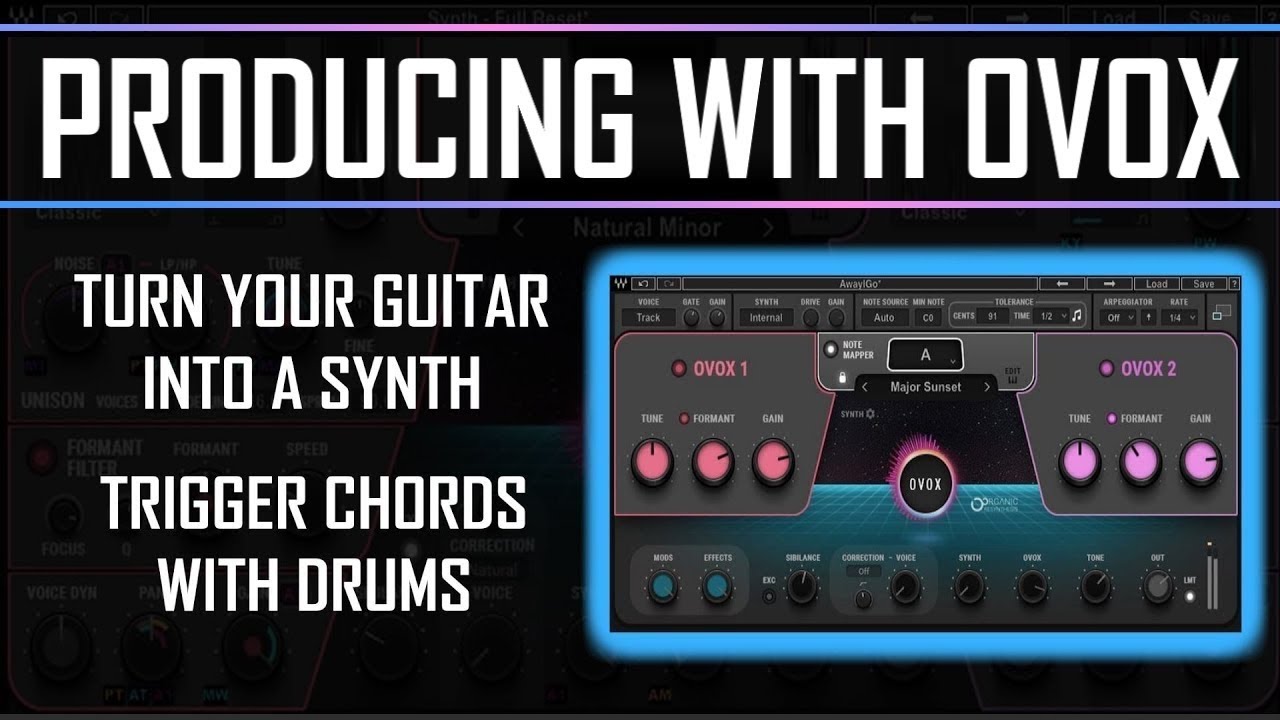
The complicated and (still not working for me) answer is: try to get a result with Ovox (VST/Plugin)
2 Likes
Or just use a synth 
4 Likes
The best way is to use key synth.
The next best way is the MXR Bass synth.
Without those (which I don’t have), the best I’ve gotten is massive compression, Auto-Wah , and reverb - then play on a really brite jazz bridge pickup and plucking as close to the bridge as you reasonably can.
This does not sound like an 80’s synth, but clearly points at it as inspiration.
3 Likes
If no auto wah (I don’t have an auto wah), play around with settings on an envelope filter.
3 Likes
I play a Boss OC5 and play it in conjunction with an EHX Bass Clone
You can get something similar with the Behringer Octaver and the UC200
Octave and Chorus basically
3 Likes
Yeah any pedal that is already internally a synth (like an octaver, especially OC-2 line) will work, and phase delay effects like chorus or phaser are a good plan to go with them.
Another option I haven’t done but I bet would work is to go bass → overdrive → fuzz or other clipping distortion → envelope filter. The overdrive and fuzz will add harmonics and overdriving into the fuzz should push it into clipping will give it kind of a square wave-like effect; and then apply the envelope to it.
3 Likes
Worth a look:
I’d just use Melodyne instead
Ovox ist $39 … how much is MeloDyne for this use case?
$249 when not on sale, but would do a much better job.
Define “better job”, please.
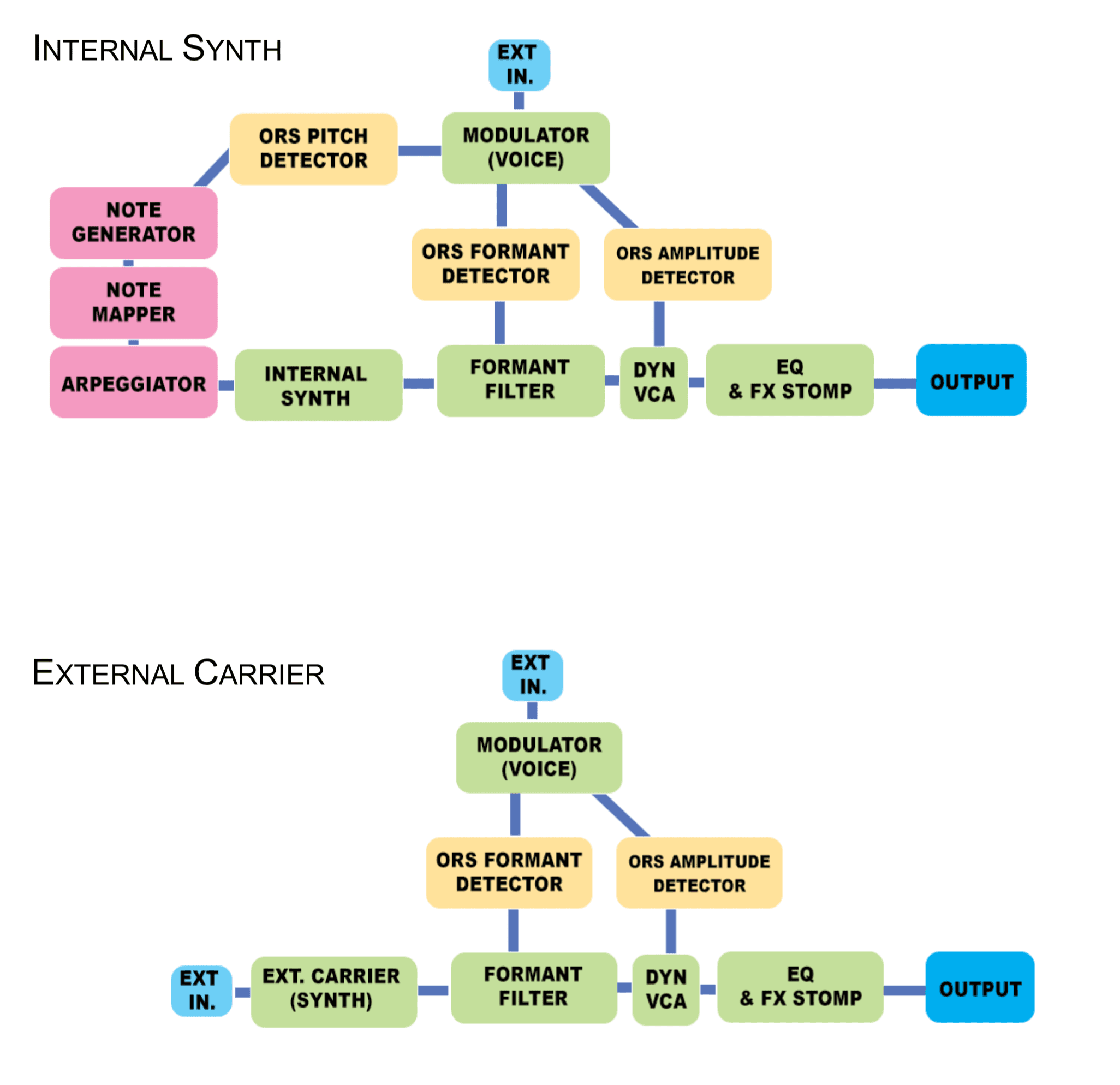
Ovox has two methods for creating synth sounds:
- Realtime MIDI conversion, which is supposed to be outstanding. You can use Ovox to control a software synth and this should be the same or better than the MXR. Some experiments I did were quite cool.
- Using the Ovox internal voice controlled synths (8 voices, two high-resolution engines). I got some promising results, but cause of my lack of synth knowhow I don’t know how to config Ovox’ synths properly (yet).
Have you tested Ovox?
Google AI:
In Waves OVox, LFO (Low-Frequency Oscillator) and ADSR (Attack, Decay, Sustain, Release) are types of modulators that can control various parameters within the plugin to create dynamic vocal effects. OVox offers multiple LFOs and ADSR envelopes that can be dragged and dropped onto controls for modulation, allowing for continuous, cycling effects (LFOs) or single, triggered changes in sound (ADSR envelopes).
What are LFOs and ADSRs in OVox?
-
LFOs:
These are Low-Frequency Oscillators that generate continuous, cyclical modulation signals. In OVox, you can use the built-in LFOs to create effects like autopanning, rhythmic volume changes, or pitch sweeps by applying them to parameters like amplitude or pitch.
-
These are traditional envelope generators with four stages: Attack, Decay, Sustain, and Release. They provide single, triggered changes to a parameter, such as shaping the volume of a synthesized voice or altering its pitch over time.
How to use LFOs and ADSRs in OVox
-
1. Access the Expanded View:
Open OVox and switch to the Expanded View to unlock the deeper modulation possibilities.
-
2. Select a Modulator:
Find the available LFOs or ADSR envelopes.
-
3. Drag and Drop:
Drag the chosen LFO or ADSR envelope to any target parameter within the OVox plugin.
-
4. Adjust and Create:
Tweak the settings of the modulator (e.g., LFO rate, ADSR times) to sculpt the sound and create unique vocal effects and morphing possibilities.
I have not, but Melodyne uses ARA and analyzes the entire track in context to accurately identify the notes, down to fine details like vibrato and intra-note dynamics changes (which can all be edited). It’s simply in a completely different league than a vocoder. Melodyne is something someone like Peter Gabriel would use to perfect his vocal tracks (and in fact - he does.)
1 Like
That might be - but for the use case “Bass Effects for 80s Synth Sound”, especially the Robert Görl track (and similar tracks), Ovox should be more than sufficient, don’t you think?
Theoretically Ovox should be better than the MXR MB301. But I’m still in the process of finding out. Tracking of Ovox is superb. But my lack of synth knowhow keeps me from getting great results, yet.
1 Like
There’s nothing wrong with Ovox AFAIK, it has a good reputation and Waves’ stuff is well regarded (except some of their sales policies anyway).
However, over time Melodyne is an amazing tool to own. This is just an ancillary usage of it and it would still be the best choice even so. But you’re right, it’s not cheap.
2 Likes
I don’t like software tools, it must be hardware. The MXR MB301 seems to be the right one, like Whying_Dutchman sat, but the price is a con. I think about it.
1 Like
Some people on zzzeee Zzeeeermmaaan bass forum have the MXR MB301, and they say it rocks … even live! You just need to remember to set MXR to 4 string (default seems to be 5 string). And you need to play with discipline, for the tracking to work properly…
If I hasd the $$$ and there would be a way to play dry and add effects later in post production, I would get it.
(It’s possible with the PreSonus Quantum HD 2 and Presonus Quantum HD8 … cause of reamping, if I understand the concept correctly. Re-amping means I can put a pedal in the chain for post production, right … @howard? If so: a very cool feature!)
This works but it’s easier to just stay in the box in that case. You can also use a preamp/DI to send a DI to the interface and get a clean signal and then also run the other preamp out through the synth pedal and other pedals to get a wet input too.
Down the rabbit hole I found those keytars. It’s of course not what I was looking for, but … look at that “Roland AX-Edge”.
1 Like