Plekk’ing in some instances is to hide a problem with a neck or fretboard (like twisting, ski jumps at the neck end of fret board). It also reduces fret life as in the leveling process, it shaves material from the higher frets to make them the same height as the lower frets.
3 Likes
It’s supposed to be more accurate than a fret dress done by a human.
4 Likes
PLEK’ing is a far more accurate way to level frets. And, unless there are some serious issues with more than one or a few frets, the PLEK process takes off a minimal amount of material; just enough to ensure that all frets are of equal height relative to each other. That said, if a neck’s fret heights are completely fucked up, more material will need to be removed, regardless of whether it’s a human or machine doing it.
3 Likes
Pleking can be viewed as a devalue on vintage instruments as they are now not “original” and further reduces the life of the frets. Like others said. May hide another problem. Vintage instruments didn’t have the option of plecking and shouldn’t need them.
On newer it MAY be considered a good thing but I’d personally rather have a quality instrument that didn’t need it.
4 Likes
You win the internets today, @John_E
4 Likes
Interesting. Thanks, @EddieJones, @RuknRole, @MikeC, and @John_E.
I was thinking about taking my B50 down for a PLEK job… or at least to see if it needs one. Gonna think twice about it now.
2 Likes
A good tech can level, polish and shine just as good without costing a lot and do it with finesse.
2 Likes
Unfortunately, the only good techs I’ve been able to find in my area are PLEK adherents. Which is why I’ve been considering it.
2 Likes
I have a talented luthier nearby who has worked on my basses. He has built custom guitars and basses for a lot of pro players, and, in Austin, there are a ton of them.
Of course, he’s more than capable of doing the fret dressing on his builds, but he also offers outsourced PLEK’ing as an option. According to him, while it’s pricier, PLEK is always dead accurate, and most of his customers opt for it. He actually prefers it as well, because he knows it comes out perfect from the get-go.
4 Likes
Some quality instruments, like Lakland, are plekked at the factory
Plekking like any tool has its place
7 Likes
I believe these two brands qualify as makers of quality instruments.
Mayones PLEKs their builds.
So does Sandberg on their German handmades.
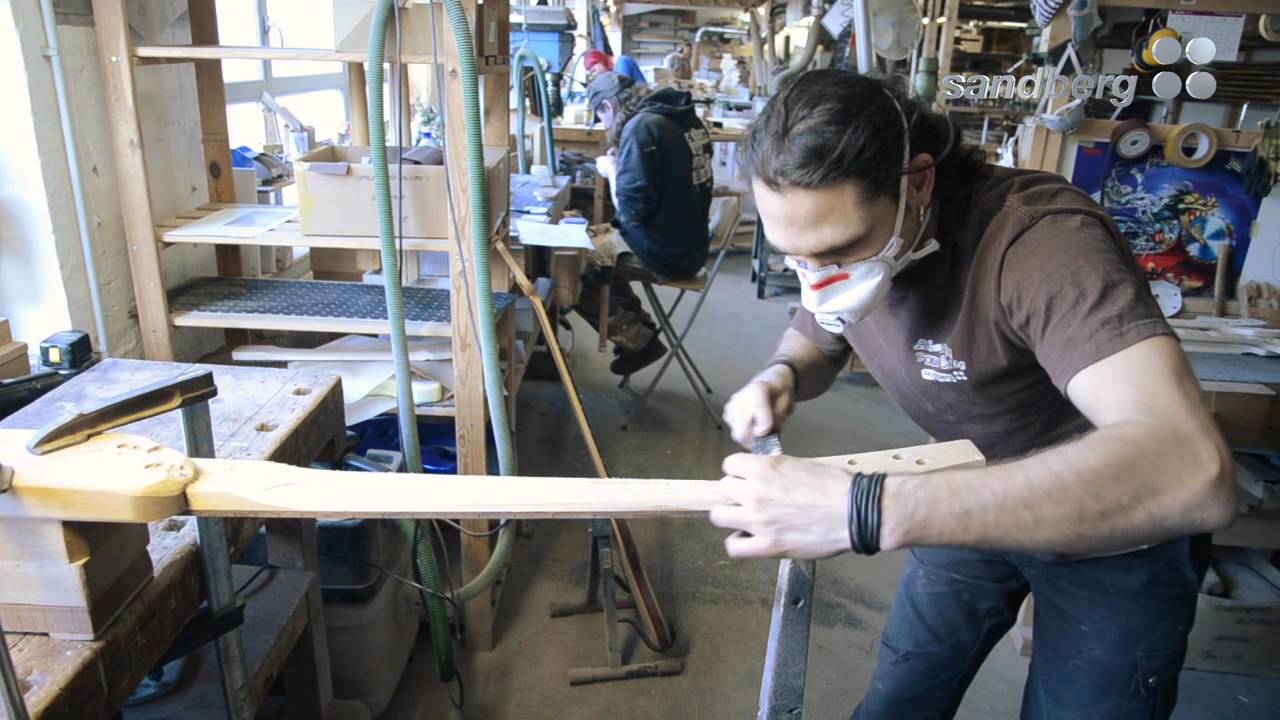
2 Likes
I’m not understanding where this ati-PLEK idea is coming from.
Everything I’ve read says it can do fretwork more accurately, more consistently, and remove less material than a human on their best day.
A PLEK machine, at its core, is a very finely tuned CNC machine that can record and work in measurements beyond the capabilty of a person. However, it is not a magic box and requires a skilled craftsman to work along side it.
I’ve never seen anything about it being used to hide a defect. As for @JustTim , they might be able to use it to make his twisted neck more playable but it isn’t going to conceal the fact it has a twisted neck. For me, that would be spending a lot of money on something that was, at best, a maybe.
7 Likes
You’re absolutely correct. @eric.kiser.
From Mayones:
Our team – after thousands and thousands of finished guitars – is perfectly capable of making the fretwork just right with just the basic tools, used in luthiery since its inception. Mayones Guitars & Basses are renowned by players all around the world for their quality, tone and comfort that rivals everything on the market currently.
Since we strive to make constant improvements we combine the skill of master craftsmen with modern technology. PLEK is not only an excellent diagnostic tool that allows us to scan new guitars to make sure they’re perfect, it also allows for levels of precision outside of what human hands are capable of.
2 Likes
Me neither. I would rather have my basses pleked than manually dressed.
4 Likes
Mayo-nnaise

2 Likes
I agree but also agree with @howard you wouldn’t plek a vintage instrument or change it’s hardware.
4 Likes
I would have never guessed this. I figured any fretwork would fall under routine maintenance like changing strings.
3 Likes
You’re right, @eric.kiser.
It’s a judgment call. If a bass really needs fret dressing, even a vintage instrument, it needs it.
At that point, the choice is to have a luthier do it by hand or have a luthier who has the training, experience and technology to PLEK it, PLEK it. Six of one, half a dozen of the other. Of course, cost and time factor into the decision, but the option of getting perfect accuracy with the minimum of material removed is worth considering heavily.
3 Likes
I think vintage basses are like vintage cars. People have a thing for keeping it original.
3 Likes
To a certain extent, I agree. However, Gruhn’s Guitars in Nashville, for example, specializes in working on vintage Martins and Gibsons. They are world-renown for their work. That said, they routinely will refret 100+ -year-old guitars, with an expert eye on keeping them period-accurate with the choice and gauge of fret wire. Frets are consumables.
2 Likes