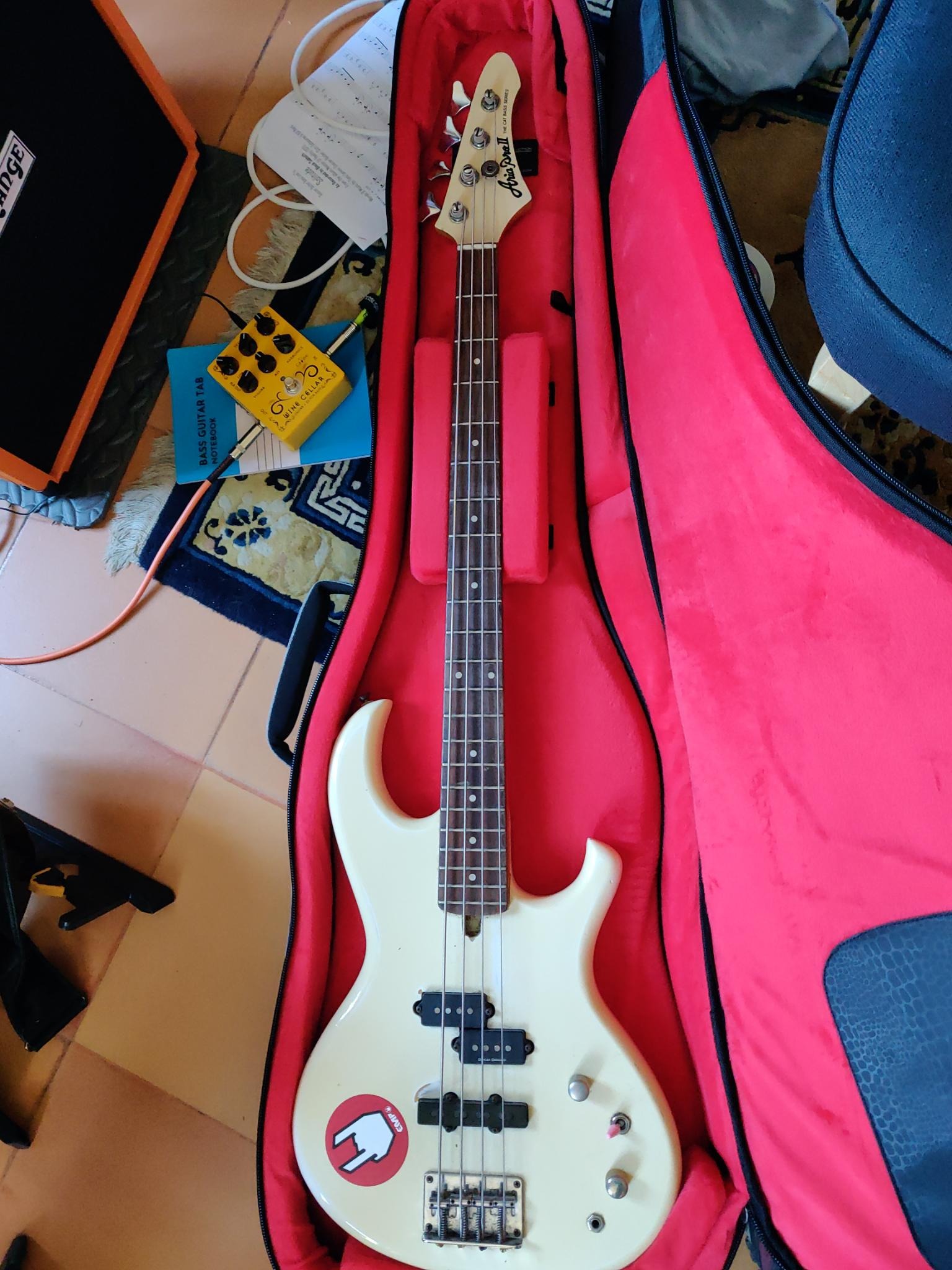
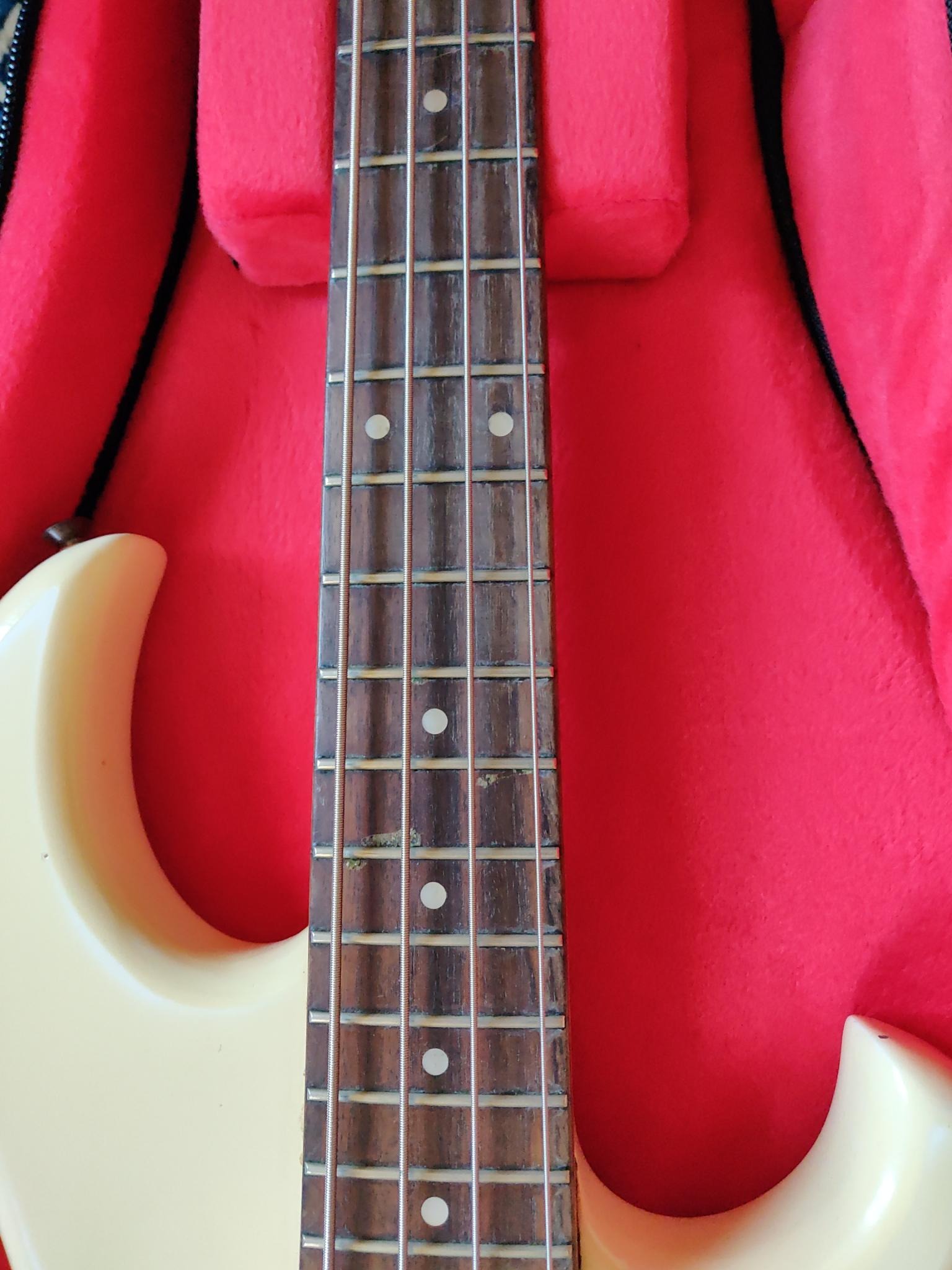
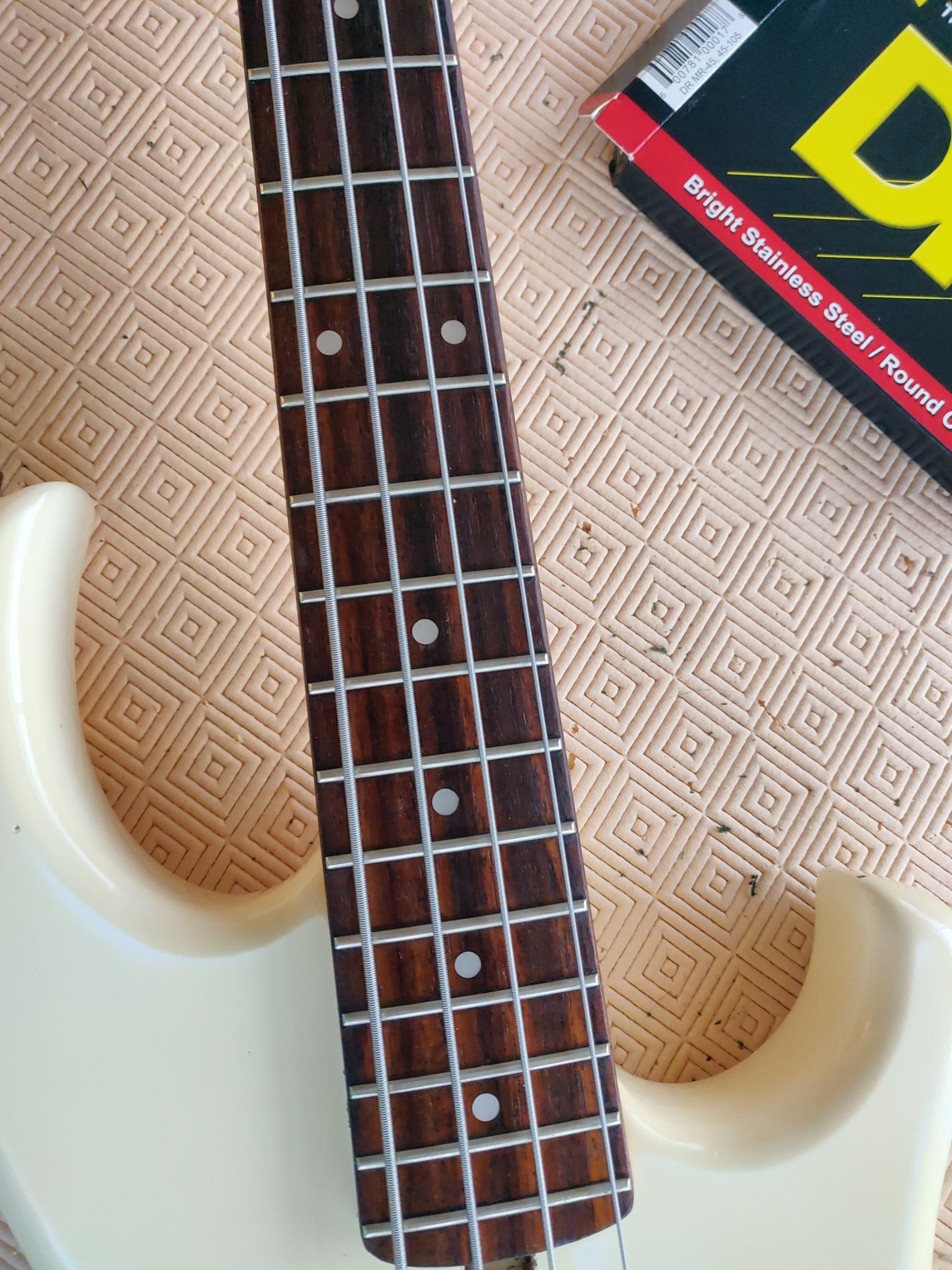
It was really filthy when i bought, it. I’ve managed to thoroughly clean the fretboard. Give a good polish to the body and remove the gunk everywhere I could without unscrewing things. And then put new strings on it.
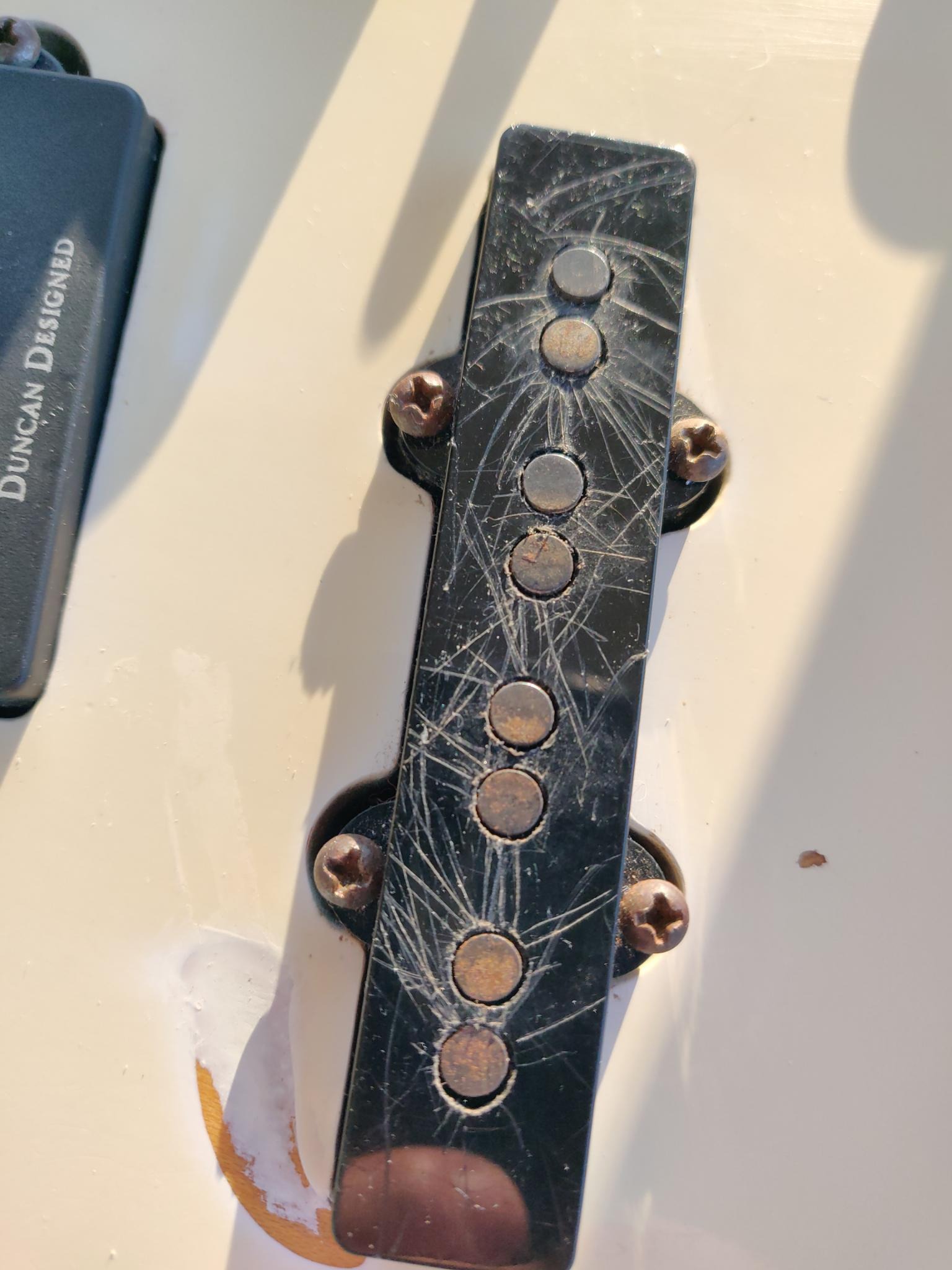
I’m looking for advice about the jazz pickup (it’s the original one, the precision pickup is a Duncan) because its plots are well corroded : is there a way to clean the rust without damaging it ?
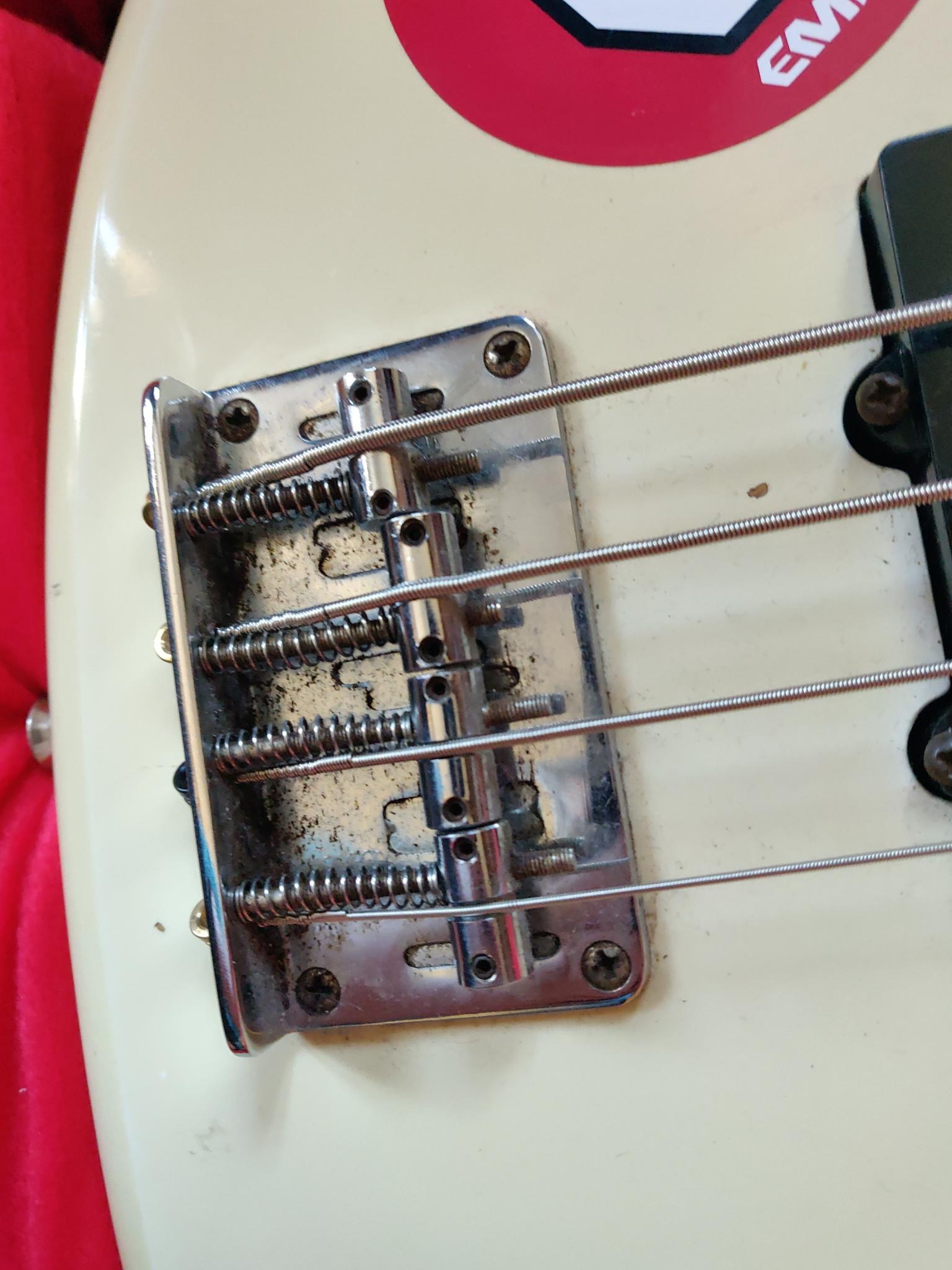
And about the bridge: I intend to let my luthier check the bass but is there something he can do about the corrosion (it’s not only gunk I think) without changing it ?
Thanks for your answer. I’d rather keep the original parts if it’s salvageable.
About the bridge, I’m not bothered by the look but more worried about wear in the moving parts : the saddles’ screws are all rusty so are the grooves underneath them.
Try Miracle all purpose polishing Cloth on the metal parts. You can find the cloth on Amazon. I have tried it a various metal parts with pretty good success.
I should have zoomed in on the saddle
Might be salvageable still .
For the pickups, I’d prefer to have a full set instead of a mismatched pair, but that’s personal preference. If it sounds good, you might as well keep them.
You will probably need to use a rust remover for the screws and poles of the pickup.
I would definitely replace the pickup and pickup cover. You also might want to replace the pots and capacitor, and check the jack and see if it could use a replacement. None of this will do anything except improve the bass.
That bridge is nothing special at all, very basic L-bend; I would ordinarily suggest just replacing it too. However it uses a nonstandard screw pattern so that might be tricky and potentially require some drilling.
You can always hold on to the original parts for later resale if you want. I have done this; upgraded parts of a bass and held on to the originals, and passed them along to the buyer when I sold it later. People are usually fine with this.
I am coming to the conclusion that you “need” a luthier only for cases where something is really, really, really broken or wrong. Like broken headstocks.
Even fretwork is doable yourself, I have done it and it is not hard, though for a full fret job a luthier would be my choice because I’d want stainless and ain’t nobody got time for filing all that. After having had stainless frets I am now spoiled.
I don’t have the money to buy a set of Seymour-Duncan pickups right now, so that part will wait. I’ll have the electronics checked and insulated. The jack definitely needs replacing as it’s loose and noisy. The selector needs work too.
About the pots and capacitor, I like the tone knob: it’s really weird as it has different resistance when turning it and gives an extraordinary sound. I’ll add them to the check list though.
I’ll have the bridge changed for something similar as not to alter the look of the bass too much.
I’ve never understood all the fuss about moding until now. When watching moding videos I asked myself in disbelief “whats’ wrong with the stock pickups? it all looks like adding useless RGB LEDs inside a gaming PC. meh ” until I tried the Duncan precision pickup on that bass. Oh my… It’s so sweet
About sending it to the luthier: he’s a really great (as master of the craft) and cool luthier who enjoys talking about his craft and have great insight. So he’ll check the old lady to see if there’s anything off, rewire things as I don’t do it and we’ll have a good chin-wag
A wimpy J is very common on a PJ. Could be part of the original design. PJs are at their best to my ears when the P is about 80% and the J around 20%. That’s really their own sound.
I have owned a number of PJs over the years and have made the same comment.


 ” until I tried the Duncan precision pickup on that bass. Oh my… It’s so sweet

