Edit 2: After going through all the setup steps again, I did have a little too much forward bow in my neck. After fully adjusting everything, the problem isn’t completely solved but it’s reduced to the point where I’m not concerned about it anymore.
On both of my basses (A Squier P and a Sterling Ray34) I have this issue, though it’s more prominent on the Stingray:
When I tune an open string so it’s spot-on according to my tuner, the fretted notes are sharp. When I tune to the 5th fret, the open strings are flat. And not just by a couple cents, it’s audibly off. Also, if I press down between the 2nd and 3rd frets, the string sits substantially more than a hair’s width above the 1st fret.
This is all shouting at me that the nut needs to be adjusted, but before I go in for a setup (not sure I want to file it myself) I thought I’d ask here and see if I’m missing anything.
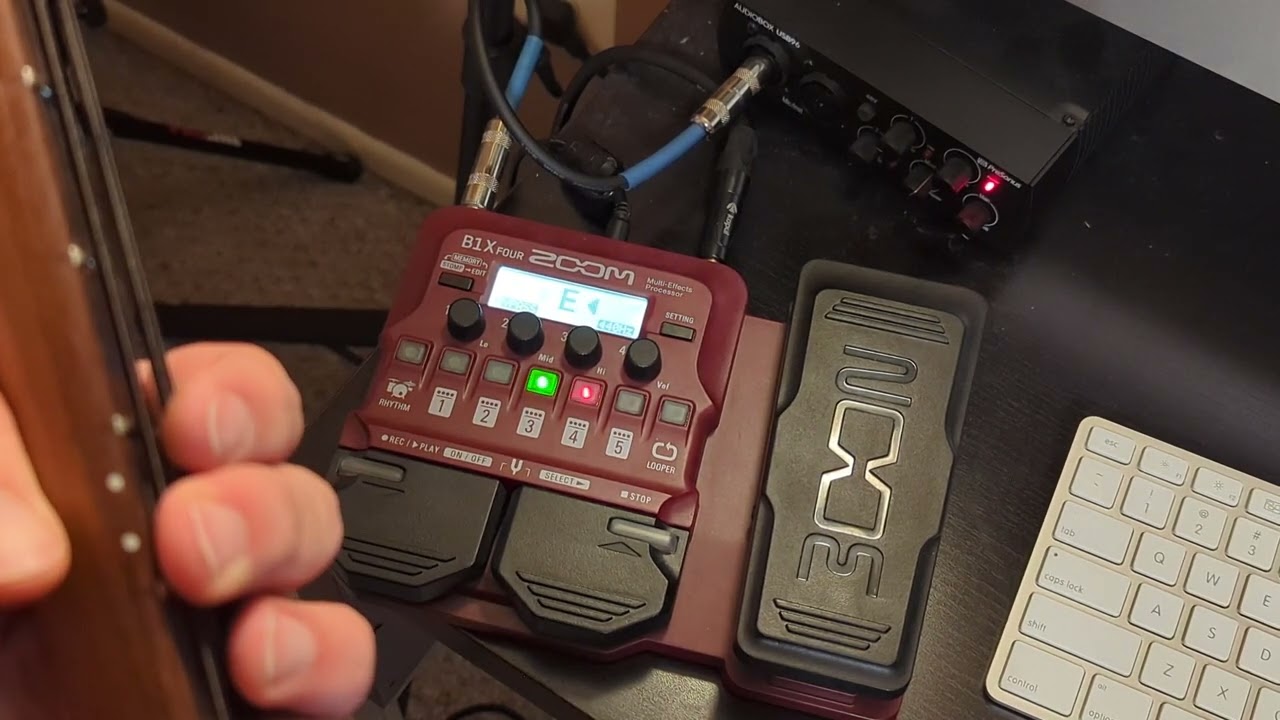
Edit: A demo with the E string properly intonated (near as I can figure anyway) with the open and 12th fret notes in tune, and fretted notes in between being sharp:
Got Pic?
It’s easier to take off just a pain to add back or replace it. Plus if the strings are seated properly then you just take off from the bottom.
Oh wait, I think you are talking about intonation. Are you talking about note pitch?
Yes, note pitch. When I tune the open string so it’s spot-on, all fretted notes on that string read as sharp on the tuner. It might be intonation, I thought I adjusted that but I can give it another go.
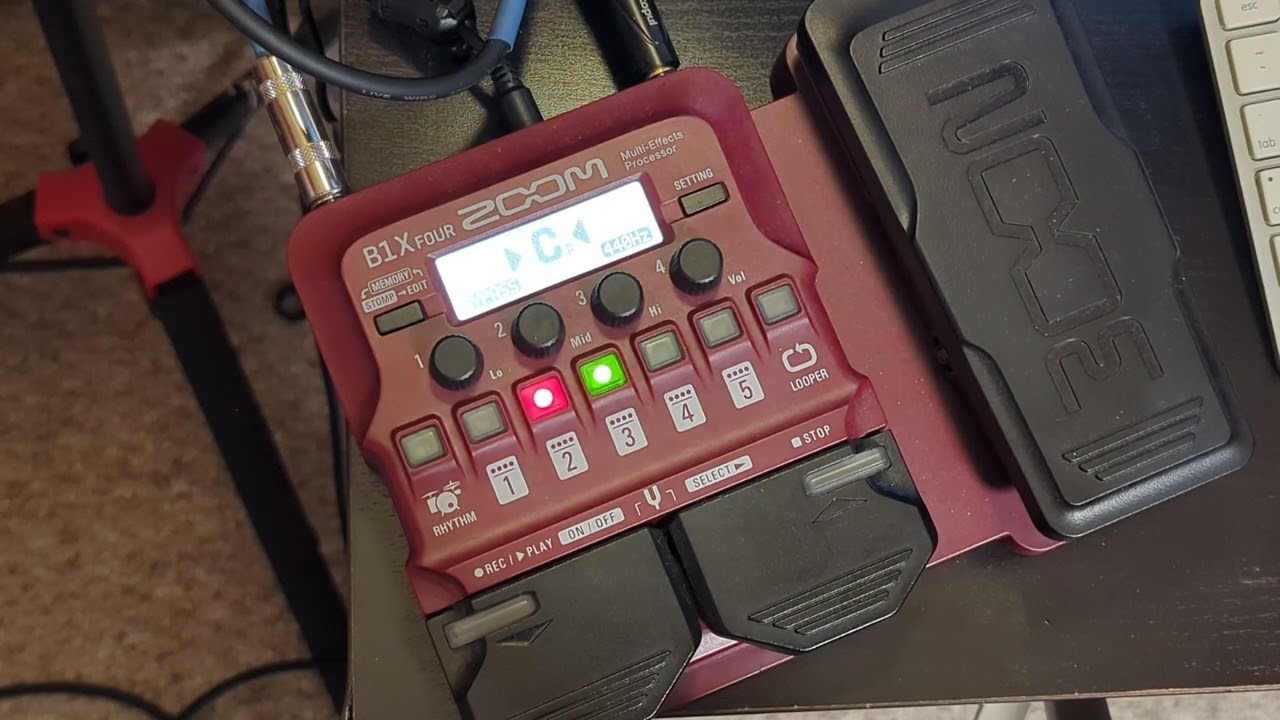
My best tuner right now is built into my Zoom B1X Four. My clip-on Snark doesn’t really register the difference so maybe it’s not as big as I’m making it out to be. But anyway, here’s what I’m seeing.
In case it’s not clear that’s an open E string, A on the 5th fret, E on the 12th fret, then open E again.
Yeah then it’s intonation. Just do the intonation. It’s not very difficult but if you have never done it before there’s a little learning curve. just don’t get discourage.
I know I have done this in the past. Just did it again - it definitely needed more adjusting. But now I have it so the open E and the 12th fret E are perfect according to my tuner, but fretted notes in between them are off.
This is open E and then 3rd, 5th, 7th, 9th, and 12th. As you can see, the 3rd fret note is fairly sharp and they get less sharp as they approach the 12th fret.
So, I have done a setup, more than once. But, I am far from an expert, so it’s always possible I did it wrong. Plus it’s been a while, and we’ve had a lot of humidity.
I went through it all again from scratch. The neck did have a little too much forward bow in it. After tightening the truss rod, I adjusted saddle heights to factory recommendations, and re-tuned and adjusted intonation again.
The result didn’t completely resolve the issue, but it’s close enough that I don’t think I need to complain about it anymore. Up around the 3rd-5th fret on the E string, notes register as just slightly sharp on my tuner, like on the cusp of being in tune. The A string is even closer, and D and G are spot on.
Thanks to everyone who poked me to go through that again.
Also, if your overall nut is too high, sand the bottom, don’t file the slots. For flat bottomed nuts, reducing the height of a nut that is too high on all strings it’s much easier, more effective and cheaper to just put a piece of sandpaper flat on a table and rub the bottom of the nut on it, a little at a time.
Honestly I set it at “low action” and then raised it until I didn’t get rattling while digging in, so I wasn’t sure exactly. But I just went and measured, and it’s around 2.5 or 2.6mm above the 12th fret on the E string (with 1st fret held).
Sterling’s numbers are:
E string: 6/64 - 7/64 (2.4 - 2.8mm)
G string: 5/64 - 7/64 (2.0 - 2.8mm)
So I’m right in the middle.
If I think it needs more adjustment than what I’ve given it, I’ll probably take it to a professional. Then for future adjustments I’ll know I have that solid base to work from.
Checking nut height is super easy and will tell you immediately if it is too high. No tools needed.
On the E string, fret the bass in the third fret, but right up against the second fret wire - i.e.the “wrong” side. The string should barely clear the first fret - it should not be touching it, but the gap should be tiny, much less than when you’re checking neck relief. Just a tiny barely visible gap, like 0.2mm.
No need for feeler gauges or anything. If there’s more than just a tiny gap, the nut is too high. If the string is touching the fret, the nut is too low.