does anyone have any tips on how to easier visualize extending the scale shapes?
I have recently been trying to make my basslines more melodic and interesting. A way i thought i could do this was to keep playing the notes of a scale further up the neck but i have problems memorizing it in a practical way. i understand the idea of using octaves and finding the same note as that of one in the scale to find the extension but i am in no way capable of doing so in a practical speed. now i must admit i am not a very patient person so writing up a chart every time i want to write a line with my band doesnt seem very entising. is there any way i can make visualising this more manageable or are there some exercises i can do to help with this?
(p.s. i am currently on mudule 11 of the beginner to badass course so if this topic does show up later in the course please let me know!)
It doesn’t change as you move up the fretboard. The finger pattern you use stays the same no matter which fret you start on. Start on root, 1, then 2-3-4-5-6-7. and on 8 it’s 1 again. and do the same pattern.
I used to practice the frets with pentatonic scales, working my way up and back down over and over
Also remember that in the same string the scale starts over every 12th fret. So on a 24 fret bass the E string has 3 Es. Same for A, D, and G strings. 1st and 13th fret are the same octaves, 2nd and 14th, 3rd and 15th, and so on.
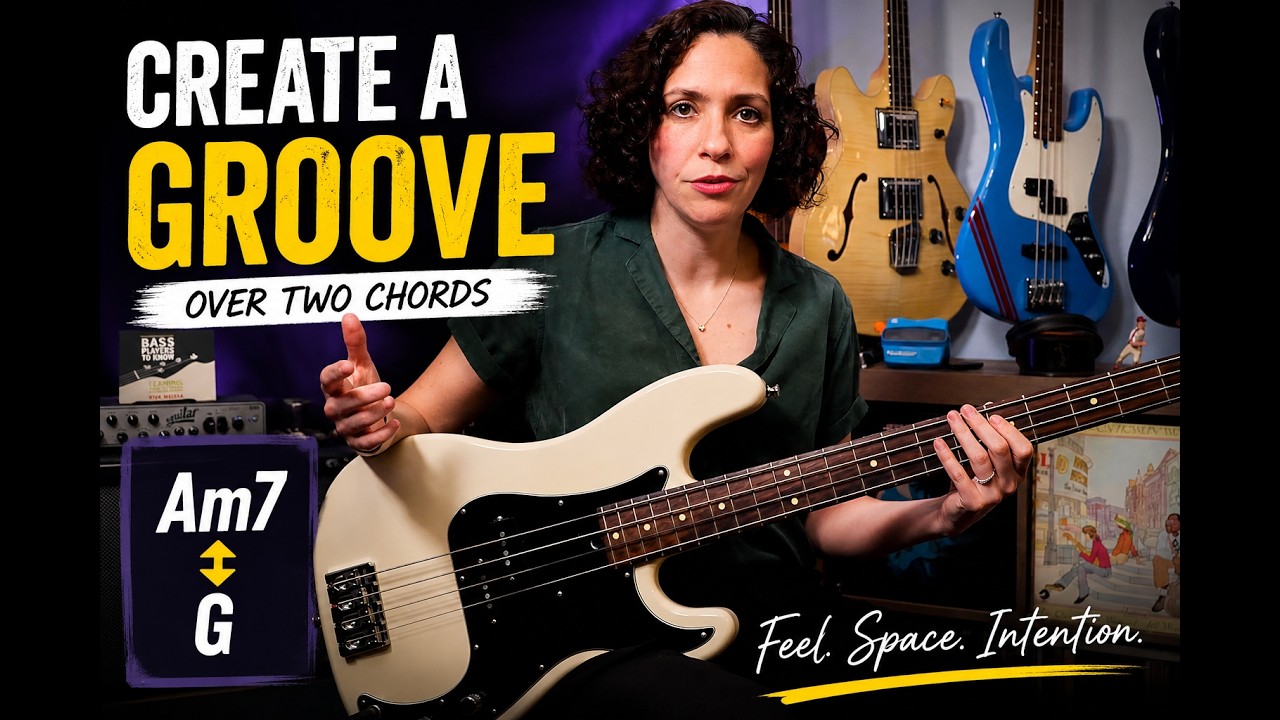
Ryan Madora is a Nashville-based writer, educator, and bass player, currently touring with ZAYN. Her bass videos aren’t always the easiest to follow for beginners, but this new one speaks to your question. Maybe it will give you some ideas.
Breaking out of that “prison” that are the one-octave shapes is a very important endeavor, albeit not easy. Part of the challenge is that there are several paths beyond that first octave (up or down), and eventually you will need to explore them all - some are more horizontal in their movement, some more vertical. The restrictions are, of course, imposed by you running out of strings at some point…
There are a number of visualizer webpages and apps out there. They require a bit of getting used to, but they can at least send you off in the right directions. Here is one created by a fellow BassBuzzer, Gonçalo (@gcancella ):
It helps to have a printed picture of the notes on the fretboard. Also, the more you play, the faster you will start memorising the notes on the fretboard. And when you know where some of the notes are, you can find the other notes.
It helps to know where G A and B are on the E string. From there, it is easy to remember the C is right after the B, and so on.
It is also good to memorise the notes on the 5th fret (it is easy, in each string, the note is the same as the next string’s open string note).
Also the notes on the 7th fret are easy to memorise: B E A D.
The first scale we learn is the C major scale, on the 3rd fret. So these are the notes we memorise first. So, next, start practicing the C major scale starting on the C of the 8th fret of the E string. That will make it easier and faster to learn the notes in that part of the neck.