Genius 
1 Like
Still cracks me up to this day. You know it’s seriously bad when there is the “sucking air through teeth” sound. “hsssssss chotto… muzukashii desu ne.”
No worries, thanks though. It sucks but it’s part of owning a 20 year old bass.
4 Likes
I might try this. I have a nice Olfa art knife that I use all the time for random stuff like this.
1 Like
Maybe if you get the screw out you could fill the hole. Paint the thing whole thing black and get away with it? 
1 Like
I think I’m going to make one (or 3) of these 
Given where the screw is and the lack of maneuverability you have, if at all possible, I’d try to drill it and use the bit as a pseudo EZ Out.
To do this you’d need a really small bit and a very steady hand. 
Using a nail or a sharp awl, tap a little dimple in the center of the broken screw. This will keep the drill bit centered on the screw and won’t let it drift off course. 
Going at a slow speed, drill a hole down the screw shaft. At a certain point, the drill bit will be deep enough in to start turning the screw. When that happens, reverse the drill to slowly back the whole shebang out.
I’ve never tried this, but it’s what I’d do.
I was going to suggest you paint it too. I usually take the covers off and never put them back on 
I’ve found that the best thing for removing small broken screws (if there’s a bit exposed) is small needle nose vise grip pliers.
The problem with this @MikeC is that the screw material is sometimes made of a very hard material. So the drill bit wants to wander off to the side. The hard metal deflects the small drill bit. If it’s a bigger drill bit you have a better chance of it not deflecting.
I’ve been in this spot more than once over the years and it sucks. In addition to my suggestion I’ve also taken a tiny drill bit and drilled around the circumference of the snapped screw to remove enough wood to get the screw out.
Long story short it’s going to be a pia job. I feel @howard’s pain attempting this one.
1 Like
If you have a dremel you could easily cut some space around it and then use some thin pliers to screw it out. You could even flatten the sides of the screw a lttle with a Dremel to it easier to grip.
The hole can be filled with wood filler … or you drill a larger hole later and fill it with some round wood.
Yeah, I have no clue what the screw is made of. Since it snapped off, I thought maybe it might be a soft metal. If it’s not, all bets are off.
I’ve had a bit skate on hard materials before. Sucks.
Drilling a few small holes in the wood surrounding the screw so a needle nose can grab the little bastard seems to be the ticket, if all else fails.
It is indeed a pain in the posterior, especially in such a confined area to work in.
2 Likes
Of course I have a dremel, but there is absolutely no way this would work without ending up looking ridiculously bad. This is in very hard maple that is only about 1cm thick, in a recess about 8mm deep and 1cm across. A dremel would be one of the worst tools for this.
1 Like
Yeah, that might be ok, but I think careful knife work might be a better plan. I’ll try that this weekend. Thanks again!
1 Like
Hmmmm … but using a dremel would be like using a drill. Only more precise cause easier to handle.
And with something like this (left one, or a thinner variation) you can make a very small cavity around the screw. Done that myself. Works perfectly!
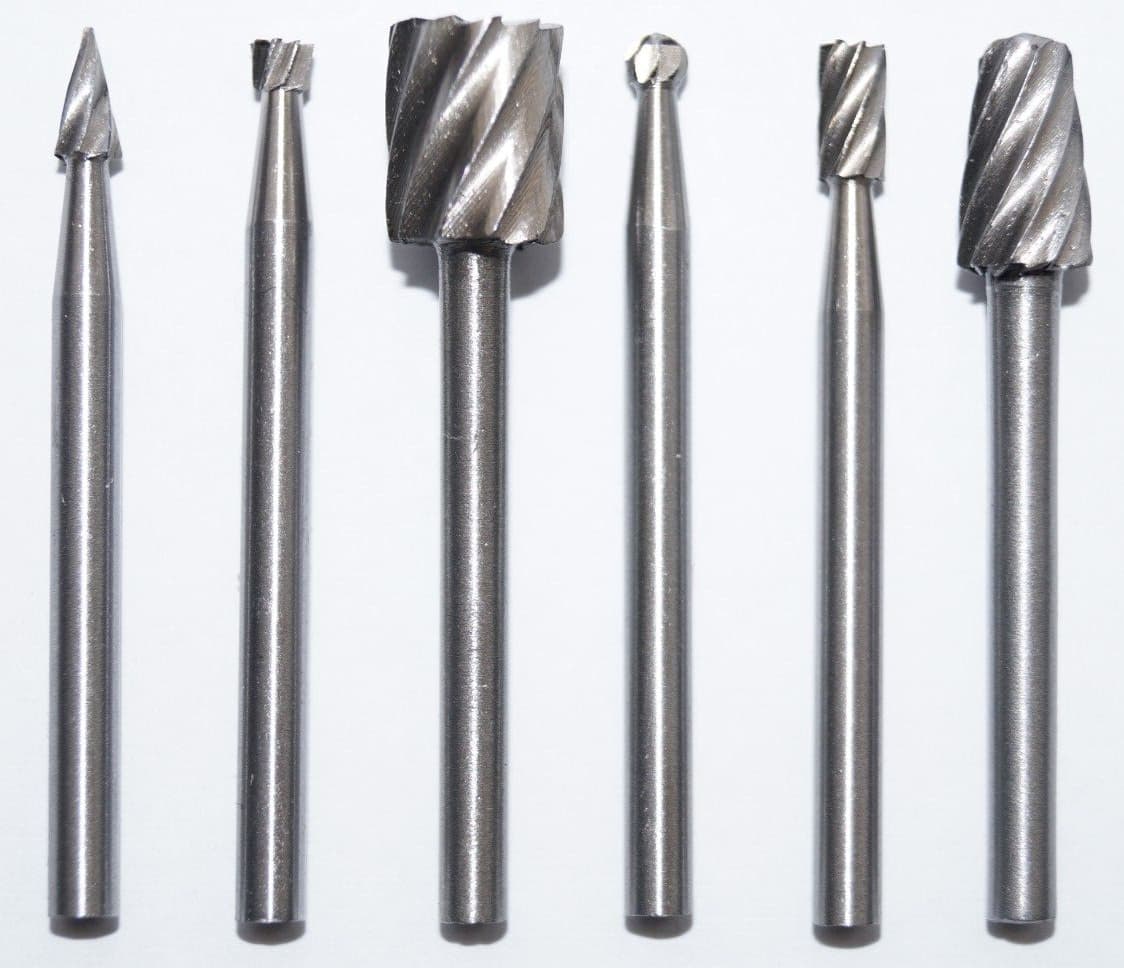
Yeah, no one wants a blowout on their backside
4 Likes

This is a truly terrible idea. Like World Class Bad. This isn’t a cheap plastic pickguard, an epoxy frankenjob wouldn’t “fix” it.
2 Likes
Hahaha! Very grown up answer, @howard. Isn’t this beneath you, really?
I tell you, it works. Done it., See no reason why it wouldn’t!
If a drill is a good idea, this is a better idea. Especially if you have a Dremel 565 Multifunctional Cutting Set.
Cannot be more precise that with that!
1 Like
I only said that because I knew you would take it well.
Mostly it’s that I expected this answer and this is not a job to dremel around. If I were to drill around it, the proper tool is a pin vise with a small bit. Second best would be a drill press. Third would be a hand drill, but it’s a distant third. A dremel would be among the last choices.
1 Like
Ok, that’s better! You almost sounded like somebody else here 
It’s of course your choice, so I’m happy with anything that works!
If you don’t find a way, I can screw something into a hardwood, break the screw and make a video how to get it out using a Dremel tomorrow.
I won’t take away more than 2-3mm around the screw … and it needs to be 1-2mm deep max!
1 Like
That’s way too much. The goal here would be 0.7-1mm tops, and even that’s wider than I would like, which is why I am trying knifing it first. The entire bottom of this cavity is less than a cm across.
The goal would be a minimal cavity that then gets rounded and dowelled.
1 Like