Hypermobility in Fretting Hand

I know there’s a few other hypermobile folks on here so I was wondering if y’all might have any insight. Been playing for 18ish months now and in the last month or so I’ve started having a lot of soreness and growing hyperextension in my the top joint of my pinky and index fingers on my fretting hand. I play with a mix of one finger per fret and Simandl, lots of micro shifting and try to be conscious of minimum viable fretting pressure but this is an issue outside of bass playing as well.

Has anyone had any luck with stabilizing hypermobile fingers? I was leaning towards tape but wasn’t sure if there were better options folks used.

Unfortunately I have a genetic disorder that affects how my connective tissue heals so it’s unlikely this is a problem that is a rest and wait it out sort of thing.

1 Like

Hey, EDS sufferer here. One thing I’ve learned about us hypermobile folk is that we’re all so unique with our own situations that sharing what works for you may not be appropriate for others.

Personally, my pinky also hyperextends in when fretting octaves and low-fret one-finger-per-fret positions, but I’m lucky in that it’s usually a ‘ugh, it happened again’ reaction than any long term soreness. How long do you play per session, and have you been practicing more demanding techniques lately?

I too mix up OFPF/Simandl as necessary. Between that and minimum viable pressure, it sounds like you’re doing pretty much everything you can from a bass-technique perspective - perhaps some strap raising/lowering? Could you elaborate what you mean when you say using tape? I assume wrapping the joint to prevent the inward flex you sometimes get with a hyperextension, but I just want to be sure.

1 Like

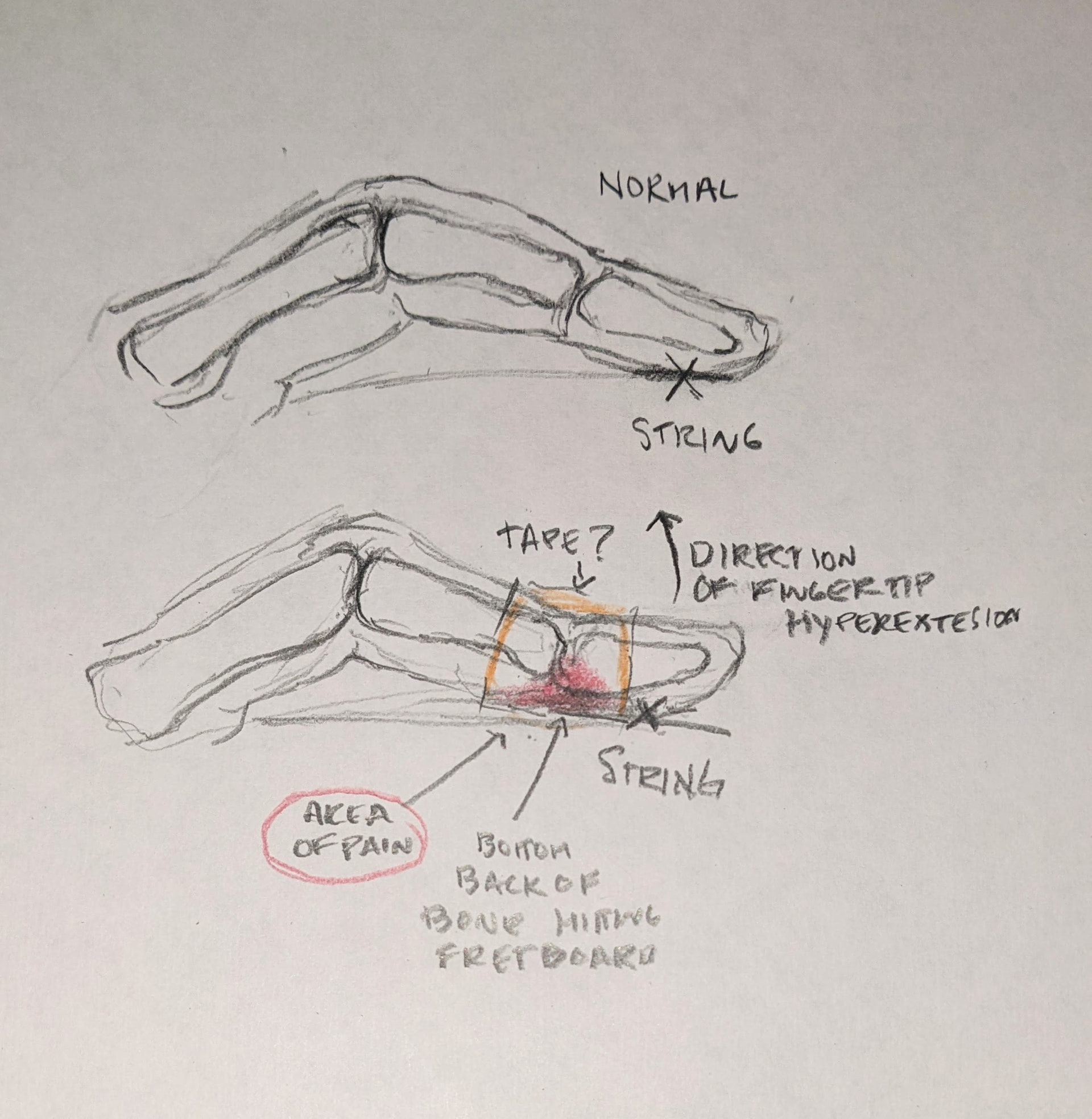
Hi fellow EDSer! That’s what I’ve got too. Very very heard on no one-size-fits all solutions. I’ve done a quick drawing since I thought that might help clarify what I’ve got going on.

So the top shows how I was fretting with all my fingers. Keeping the top two finger joints relatively straight with the meaty part of the fingertip on the string. If I play more on my fingertips it will cause the middle joint to bend backwards. This has always worked fabulously.

About a month ago I started noticing that the fingertip joint on both my index and pinky fingers started bending backwards enough that the end of the bone was starting to hit the fretboard and causing pain. This happens when I do anything that puts pressure on the fingertips (such as typing).

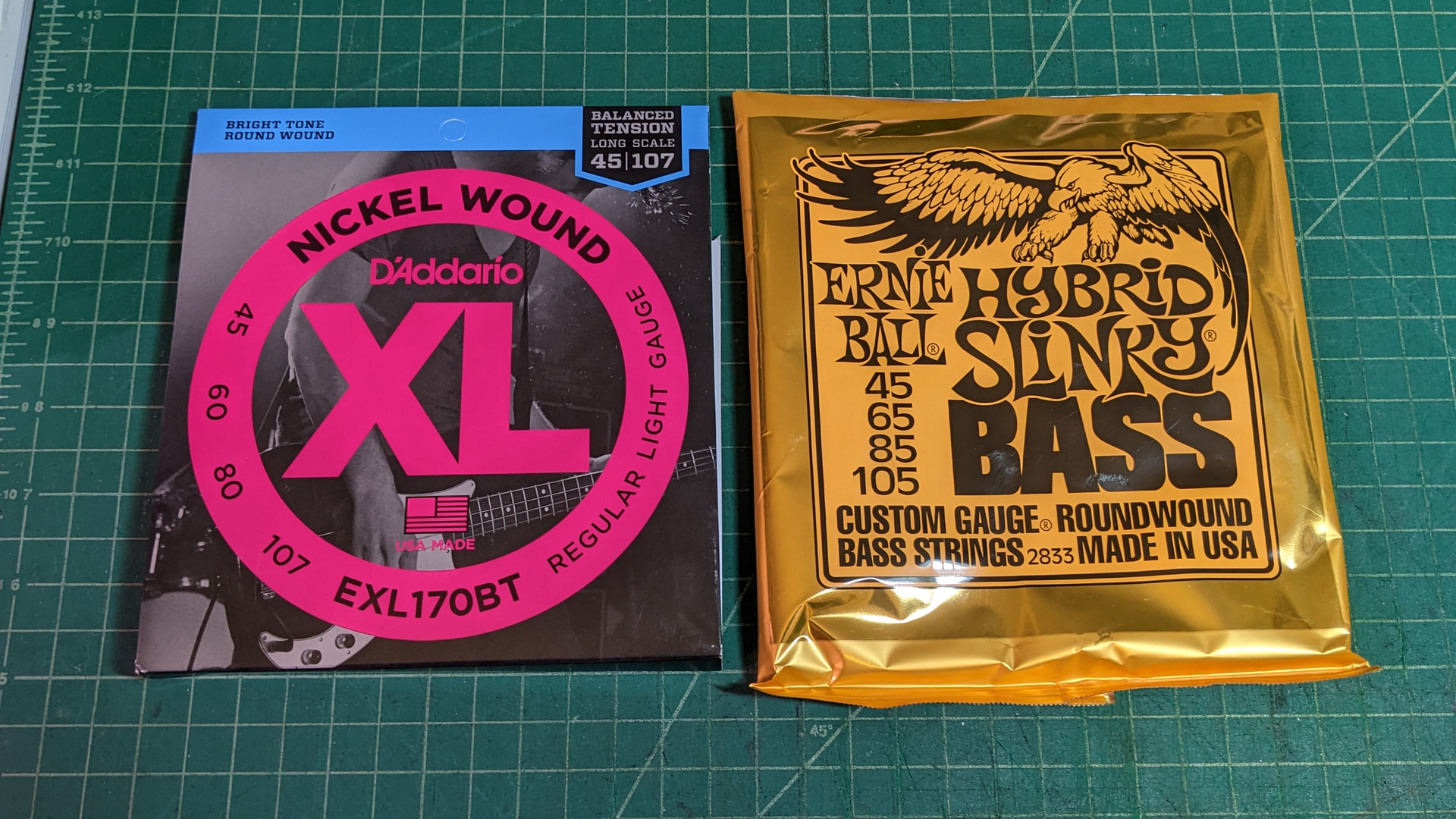
I’ve been keeping a minimum 60-90 minute practice time including warmups, cool downs, and breaks 6 days a week since I started playing. I try to maintain a mix of different skills, difficulties, and easy wins. I play sitting down on a drum throne due to torn cartilage in from my hips subluxing (EDS is so much fun). I have two different long scale basses I swap between but I haven’t particularly noticed a difference in pain playing. I switched to 45-107 strings on my main bass this week, but might swap back to the 45-90 ones I had.

What I suspect is that the connective tissue on the front of the fingertips is the issue so I was mulling over the tape option just to give it extra stability.

2 Likes

My fellow collagen-less friend! Woah, you just drew this? Nice! Could be a biology textbook technical diagram!

I see now. What you’ve drawn is actually pretty similar to what happens to me when I ‘finger roll’ with either my index or pinky, which led me to assume I’m doing it wrong when it could just be the best my anatomy can manage. Essentially, the joint ‘bends in’ exactly like your second image and while it isn’t painful, it definitely requires more force than it’s comfortable with applying for long periods (not unlike guitar barre chords). Until now I’ve assumed this to be a power-through-with-practice thing, but perhaps that’s not necessarily the case. I’ve seen multiple people do finger rolls and they seem to mimic that motion, fretting the higher-pitched string with roughly where your joint/bone is giving you grief.

I’d say try the tape! Perhaps it’s akin to a repetitive-stress injury and rather than getting stronger with that motion, it’s been grinding the joint over time. If that isn’t substantial enough, perhaps some sort of reinforced rubber cover, like a fingerless glove but just for the index to take the brunt of the fretting pressure, or make a bit of a barrier between flesh/bone and string.

I also use a drum chair when I’m not standing. I find I perch less on the edge than if I’m practicing on, say, and office-type swivel chair. Certainly back friendlier.

2 Likes

oh huh you know, it probably was doing finger rolls that aggravated the joints. I’d been making a concerted effort to work on them with all of my fingers to build speed but since it’s only bothering two fingers it didn’t click that might be the issue.

I think you’re right that it’s repetitive stress rather than anything that can or should be powered through. But ya will definitely update to see if tape works.

Thanks for your help!

2 Likes

Hahah, me too! I’m revisiting some of the finger roll stuff in B2B right now and while it isn’t hurting, doing them with octaves is resulting in some fierce ‘claw shapes’ with the index and pinky. May drop Josh a comment and see what he says.

Let me know how tape goes and if it improves or not. Genuinely interested to know and always great to talk to another hypermobile person determined to master something demanding of our dexterity!

1 Like

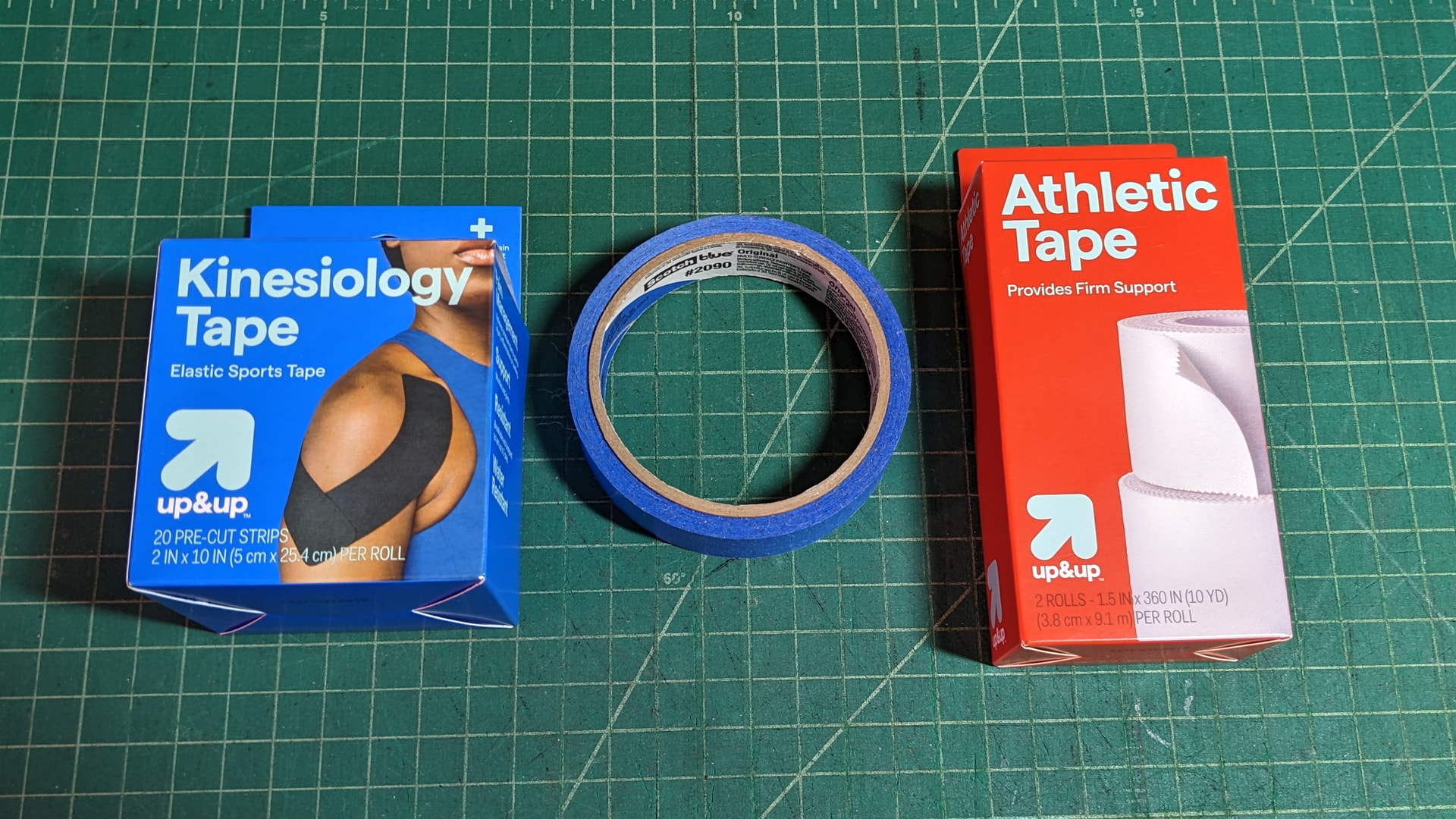
Okay! Wanted to get some proper playing in before reporting back. I tested kinesiology tape, athletic tape, and blue painters tape.

By far the best was kinesiology tape and I will definitely keep using it. I double layered it on the bone and it held up no problem with 90 minute playing sessions including finger rolls and slides. The blue painters tape was slightly stiff but genuinely worked fine, would definitely use it in a pinch. The athletic tape lasted all of 5 minutes before the texture started snagging on the strings and peeled off.

These are the strings that are on my basses. Brand new as of a couple days ago.

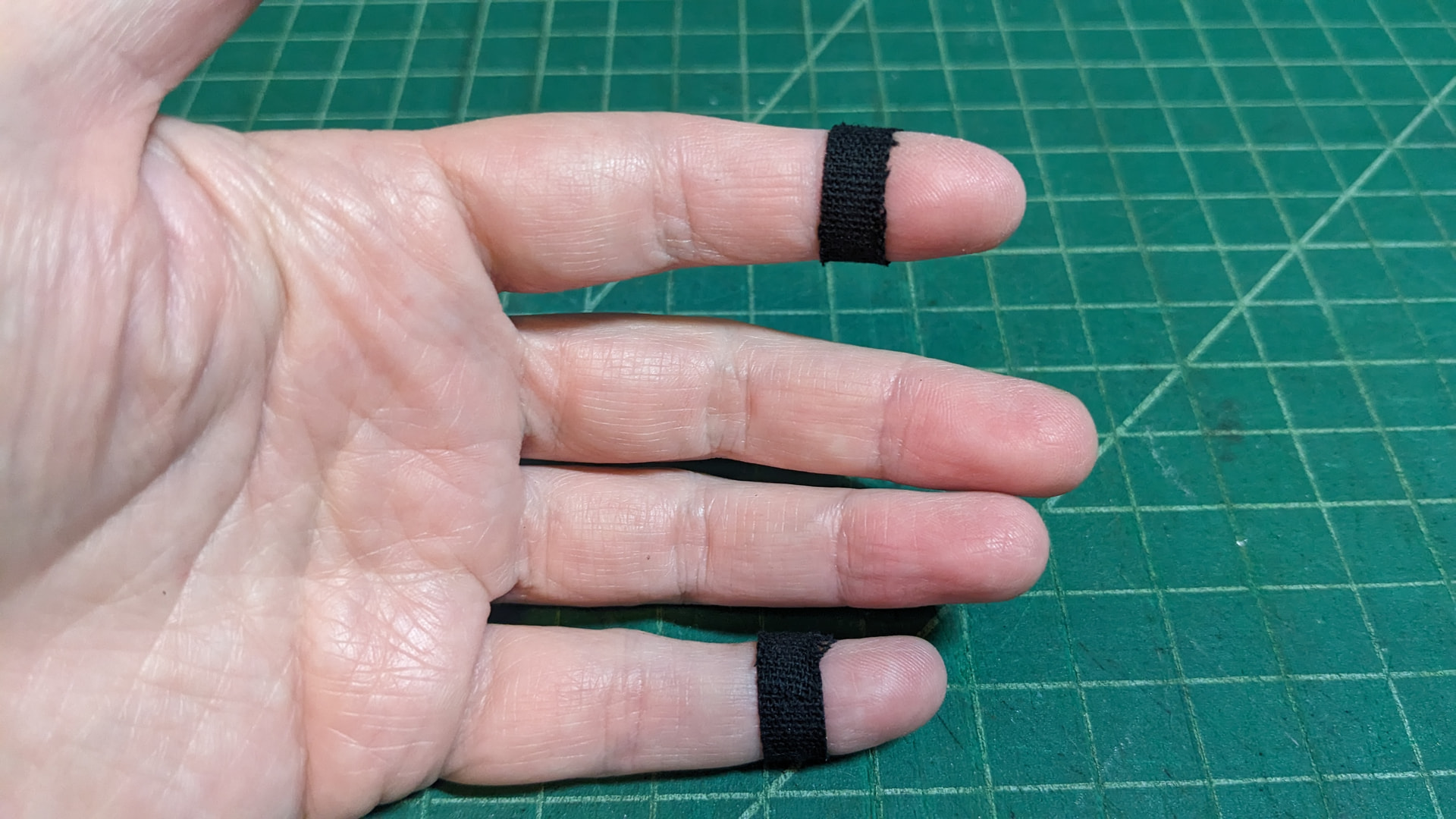
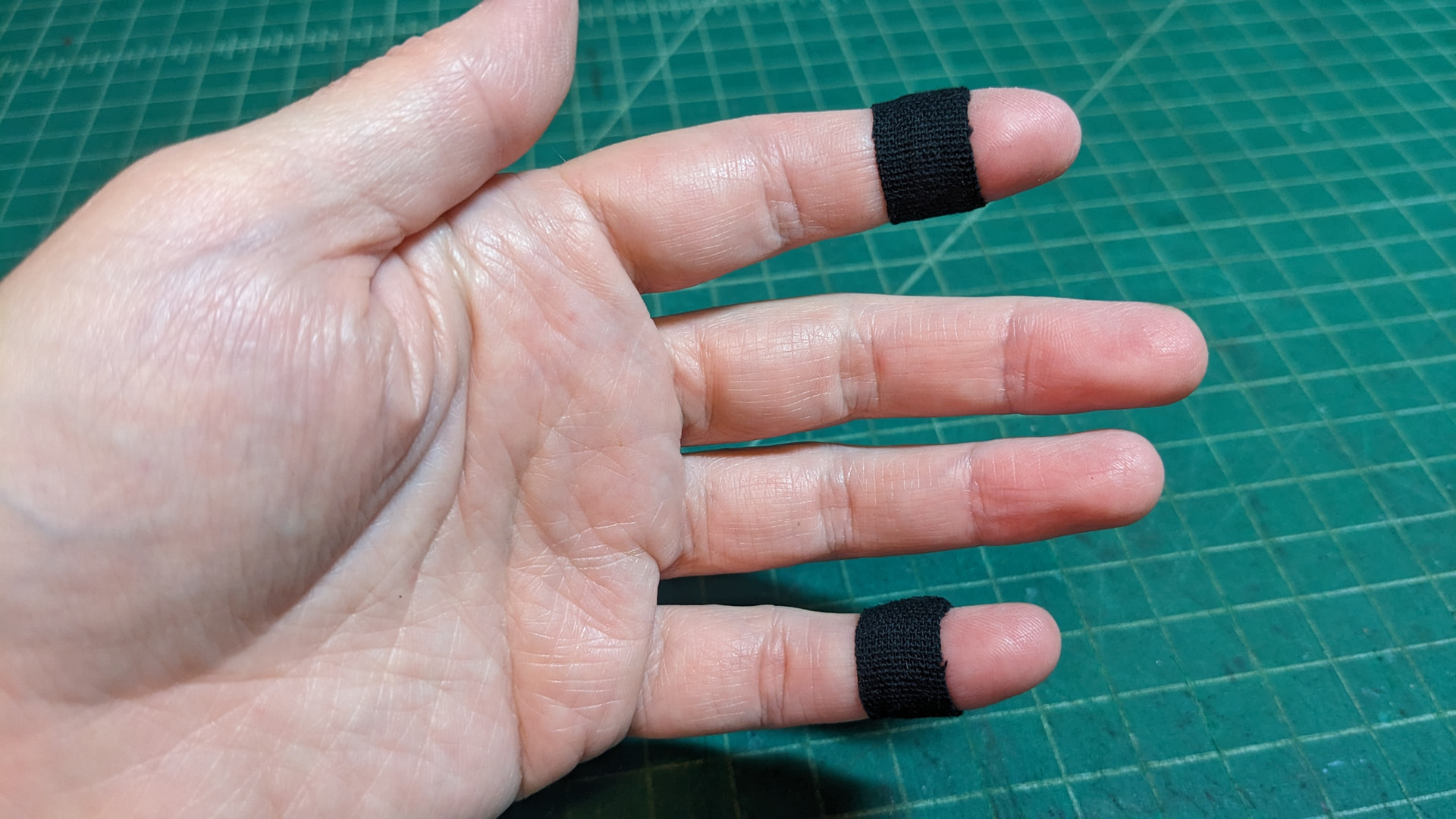
This is how I wrapped my fingers with the kinesiology tape. I used a narrow piece wrapped around the bottom of the fingertip bone for a little bit of padding that lined up with the crease

and then put over it a wider piece that stabilized the joint

It definitely is helping prevent the hyperextension and I’m not feeling the soreness on the edge of the bone.

3 Likes

Awesome, what a detailed report-back! I think I’ll try finding kinesiology tape myself and wrap my pinky like this if finger-rolling roots/fifths with it continues giving me hyperextensions. Thanks for explaining your wrapping process!

1 Like

Sure thing! More than happy to share :slightly_smiling_face: The roll was pretty cheap thankfully!

2 Likes

I’m glad you came up with a solution and the kinesiology tape is working! I sometimes had kinesiology tape on my back (applied by a physiotherapist), but I have no recollection of whether it is sticky or not. Does it leave any residue on the strings? I suppose not.

I agree your drawing is amazing! It also illustrates the problem very well!

I have hypermobility too, and sometimes have subluxated a shoulder while putting on socks, and a finger while washing my hair :rofl: It used to be worse when I was a child (hurt myself almost every time at PE classes, especially playing volleyball). With time my muscles became very tense to stabilise my joints.

Finger rolls can be a problem to me, depending on the finger, and depending on how often I do it. The index and middle finger are OK for it, as long as I don’t do it too often, because otherwise, if the joint starts to hurt, it might take weeks for the pain to go away. I often stack the pinky + ring finger instead of finger rolling.

I have a different kind of problem with my pinky, only when playing something repetitive on the same frets, and going up and down the frets (like, pinky on the 5th fret and index on 3rd, starting with the index on the G of the E string, then pinky on the D of the A string, index on the F of the D string, pinky on the C of the G string, and then coming back). If I keep playing a song for too long on the same frets but just changing strings, soon the third joint of the pinky (the joint between the finger and the palm) starts hurting. I don’t know why this joint hurts. I’m not sure I’m doing any wrong movement. :thinking: Maybe I’ll try filming that hand while playing to see how the joint moves.

My biggest problem playing was with my right hand’s thumb, when anchoring it on the pickup, and putting too much weight on it while playing a Billy Idol song with fast chugging. The joints closer to the tip of both my thumbs bend backwards much more than they should, so anchoring the thumb while putting pressure on it was a problem. My thumb was hurting for weeks. I started to pluck with a floating thumb when chugging on the E string. Lately I can rest my thumb on the pickup, but I have to be aware not to place the weight of my hand on it.

Hypermobility sucks. In my case, I have a lot of muscle tension on my whole body. It sounds like a paradox, but being hypermobile in my case means I’m not very flexible. I have to do stretching regularly (and carefully) but it doesn’t help much.

Let us know how it goes with the tape! I hope it helps!
1 Like

Hey, I just had another idea that could work. Self-adherent tape, the kind that has no glue, but sticks only to itself. It is elastic and you can choose how tightly you want to wrap it. They sell it at drugstores.

1 Like

Nope no residue thankfully! I had considered the self-adherent tape as well but was worried it might shift around with such small pieces. lol yeah my physiotherapist has been getting on my case about taping my wandering kneecaps so I figured it would be good to pick up some regardless.

Filming is a fantastic idea! Since you said you hold muscles very tense do you think that could be a factor? Or maybe something in the way your wrist ends up getting angled?

Yeah I can’t play with my thumb on the pickup at all. It bends the tip of my thumb backwards and causes a lot of pain in the joint where the thumb meets the palm. Pretty early on playing I found a YouTube video where someone was showing how they floated their thumb behind the strings rather than on top with the nail pressing against the bass body. Since I have small hands that ended up working the best for me since my thumb is thinner than the space between the strings and the body. It’s a bit goofy looking since occasionally I will mute the E and A strings from underneath but it’s the most natural way I’ve found for me to play. I figure whatever is comfortable and sounds good is better than what is strictly “correct.”

Seriously tho you’re right the hypermobile life is a weird one for injuries. About 10 years ago I slept funny one night and ever since then my sacroiliac joint will sublux on one side :zany_face:

I didn’t consider that, but it could shift or start peeling off.

I don’t know. Muscle tension could be a factor, or the way that joint moves while playing, or a weak finger. I play a lot with my pinky, though, so it is much stronger than when I started playing a little over a year ago. It feels better for me when I play songs where the fretting hand has to move a little more around the neck. When the riff is repetitive and the hand stays around the same frets, just playing notes up and down the same frets, that joint maybe experiences fatigue? I will eventually film it to see whether I notice anything.

Interesting! I think I have never seen this. The version of floating thumb I saw and tried is with the thumb resting on top of the strings. But we are all different, and when something works it can be a good tool. Whatever feels more natural. :+1:

Yes, weird things can happen during sleep. :sweat_smile: Many times I woke up with my neck, shoulder, knees or an elbow hurting. Now I use a lot of pillows to support my body in a comfortable position, because I sleep on my side.
The sacroiliac joint is one most people are never even aware of. I hurt it once going up and down the stairs too many times in the same day, carrying stuff. Later I didn’t know what was hurting nor why. It turned out it was that joint.

1 Like

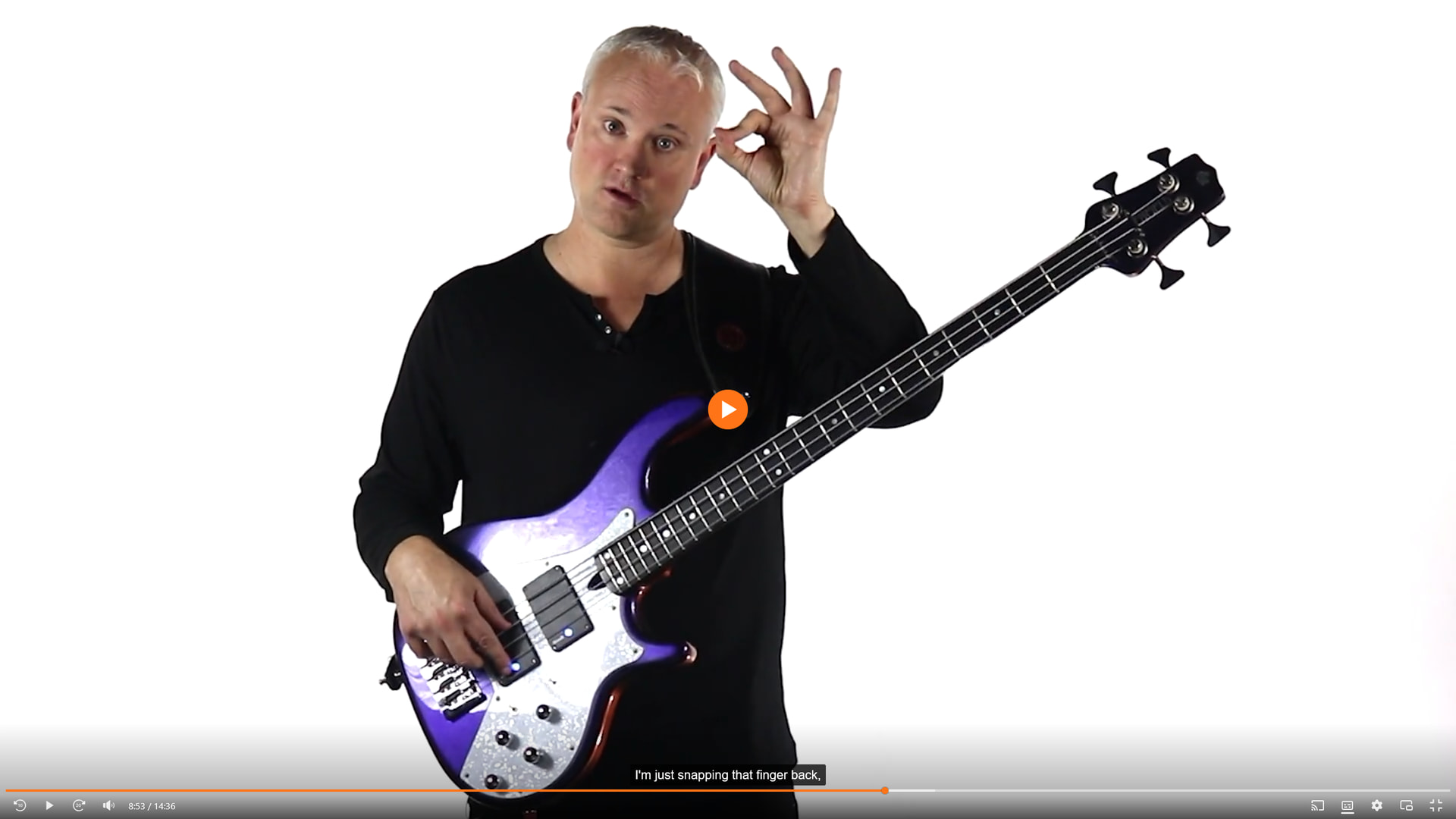
So I’ve just started TalkingBass’ Groove Trainer course as something to work on post-B2B and was reminded of this thread. Mark refers to pretty much that exact ‘flexing in’ of the joint we’ve been talking about as ‘joint barring’. It’s basically the same as the finger roll in that it’s a technique used to reduce the time gap between two notes played within the same fret, but his demonstration of it looks identical to the ‘bend in’ of the joint I was experiencing unintentionally sometimes. So hey, if it doesn’t hurt and it’s replicable, it’s a technique!

Like Josh, he also suggests pulling back with the forearm as well, so the finger itself doesn’t have to be applying too much force in the motion.

2 Likes

ha! I mean for reals for reals right? That’s fantastic tho that the bending is something you’re being able to put to good use in your playing! Mark is such a great teacher.

I’ve been taping my fingers as needed for the last month and I’ve definitely found a huge improvement with the pain and irritation of my fingertip joints. I’m genuinely pleased and will definitely be keeping up taping as needed. If only the problems with my other joints (and guts, and autonomic system) could be fixed with some tape :rofl:

2 Likes

Super happy that it’s been working out for you!

1 Like