Don’t you be startin’ that shit up agin boy!
3 Likes
grabs the popcorn and grins
3 Likes

Amazing the pain that can be avoided by simply resisting YOLO-ordering
2 Likes
I think we have discussed our knobs enough 
2 Likes

1 Like
What’s up with locking tuners?
I’m apparently very inspired by @howard on this guitar concept 
I’m so glad I wasn’t drinking my coffee when I read that..
4 Likes
I like them because it makes string changes really fast and easy. It grabs the string so you don’t need to wind it around the post; just put it through, lock them, twist a little to tune up, and snip off the excess. DiMarzio even makes some that cut the excess strings off for you
Not sure why they don’t exist for bass.
1 Like
I think that locking tuners may have been made to improve the tuning stability when using a vibrato, this would explain why there is no locking tuners for bass
2 Likes
Yeah possible!
Personally I love the convenience.
2 Likes
Bass VI says “Hold my beer”
1 Like
Okay folks! I finally got around to editing some footage to share. Sound test in the next video!

2 Likes
I wonder if the pots have been replaced ? they look like CTS’s
The part at the back of the headstock is for allen keys for the trem, yes.
1 Like
Pretty sure I did see CTS printed on one. Not sure if original or not. I hope to learn more soon.
This guitar had the neck pickup added in the late 90s, and then later I vaguely recall having a family friend do some work on it as well. I don’t recall exactly what they did though. I ‘think’ they changed the neck pickup and filled a couple finish cracks that existed at the time. I have more to say on that but I won’t spoil the sound test vid just yet…
1 Like
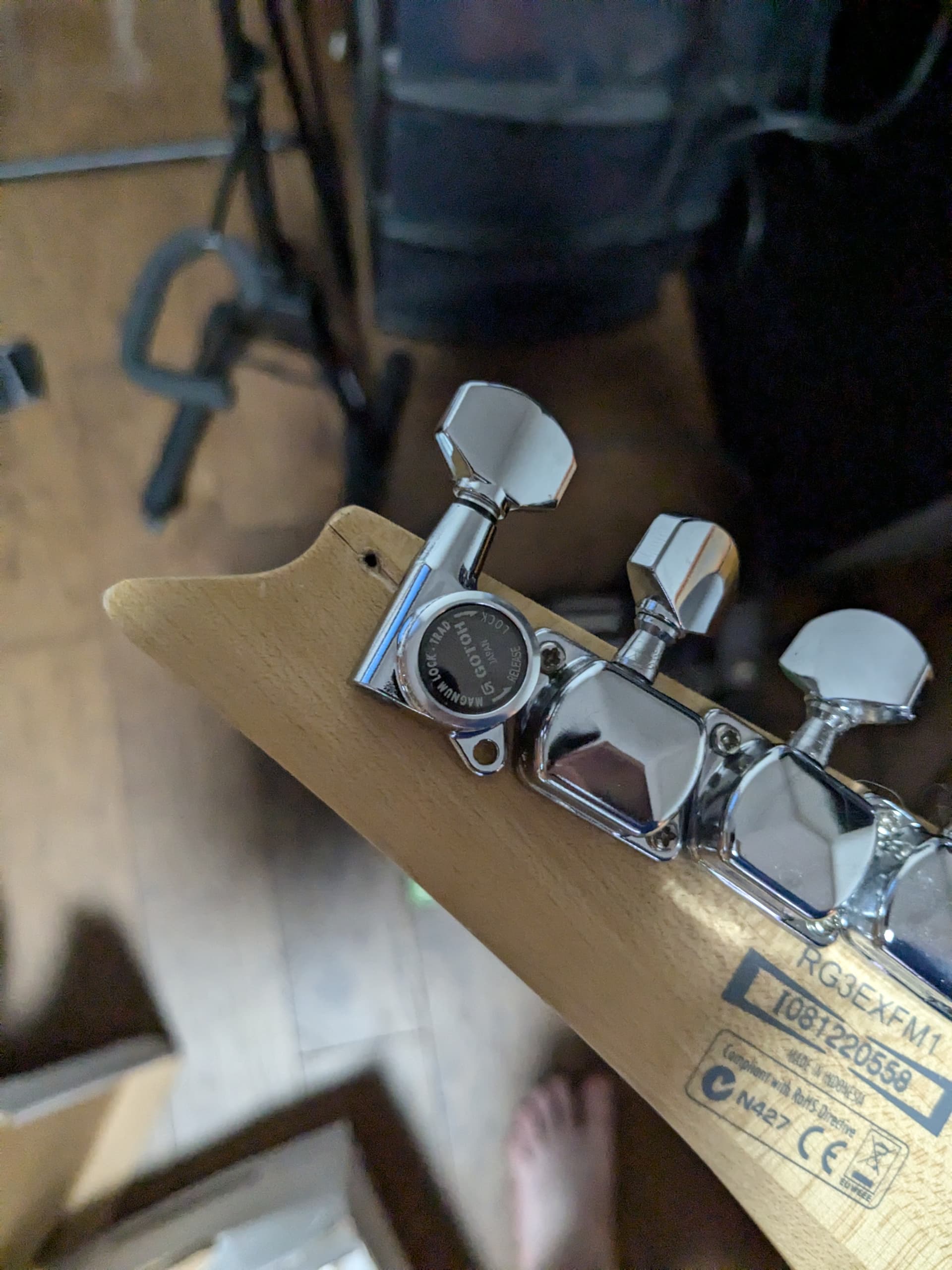
Ok modders and carpenters, what’s the best way to keep this crack from growing or becoming a big problem. It seems like it runs full depth along the grain from that corner to the first tuner 10mm hole then stops:
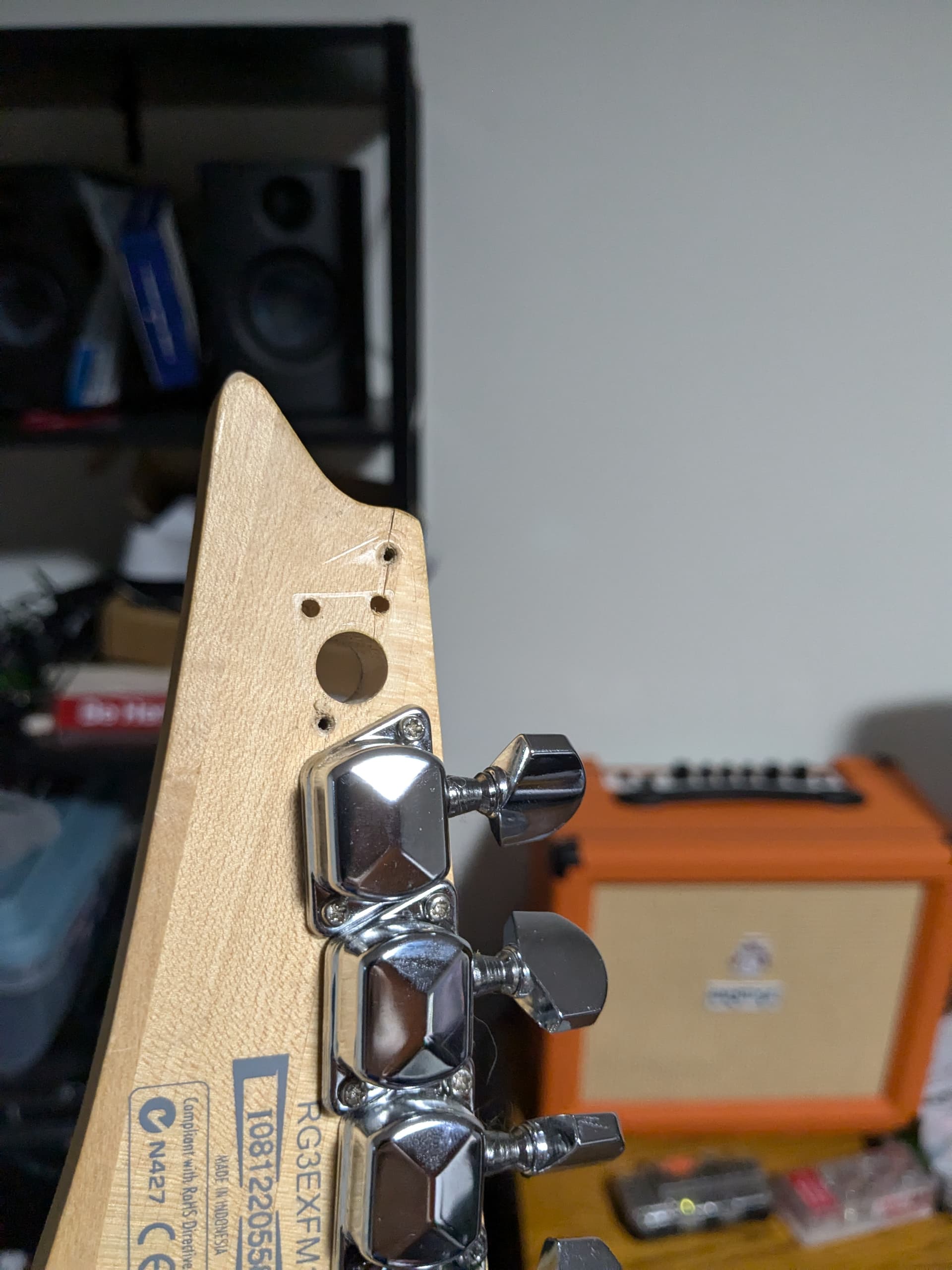
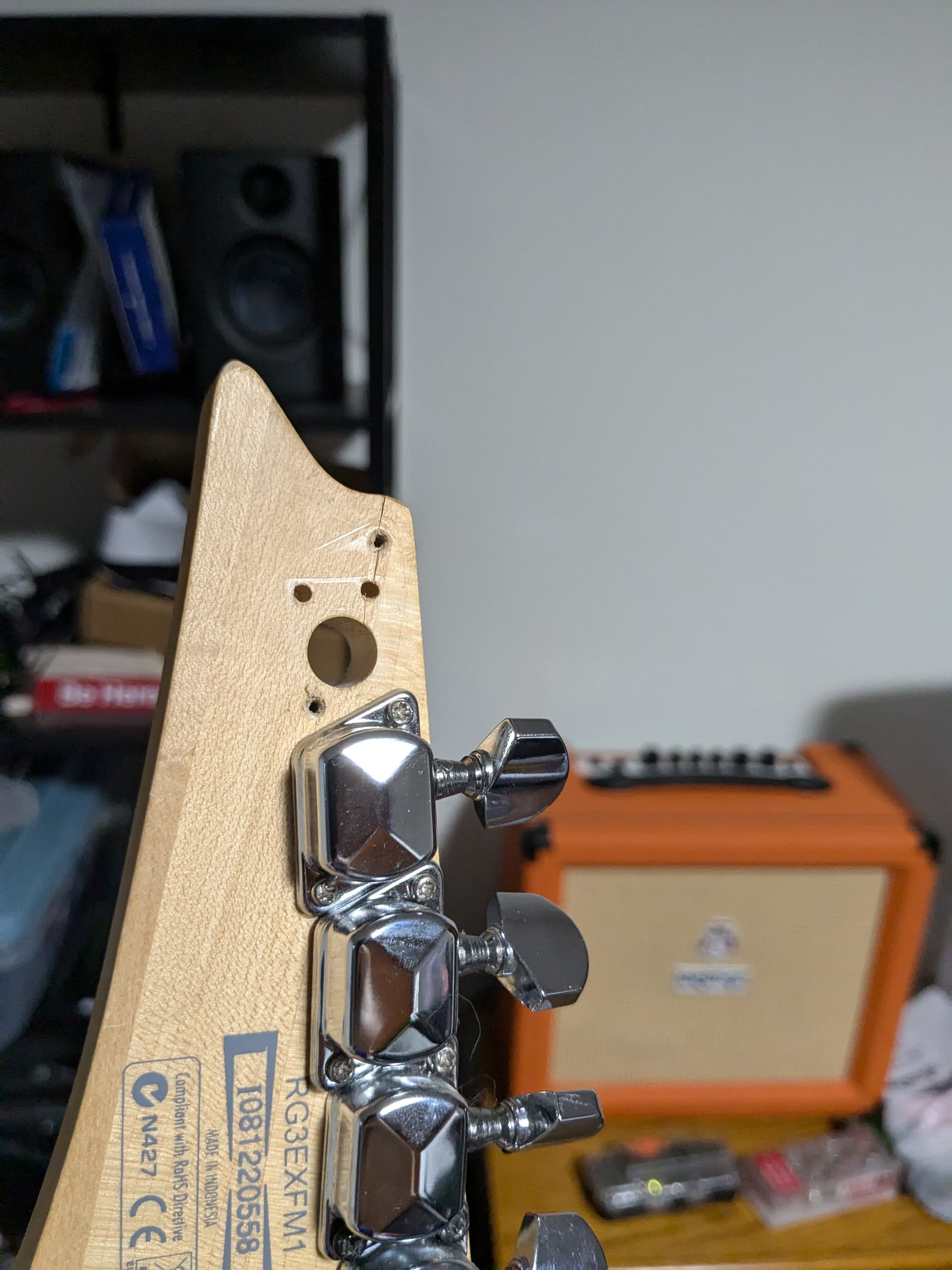
I have new tuners that won’t use that screw hole, mostly because I don’t like how close to the edge it is.
I’m inclined to wedge the crack open a bit, drip some titebond 2 in there, and put a couple pin nails in to help keep it in place. I could cut a wedge and clamp it without the nails, but I kind of like the idea of having them there to reduce the chance of continuing to crack down the grain. I guess the real quick and dirty solution would be something like 18 ga nails from both sides relying on those to hold it together, but I like to think I’m not quite that much of a wood butcher.
I also want to fill the screw holes the crack runs through to increase strength, what’s the best way to do that? I think the best way is drill those holes out to 1/8" and dowel them with maple, but I don’t have a way to make 1/8" maple dowels easily. The new tuners need screw holes close enough to the bottom right hole that I definitely need to fill those.
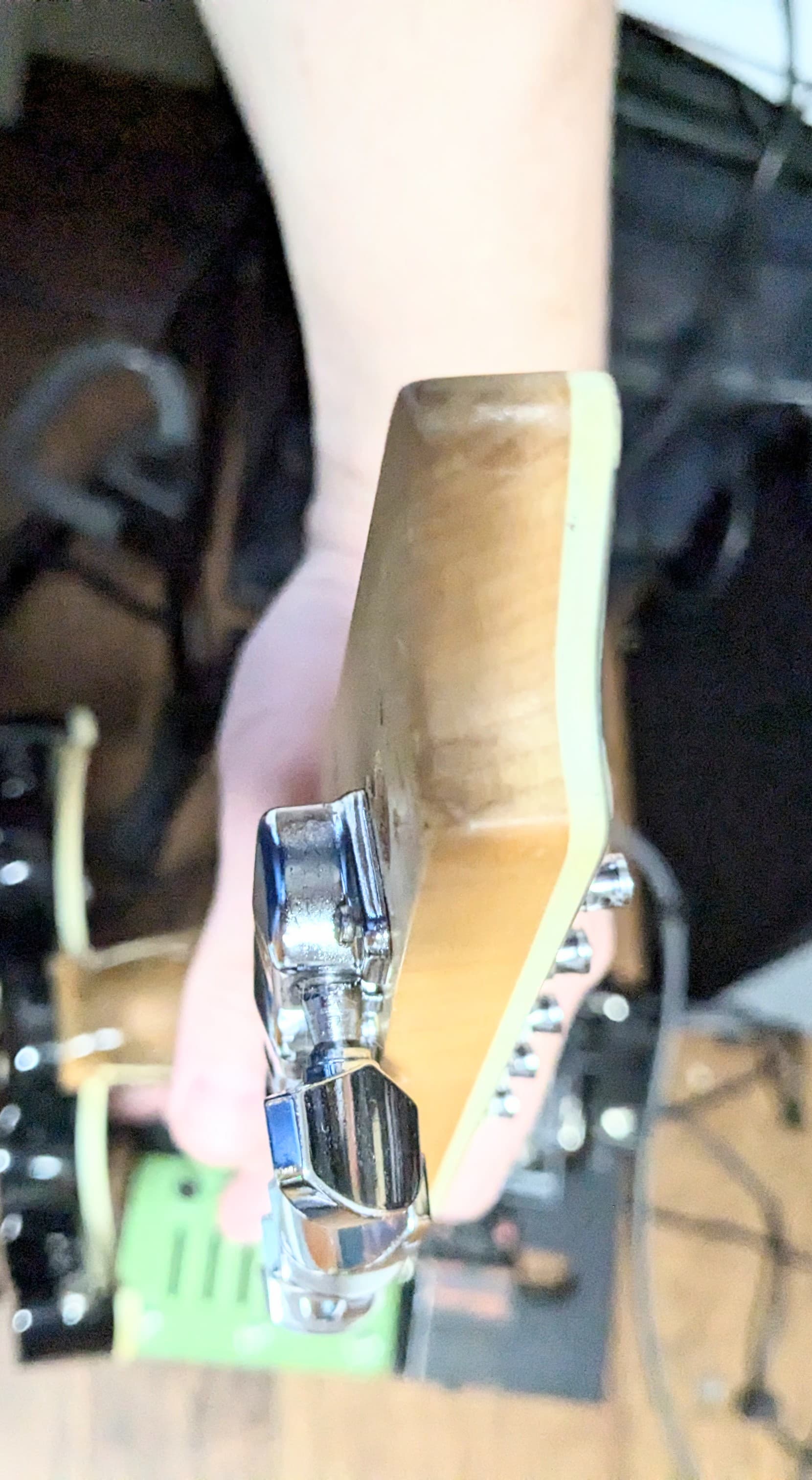
Here’s the new tuner mocked up for reference.
2 Likes
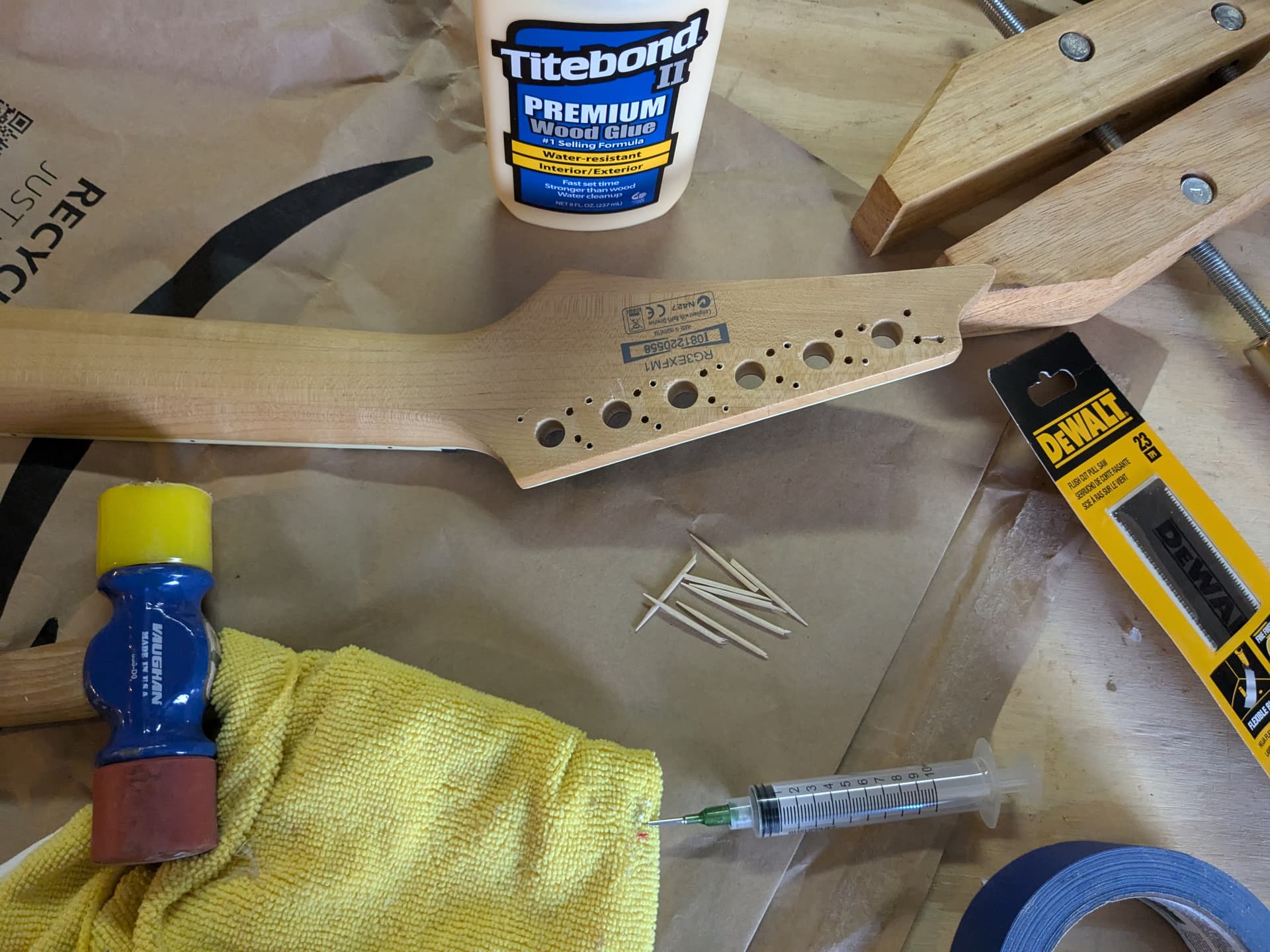
Just pour some wood glue into the crack, then clamp it to keep it tight during the curing process and it should be fine ! Also you can glue a toothpick to fill the screw hole
1 Like
+1 toothpicks make excellent dowels for screw holes. Drill them out a little if needed then dowel.
What about bamboo skewers? That and toothpicks are the recommendations I found googling.
1 Like
I tried both and tootpicks takes the wood glue better in my experience
2 Likes