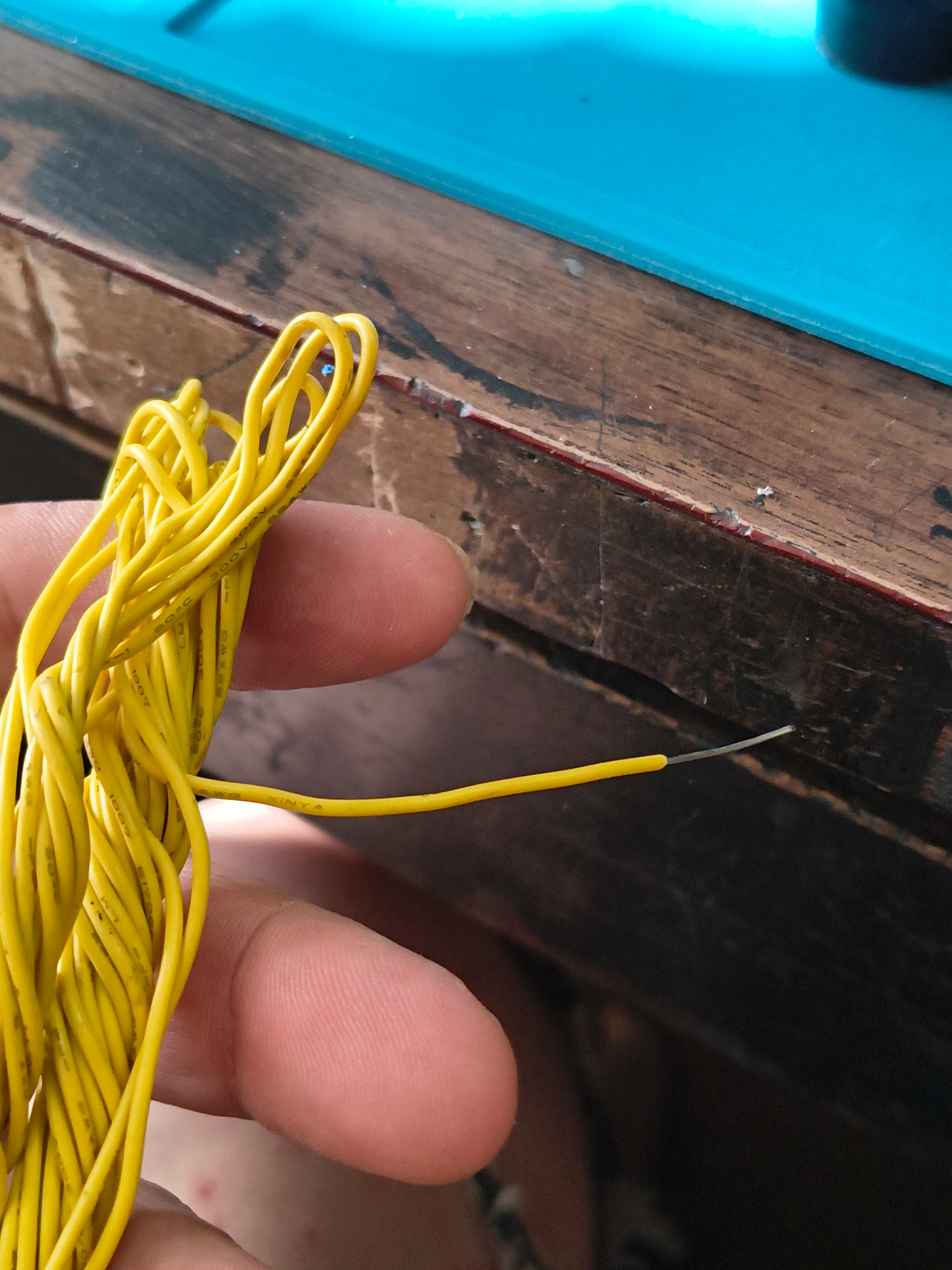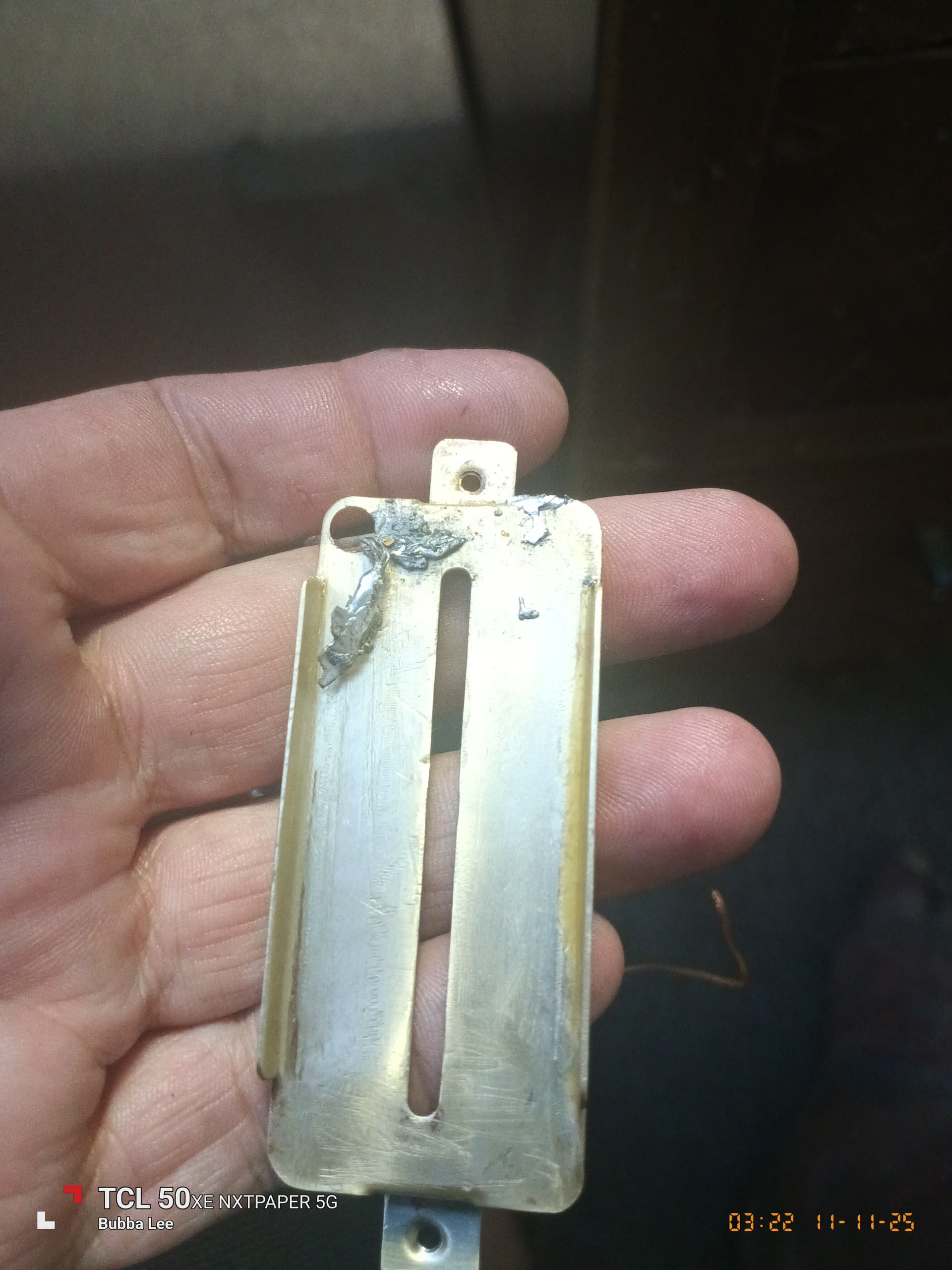
Go to your local hardware store and get some fine grit sand paper (like 400 grit) and Oatey’s tinning flux (it’s in the plumbing aisle). At the drug store (or walmart), get some rubbing alcohol that’s at least 70%, and a cheap toothbrush (or use an old one you have at home that you can sacrifice to the cause). You might be able to get all of this at Home Depot or Lowe’s or the like.
Lightly sand a small area on the plate to get bare, clean metal, and brush away the filings so it’s clean. Dab on a little tinning flux and heat it with the iron until you have a shiny, tinned surface where you sanded and applied the flux. Clean away the flux residue with rubbing alcohol and the toothbrush. Then dip the end of the wire in the flux and heat it with the iron to tin it, too.
Finally, add just a little more flux by dipping the wire into the flux again, and solder the wire to the plate. Clean it all up thoroughly with alcohol and the brush.
The flux helps the solder flow and removes mixed impurities from the solder joint as long as the metal surface is relatively clean and not overly oxidized (or enameled). The tinning flux specifically also has solder powder blended in to help tin the surfaces, making the solder joint form more easily.
(I’m a radar/communications electronics technician by trade.)
Thank you J.Davis, I truly appreciate that man. I have everything you mentioned except for the tinning flux. I have flux but it’s not tinning flux. Plus everything I buy from the stores has to be delivered. Cuz I’m stuck in a wheelchair and I don’t have my own ride. Or have the energy to push myself and catch the bus. But I’ll see what I can do about getting some tinning flux. I soldered one more time. But, I don’t have high hopes on it. It didn’t look promising at all. And once again thank you very much I truly appreciate it man.
What I’m doing is bringing my pickup out of my first bass. Which was a Maxon mini humbucker. Only thing I have left for my first bass was just to pick up cover. Few months ago about two Maxon mini fakebuckers. Then just a few weeks ago, couple months ago probably. I had an idea of bringing my Maxon mini humbucker back to life. After 30 something years!. I will upload a picture of my mini humbucker later on.
Once again thank you, and I’m going to definitely look into that tining flux. The the way you spoke of it, and knowledge of the trade you do. Sounds like it would definitely help my guitar building repairing soldering skills dramatically.
It’s been a long time since I ever had an solder act like that. I went off on Walmart on the review. Because I bought my first iron from there for 10 bucks it was an ever start iron come with a little thing of solder and the iron. Till I was on YouTube and I seen a video. That was called 10 things you should never do to your soldering iron. All 10 things they mentioned of not to do never to do. I did it all
Anyway needless to say I got better at it but there’s something missing I still didn’t look right it still wasn’t acting right.
I appreciate you man and once again thank you very much and I’m going to get some sleep and then I’m definitely going to check into that
I usually recommend the tinning flux because it’s a little easier to work with on pieces with a lot of mass, but regular flux can do the same job especially if you have a hotter iron or a soldering gun. The biggest trick to it is getting the surface and the wire tinned for the joint, because solder likes to stick to solder. If it helps, Oatey’s No. 95 tinning flux is available on Amazon.
I wish you the best of luck! I plan to hang around the forums, happy to help if I can.
I just bought some of that yesterday or last night. I wish you’d be here with the rest of my order. Except it won’t be here till Monday
Again thank you very much man I appreciate it
First heat the wire then apply solder to the wire, heat the metal then apply some solder, then solder together.
A high out put iron is best.
That’s what I try to do all the time. My brain don’t work like that all the time. But always try to remind myself to heat everything first. Then add to solder.
Then it works…
Yo Bubbas, please tell me if you know, why is there a small cavity under the bridge of basses? It looks like an imperfection but I think I see it all the time.
It’s for a ground wire to go the underside of the bridge.
Some Fender-shaped instruments also sometimes have a cutout there for a brass block that sits under the bridge. My MIJ P-bass had one.
Does this block connect to the bridge and are all things grounded? If so where does the ground connect or end?
I read an old post where you spoke about slap’in bass, Is slap something you do?
Slap is new to me and I’m doing some short grooves and lots of now double thumb exercises. It’s my new direction and I practice slapp’in on a Fender Marcus Miller - it is meant to be…
There isn’t much slap talk on the forum and no dedicated thread, maybe if more people become interested someone will start one.
The block does touch the bridge and the bridge grounding wire. The ground wire runs between the bridge and the output jack ground (regardless of whether the brass tone block is there).
Sometimes the bridge wire gets soldered to a pot, sometimes to the jack, but like everything else on the ground side of the circuit it eventually is connected to the output jack ground terminal.
nope, not my thing. I tried it during the course and occasionally afterwards but don’t really like doing it.
Thanks for the info on grounding.
Otherwise I’m going slap happy, maybe even mental…
I’m Loving Marcus and Dr. Funk huge lately and will work the funk until I own it.
An update on my Maxon mini humbucker project. I was able to the ground wire soldered to the base plate. I’ve got it completely together. Now I just need a bass to install it.
No the ground wire is soldered to the base plate of the humbucker pickup. So I can have a four wire humbucker pickup.
I do not know why there’s a small cavity under the bridges a basses. Out of all the basses I’ve taken apart and work on. I’ve never seen a small cavity under the bridge. Unless you are referring to the indentation that is put there from the ground wire. Then that’s because two matters cannot take up the same space. There has to be some give and take. Between the body of the bass and the bridge. Since the body is softer than the bridge. The ground wire ends up putting an indentation in the body. Did I answer your question. My apologies for taking too months.
Hello Jimmy Wishbone, I use solid copper tinied for my bridge ground. I just cut off a little section of what I need strip the wires, and she’s pretty much done. The little cavity that you see that I believe you’re referring to. Is from the way to the bridge pushing down on a solid wire causing a little indentation in the body. Which you don’t really need to worry about it as long as you getting it tuned right is set up right and an internet or right You all good.