That’s so awesome man. You should sell this.
4 Likes
Thanks @Al1885 ! Very kind of you to say. This one however, will never be sold! Even if I make 1000 basses, this will always be the first and I will always hold on to it.
7 Likes
Yes I meant the custom knobs. It’s so cool. I paid almost $50 shipped for my Acoustasonic Striped Ebony knobs.
2 Likes
I put Quarter pounders on a Squire P-Bass also, really woke it up. I was also thinking about a high mass bridge.
2 Likes
I don’t know that the hi mass bridge does anything for the sound, but it does look cooler and help a little with neck dive.
1 Like
Same thoughts! I can’t leave anything stock!
4 Likes
My Man!!
5 Likes
Oh I think it does for sure. Changed my Squier J considerably.
1 Like
How so? genuinely interested
1 Like
I have all kinds of barely used take off auto, truck and Jeep parts in the garage, shed, attic and even in the house!
1 Like
I think it depends on what model Squier, I came across a Chinese Affinity that I can bend the back plate with my hands.
The Fender non-badass hi-mass bridge may not be as dramatic.
Ah , that makes more sense 
Not a bad idea! Thanks!
2 Likes
lol yes that’s pretty bad.
Honestly it has to be better though. The L-bend bridges never get all that much better than that Affinity bridge. They just look and feel like some kids first-day metal shop assignment. Here kid, take this flat piece and learn how to use the drill press and sheet brake.
1 Like
I remember a few things (it’s been a while)
- more sustain for sure
- A “deeper” color of tone
- And of course helps stay in tune better.
2 Likes
Can you explain that? 
Bass players: SUSTAIN!
Also Bass players: You should try putting a sponge under your strings
10 Likes
I recently swapped the stock, bent plate bridge on my p bass for a high-mass Gotoh 201B-4, mostly for looks (swapped out all the chrome hardware with black). Other than looking better, the only functional difference is it does noticeably help with the slight neck dive the bass had. I don’t notice any difference in tone or sustain.
3 Likes
Sustain is when a note plays longer than you need it to 
2 Likes
It’s been a long time since I put a high mass bridge on, however, I always felt like the tone was just cleaner and clearer after it went on. When I upgraded that base, I did it one thing at a time and tried to notice changes. All that said, it was very early on in my base journey, and I could totally be making up all of it. We tell ourselves a lot of things to justify what we pay for things and what we do.
3 Likes
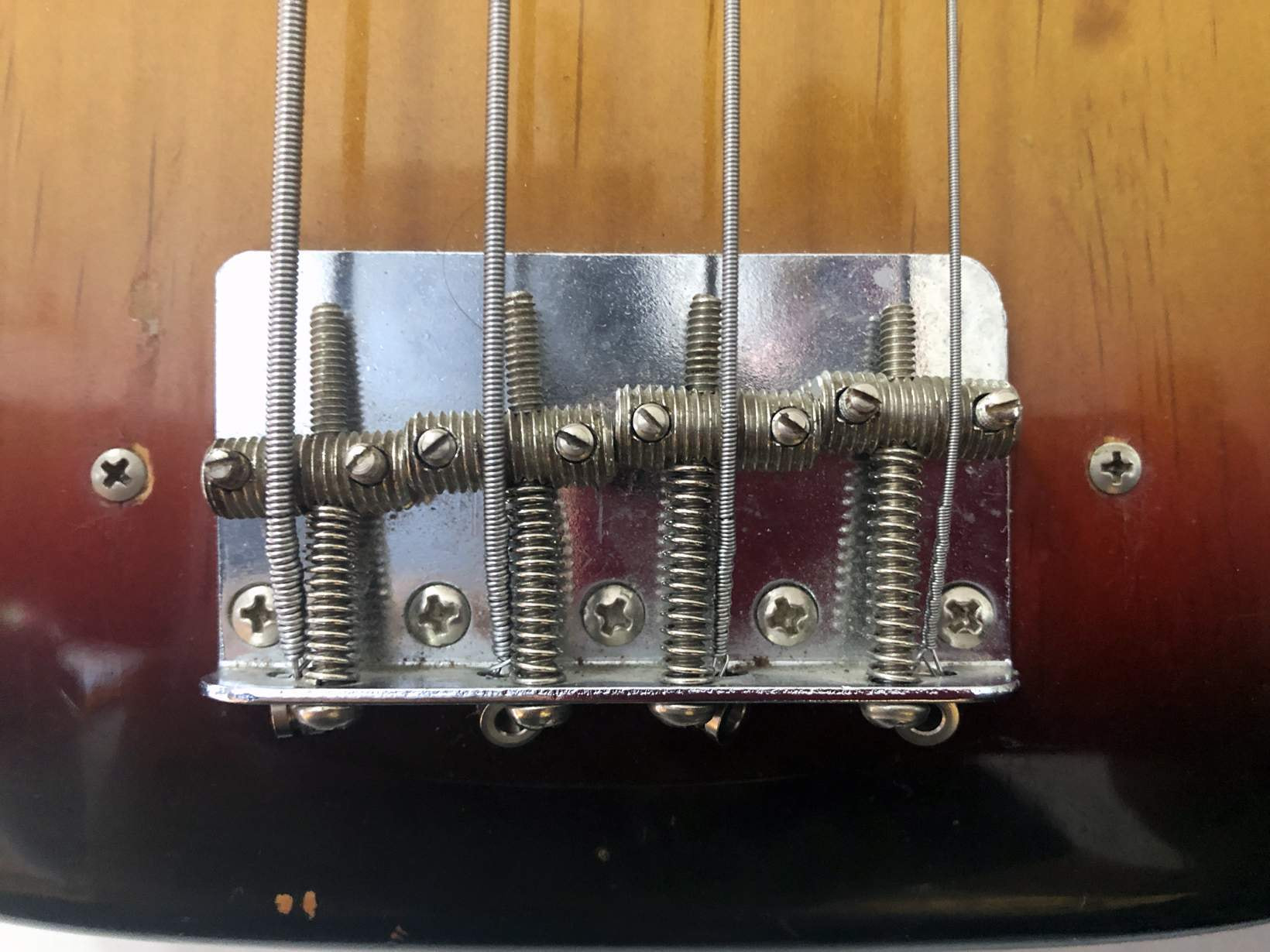
While I don’t think it is the case in the current bridge discussion, changing from old serrated edged saddles to ones with a single slot or groove I think would be an improvement perhaps in tone, intonation and/or sustain.
At least that what I telling myself to justifiy the replacing the bridge on my Sire P5 with an AlBridge parts one. 
Here’s an example of a vintage (Fender) bridge with serrated saddles.
2 Likes