Watching Josh Fossgreen’s lessons, I noticed he has long fingers. I have short fingers, and arthritis in the thumb and wrist joints makes playing a 34-inch bass difficult. I am 73 years old I played an upright until last April, and I learned to “cheat” by shifting and pivoting like crazy. I replaced the upright with an Ibanez UB804 upright, which is more comfortable, to play at church. But I would like to have a bass guitar to play for fun, and learn bass parts I always wanted to learn for over 60 years. Would a shorter scale bass be better for me in my situation, or should I try to keep slugging it out on a full scale bass and use a lot of shifting?
I might be reading this wrong, but I’m not sure that a short scale would help here. It’s going to be the same vertical distance that your fingers need to move to get to the E string. A 30” would help if you have short arms, eh?
Agreed. The neck width will be essentially the same between short and standard/long scales but it’d be worthwhile to try different neck shapes/nut widths to see what feels better (and narrower may not be better as it could be a more cramped feeling). As far as scale length, that would mostly be arm reach as you mention, but it’s worth noting that not all short scales are the same. For instance, my Beatle bass is a 30” scale, but the neck is as long as my StingRay5 34” and similar distance from the bottom strap button to the nut because the bridge starts further in on the body. The frets are slightly closer together still, of course, so it could help finger spreading. But so does micro-shifting. But if getting a short scale because of arm reach, it’s still worth trying out in person to see if it’ll work and not rely on scale length alone.
2 Likes
I agree with you about neck width. Arm reach is not a problem; I simply have short fingers and arthritis that make stretching the fingers difficult, but I have been micro shifting for years on the upright. My new Ibanez UB804 is a 34-inch string length, and I’ve been using the Simandl type fingering on that and it works well. My only concern with a short scale is that I may be better off with a 34-inch just to stay familiar with string length.
I think the best and safest way to go would be to visit a music store and try out some short scale bass guitars. This way you can experiment playing and see whether they would be a better option for you.
I hope you will find a bass that will suit your needs and will make playing an enjoyable experience.
PS: try different models. Maybe a jazz bass could be more comfortable to play than a P bass, because the neck is narrower.
1 Like
I have arthritis and a torn tendon, and I find a short scale much easier to play - and by easy I mean without pain. With long scale the extension of my arm creates stress and stretches the fingers more. Ouch.
The arm extension makes a big difference so I think it might help using a short scale
Here’s a quick test you can do at home.
- Tune your bass down a full step
- Grab a capo and put it on the second fret
- Play. your scale length is now close to 30" like a short scale, and the fret dots line up pretty well
It’s a good approximation and will tell you if it helps. As my grandaddy would say, one experiment is worth a thousand expert opinions
The frets are narrower and there is less stretching on a short scale over all which may help as well.
3 Likes
Dear Wombat-metal (what a great ID!): I’ve been working with a fretless Squire Affinity PJ, and given the shape of the neck and the nut width, it’s not bad but I still have to stretch. I am also testing a Sire Marcus Miller 30 inch bass and I must admit it is much more playable for me. For example, Michael Jackson’s song “Billie Jean” I can play comfortably on a shorter string length; on the longer I have to keep shifting.
2 Likes
Stretching makes a big difference to us old dudes. At least this one. Pop over to the Short Love thread some time. Shorties made a world of difference for me.
1 Like
This sounds like you have the answer you need.
If a shorty works better for you, go with it. The only people who might notice are other bass players, and they aren’t going to think anything of it.
I’d like to amplify @kamikos point re bridge position on a short scale and how much of a difference it makes. Here are pics of my Tim Commerford Stingray and my Fullerton Deluxe Fallout, both short scale basses. The nut and first fret on the Stingray are a couple of inches less reach than the Fallout, which plays like a long scale, reach-wise.
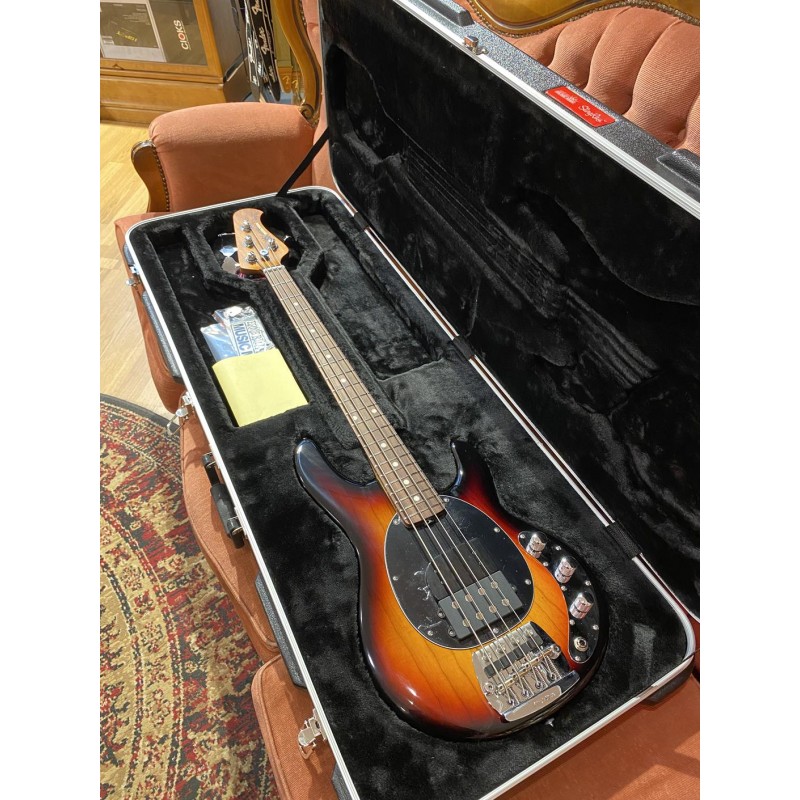
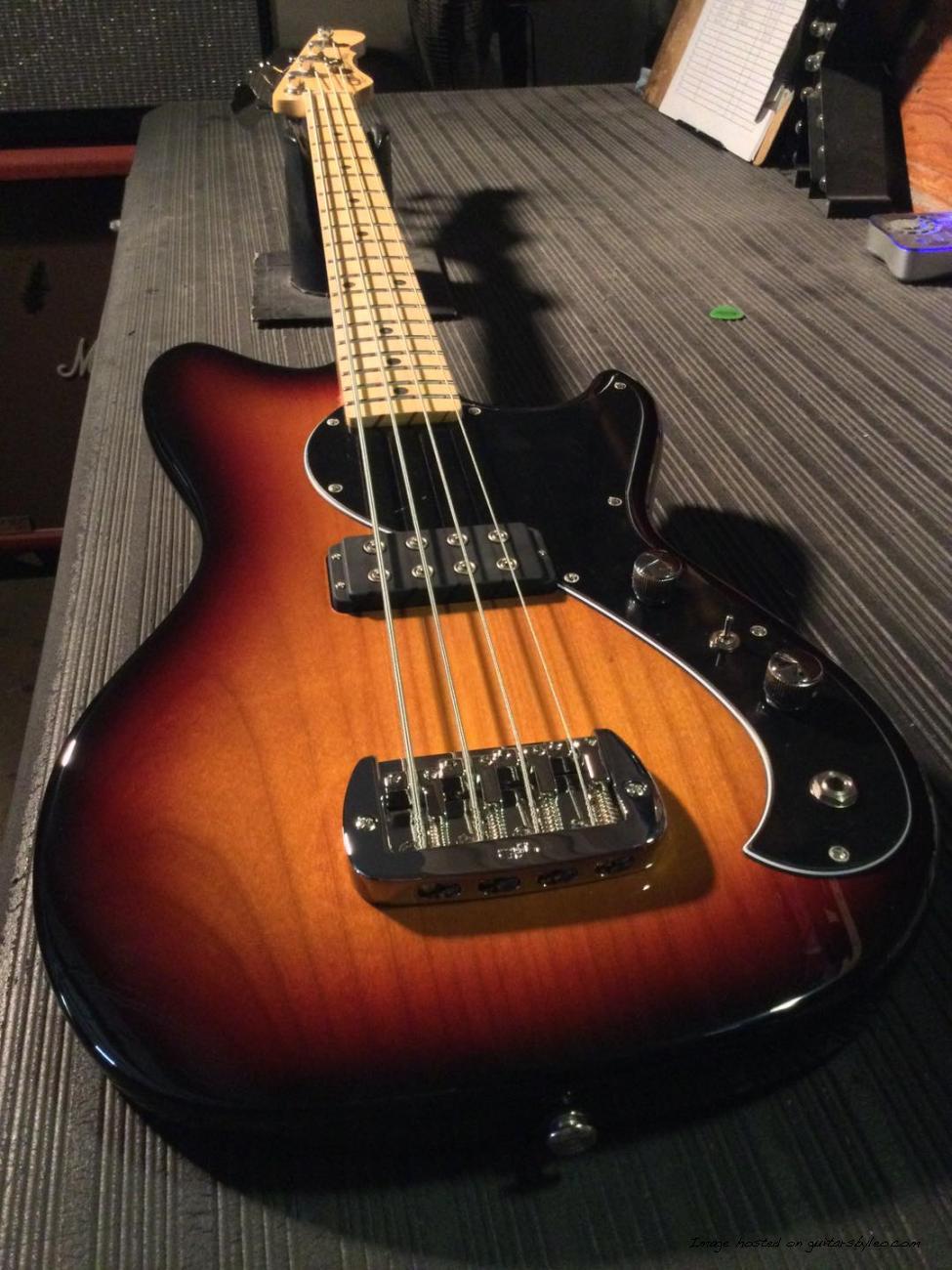
4 Likes
To follow on, here is another example
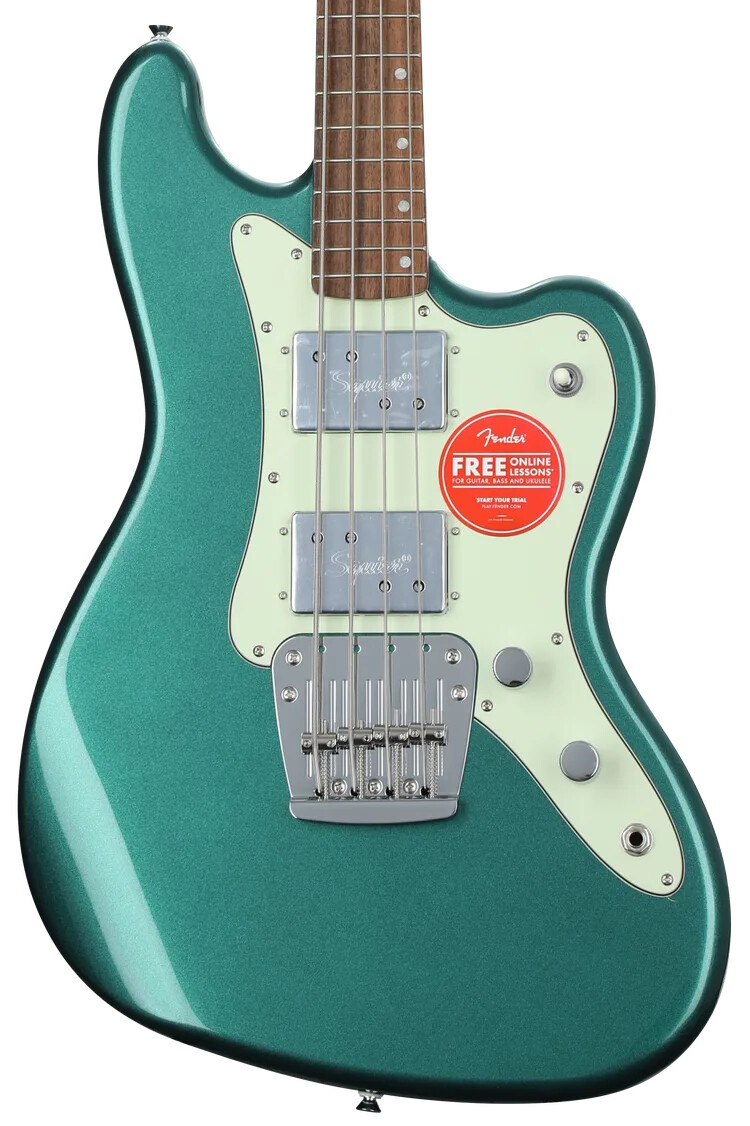
Squier Rascal, which plays like 34" scale
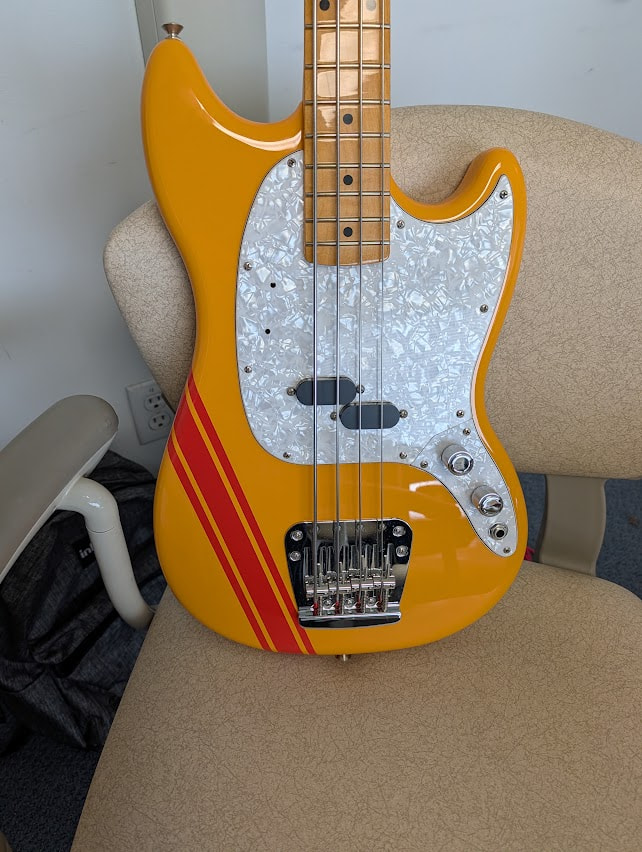
Fender Mustang. Which plays like a short scale. Same bridge on the two basses, but the placement of the bridge on the body makes all the difference
2 Likes
I recently got a Reverend Wattplower and am loving it. Switching between that and my regular scale bass is pretty simple: for me the short scale has less micro shifting–not much else. But the neck is small and I like that. And it’s very light. If you watch the vids with Mike, he’s pretty much saying it’s designed to be played for more than a hot minute by an old guy like him!
Not me. {cough.}
1 Like