Choose the future - choose METRIC!!! 
They told me that in primary school and taught me metric. Then they said nope, silly metric and taught me English units in secondary school 
You can still adjust your poles individually and not have to mess with raising or lowering the pups. Get them close by adjusting the pup and fine tune the poles.
2 Likes
Ok, so … for the first time since I have the DP126 I am thoroughly enjoying playing them.
It’s not maximum orgasmic joy, like on the EMG GZR, but this could be very nice foreplay (to remain in the metaphor).
What did I do?
I played every string repeatedly and lowered the E/A PU until the E volume matched the D.
Then I adjusted the A side by lowering so volume matches D and E. Then I lowered the G side so volume matched all others.
All done with measuring, not by ear.
I had to lower the E pole piece too, as the difference was quite high (did this first, by “feel/ear”).
Now the E string sounds much more defined, and the A is also not ashamed anymore.
I will play with height a little more to see how low I can go - but slooooowly I’m getting there!
Remember: “english units” are actually “imperial units”. It sends the wrong message
2 Likes
I play with pickup height on all of mine, particularly with a Tone-o-matic or floating bridge.
Just fiddle until you get a sound you like, I also raise or lower them to balance the volume on each string
2 Likes
Those pickups come with the correct sized Allen key included in the box.
Unless you were a numpty and threw it out.
1 Like
+1. Measuring here is a bad plan, just adjust by ear until it is good. Nothing else matters.
Later, if needed, when mixing you can EQ to fix anything that sounds less good once in the mix. For the bass itself, just get it sounding good clean.
1 Like
Better now!
Lowered EA PU height so that the E string sounds good and can be heared clearly in a mix, even when playing Drop D (ie “Empty” by Garbage).
Incidentally, this is the lowest position … maybe I’ll try a little higher next week, just to be sure…
Then I changed PU height for all other strings using the procedure in the previous post, but with E/string distance fixed. Yes, I used the measurents approach after setting E height.
My logic is that I want all strings to have a similar volume and only change height of non-E strings if they sound bad.
They don’t.
I did not have to fumble my pole pieces, except for screwing them just a little deeper to avoid string contact when playing. A nice feature!
Of course the DP126 does not sound as edgy as the EMG GZR, but it has it’s own voice now, even in a dense mix. It’s a little deeper and more subtle than the EMG GZR, but that’s good!
I would not use the DP126 in a bar fight (like the EMG GZR), but I can take it out to a nice restaurant now ^^
Thinking about changing from DAddario EXL170S .045 - .100 strings to Daddario EXL160S .050 - .105 to further refine the DP126 sound!?!?!
2 Likes
Why not? It’s only strings.
1 Like
It won’t change the sound very much. It’s different on a guitar where the string gauge can really make a guitar sound too thin. On a bass, from the point of view of a pickup, even the lightest strings are a big conductive metal cable already 
And I say that after changing from EXL 105’s to EXL 100’s with my DiMarzio
2 Likes
Meh! OK, need to save money anyway
Hmmm. People seem convinced that heavier gauge strings sound better for tuning down and I’ve heard the difference. Are you saying as long as there’s enough tension there’s not much difference?
1 Like
I was not talking about down tuning. Obviously, yes, you need to compensate the tension with heavier strings when you go into the down tuning territory. That’s what I do too.
What I was saying is that, for a given tuning (say EADG ), you won’t “loose tone” if you decide to go for a lighter strings set. (100’s vs 105’s)
1 Like
But going from 100 to 105 is going to a heavier stringset, right?
So in this case it should be a win in my opinion, especially if I want to play Drop D sometimes??!
Again, what I’m saying is that for a standard tuning there won’t be a noticeable difference in tone between 100’s and 105’s.
That’s a different question but 105’s are obviously heavier than 100’s and will bring a bit more tension for Drop D, sure.
My lowest tuning bass has 135’s. It does not sound better than any other guauge, it just allows to tune lower.
2 Likes
Got it!
So if I want to play “Eeeeeeeeeeeemptyyyyyyyyyyyyy” by Garbage on my short scale, a 105 (instead of 100) makes sense.
I’m going to have to think about this. The tension increases, but so does the mass and maybe the internal damping?l. I’d think the harmonics change, but maybe 5% gauge change is only a tiny difference?
No because more mass = more inertia. But as I said, on a guitar (very thin strings compared to bass strings) there is a real difference, that does not really exist in the bass world in my opinion. It’s like sustain : some configurations will bring you more sustain but in a real life situation you just will never use/need it
What it changes is the feel, and so the way it makes you play. This is a real difference, that really counts. And also there are strong personnal preferences regarding string tension in general. But tone is not the good argument here, in my opinion/experience
My two main basses are stringed in 100’s (Greenie) and 107’s (Grabber). The feel is really different. Both are good, and for having tested different gauges on those two basses, tone wise I never found a real difference.
Personnally I have no problem playing in Drop D (even Drop C#) with the 100’s on Greenie ; even if the higher tension on a 105 set would probably make it easier for a lot of players because higher tension strings can be more tolerant to the picking technique, in this context.
In this example, Greenie was strung in 95’s and the “E” string was tuned to C. Maybe the lowest notes sounds a little bit blurry, but not so much considered that C in a 95 string is quite extreme :
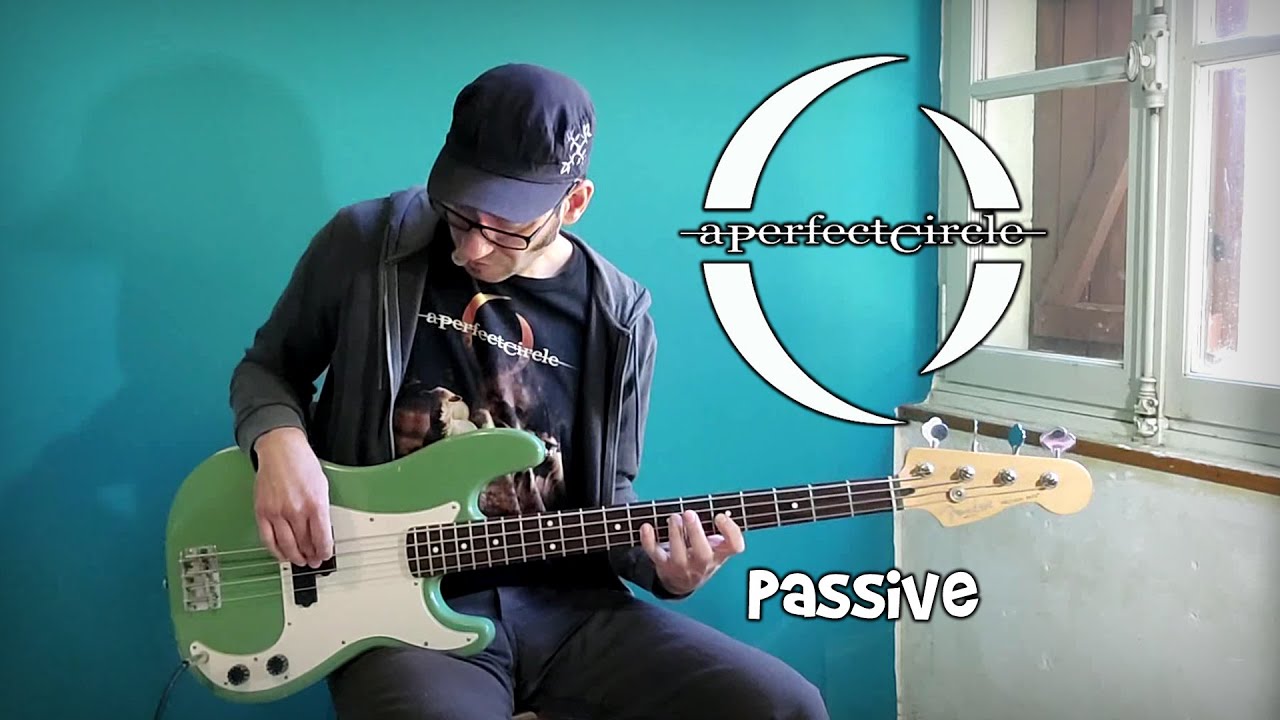
That’s just my experience and opinion. Just trying to help. And again, I won’t say the same at all if we talked about guitar string gauges. The context is important
3 Likes
If that’s a real concern to you, maybe you should just try different gauges and see by yourself ? Always a good way to learn even if it will cost a little bit.
Also if you do this, please really make the difference between the tone itself, and the feel and the way the instrument makes you play (which will affect the tone) because that’s different, really.
But the important thing is to find what you prefer overall really !
1 Like
It’s only strings. Change 'em and see
4 Likes
Agreeing with all of @terb’s points above - for 100s vs 105s the difference is entirely in feel. Drop D will make little difference as well.
You have to make more drastic changes to get tonal differences on a bass, given the same tuning - like Hooky using a D string for his G string, or going to .135 for drop tuning over .100. And even then it’s still a lot about feel.
One thing that will make all of this worse though is that these are short scales. Removing 4" of scale length has a much larger tonal loss than anything you will see without really drastic string changes, and this is going to get worse with either downtining or going to flats.
2 Likes