Hey everyone! Wasn’t sure if this belongs in Gear or Technique, so I’ll try my luck here.
I’m fairly new to bass and currently on Module 7, but I just couldn’t resist jumping ahead to try some slap!
I have a Yamaha TRBX174 (PJ Bass), and I’m really struggling to get a proper slap sound out of it. My main nemesis right now is the A string. Up to the 3rd or 4th fret, I can get a decent sound, but from the 5th fret onwards, the sound is just completely choked, muffled. Zero punch.
Here is what I’ve tried so far:
Technique**:** Tried “bounce” method and the “strike-through”.
Setup**:** I originally lowered the action to around 2mm (even got a fret leveling done for this..), which didn’t solve it. I then raised it to 3mm—didn’t help. I played around with the pickup height, but still no luck.
Oddly enough, I’m doing relatively fine on the other strings.
I’m at a loss here. Is this purely a technique issue that I just need to grind through, or is the TRBX174 just not a very slap-friendly bass for a beginner?
Not enough information. Would need to see video with a clear view of your hands to tell you what is going wrong. It is almost certainly technique, not gear.
Slap is tough.
I’m not going to tell you that you shouldn’t practice it this early, but I would not try to grind through it or focus on it. I recommend trying it for a bit, then set it aside and working on other techniques before revisiting it. You will discover it becoming much easier as more time passes.
A string is probably the most important string to get it right because the most popular licks to play is the octave slaps and pops. Take your time and nail the tone and contact. It will take a minute but once your muscle memory is down then your next task is the lower set of E and D string octave, that’s a different animal altogether. Once that’s down your triplets should be much easier to attack.
Videos need to be hosted online before you can share them in BassBuzz forum posts
The simplest way to share videos is by uploading them to your YouTube page.
Obviously, this requires you to create a YouTube page first, but that’s pretty simple. Then post (upload) each video individually. Once a video is posted, just copy the link and paste that URL into a BassBuzz forum post. That’s it.
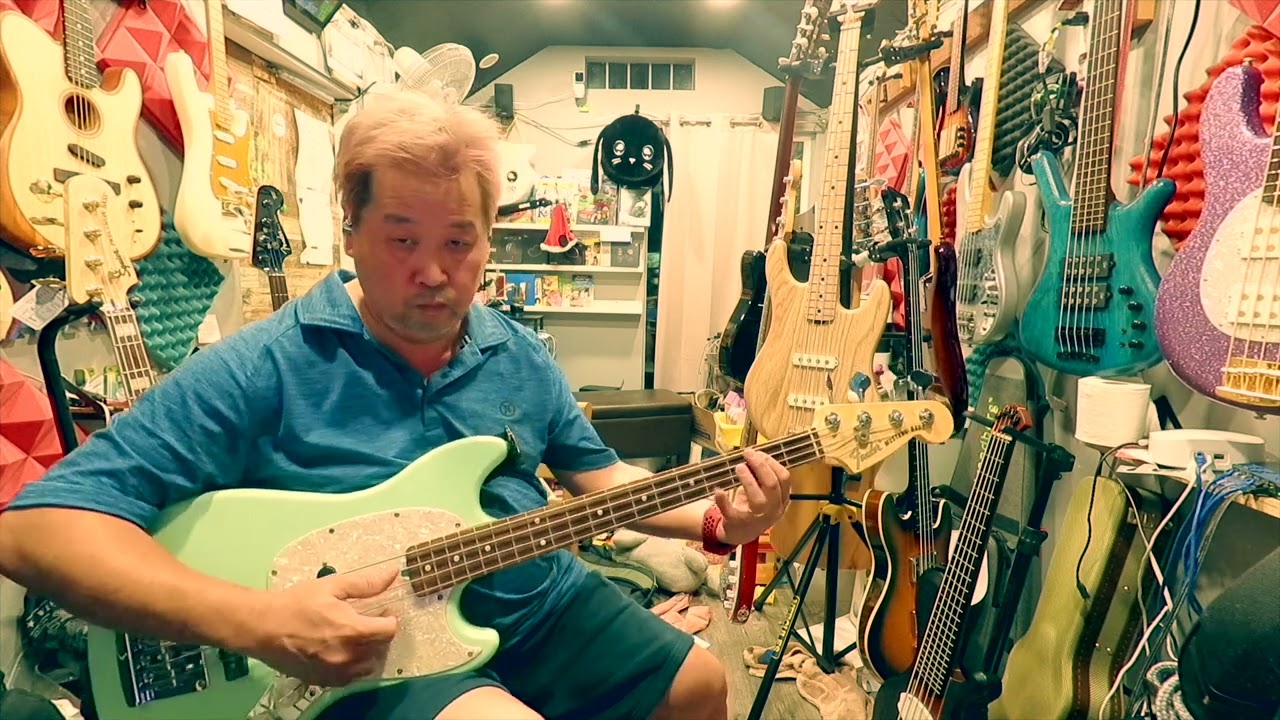
here is the video (and please try to ignore my weird-looking thumb! )
I know my technique needs a TON of work, but I just wanted to check if I’m even in the right ballpark here, or if there’s something fundamentally wrong with what I’m doing (or playing on).
I hope you can hear how the sound completely chokes and dies out as I move up the frets.
Much better bassists than me will surely chime in. I hear what you’re describing and in my opinion you sound like someone who’s pretty well on their way down the learning curve. Just keep at it. It’ll come.
Well, better technique and experience always makes it easier to do something with marginal equipment… but i can tell you that i have a TRBX174 and I found it difficult to slap on. I bought a jbass just for slap and then discovered that i really don’t have that much interest in slap
You said you lowered the action and played with the pup height but did you check the nut isn’t too high? I think mine is on my trbx174 and that’s pretty common for most basses and guitars.
It looks like your issue is your fretting technique/placement. It’s just showing up more in your slap than other playing, because you’re trying to focus on both hands at once. But you can only consciously focus on one hand at a time.
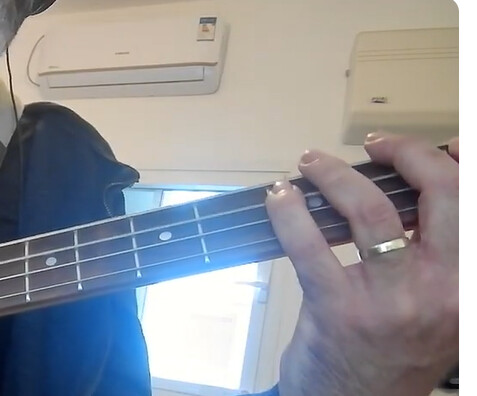
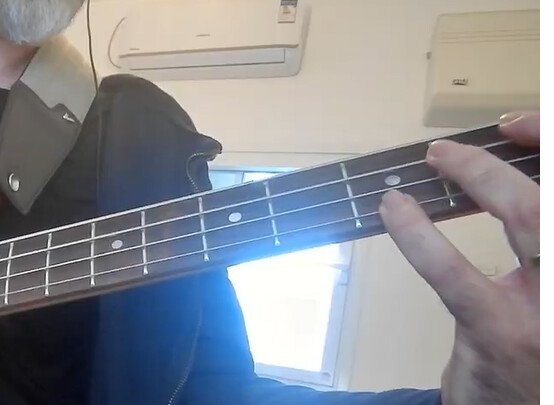
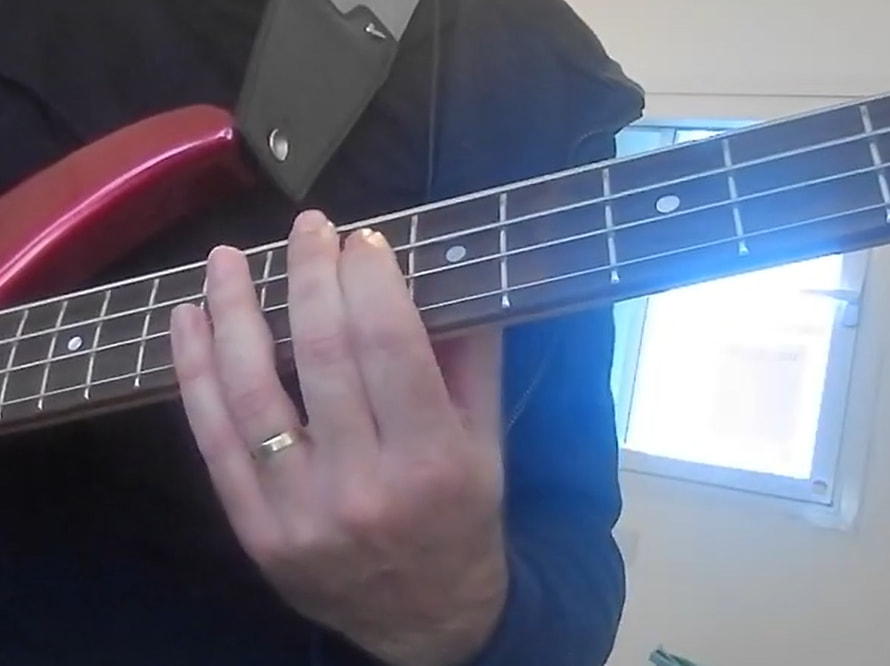
You are often fretting almost right in the middle between two frets. You want to fret so your finger is almost directly over the fret.
You’re fretting cleanly and your tone is sounding better when you start out and have your hand in a fixed position with your index right on top of the 1st fret and pinky on top of the 3rd. This is what you want:
To clean up your slap playing practice finger style until your right hand does not require attention. Then spend time dialing in your left hand technique until that is on auto pilot. Then switch back to slap so you can focus all your attention on your right hand.
I’m not a slap expert. I’m not seeing anything glaringly wrong with your right hand technique. Just… slap is hard and takes practice.
Maybe you are not ready to walk and chew gum at the same time yet when it comes to slapping.
It’s not the technique but the quantity of effort you put into playing notes. Rule number one, You have to try hard not to try hard, gotta perfect the art of not givin’ a Sh!t when you play and your tone will improve and when you relax your speed and accuracy will improve as well.
I see that, from my vibe it feels like it was press too hard that’s why it buzzes. My defense to not fretting on the dots is 2 prongs. One, I usually play several basses on one song going from 35” to Multiscale and 34”, 32” 30” down to 23”sometimes my finger finds the safest position . I don’t look but it seems that when I switch to my fretless 30” scale my finger seems to find the dot automatically.
Two, when I’m comfortable enough the inner autopilot kicks in and provide me the best tone I’m after. I like the extra cracks on the pop and usually have light fretting touch, I notice when I don’t hear the right tone my slapping impact zone change without me knowing it. I watch the cover I made and I was surprised how low I got to.
Consider ourselves lucky, imagine slapping on a 5 string with upside down stringing. It would be soooo crazy. That’s what I love Sonny T so much.
Thank you guys for all the replies and feedback. I was really hoping I could just blame the bass…
But yeah, I’m totally tensing up. Watching the video back made it clear to me. Recording myself and actually observing my playing is a really good learning tool – I didn’t even think of that.
So anyway, head down, back to Module 7. I guess slap will wait for now. Geez, I thought it would be much easier…
This could be the actual reason, but I find the two are connected. Fretting in between frets often leads to using more force to fret.
If you fret right on top of the fret (or you play fretless), the string just stops when you hit the fret. No amount of force pushes the string any farther. But if you’re in between frets, the string will stretch and bend as you apply more force. So you are inclined to push harder, especially if you are get nervous, anxious, or frustrated.
The result is the same. More practice. Dialing in good left-hand technique until it is relaxed and comfortable and you can run on autopilot.
It doesn’t have to wait. Just don’t practice it in a way that you put effort or expectation into it. Do not stress about getting it “right”. Don’t try to work on any particular licks or songs.
But do feel free to sprinkle it in now and then. Just play around with it. After you’ve learned a line and feel comfortable with it finger or pick, try out what happens slap just to see.

 )
)