Veni, MIDI, vici ... "tricks" and best practices that solve issues when producing MIDI tracks

I made quite a few recordings, really. Different tempi, different styles. Mind you, my girlfriend was away, being a witch and all that, so I had the house for myself and could go wild! My neighbours had a pitying look when I met them later though…

I learned to appreciate the singing skills of Yoko Ono, as she is much much MUCH better than I am.

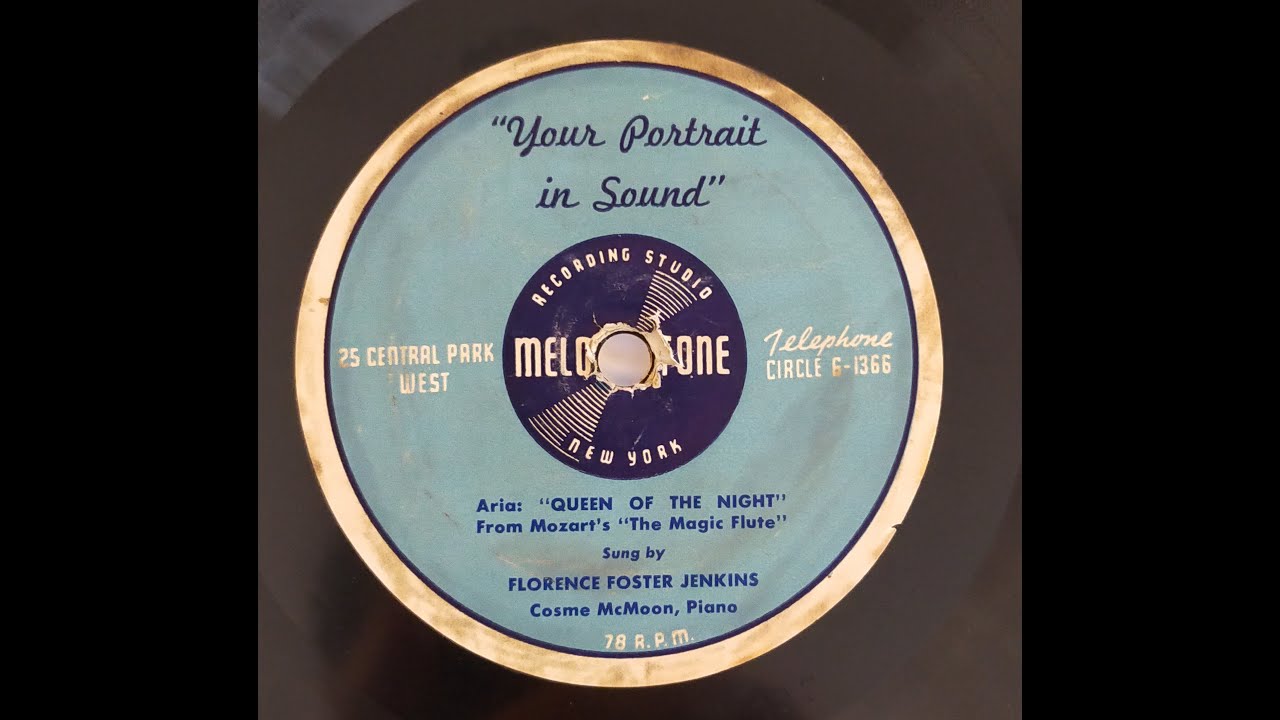
Even Florence Foster Jenkins was better, so that’s that!

I lack these talents:

  • I can’t play soccer (the real football!) … or any sport that needs a round ball
  • I can’t open wrapping of sweets, much to the amusement of my girlfriend, as she has to do that for me. I’m like a dumb monkey that tries to get a banana out of a box with a hole that is too small…
  • I can’t wash dishes that involve anything made of glass
  • I can’t sing

I have accepted these shortcomings.

So: Melodyne to the rescue!

1 Like

We see though that behaviour.

1 Like

LOL!

My girlfriend calls it “Neo Hilflosigkeit”, which is basically “deceptive incompetence”.
I must say that my actions are not consciously deceptive, but I’m pretty sure that it’s an unconscious way to avoid tasks.

She finds it adorable how such a big guy can fail at such small tasks (sometimes she stands next to me, watching me doing the dishes, just to feel her power and superiority, while I feel clumsy and like a little boy), so all is good :slight_smile:

Also: she assigns other unpleasant tasks to me that match my capabilities…

1 Like

OK, played around with Melodyne a little more.
The UI really s#cks, but I could improve pitch per syllable a little and - more importantly - the rhythm.

It’s not perfect yet, as I have have words that need a very short shot/staccato-like start, ie “Atme!” (= breath), where the “A” is short and hard, and while the “tme” is a little softer and longer.

Also the general tone of my voice does not match the tone of the song, as I’m not somebody who raises his voice, ever (I don’t have that mindset)… and this song asks for a more punk-like approach.

It’s literally “drag the notes where you want them”, not sure what else you wanted there :rofl:

Shorten/lengthen the syllables, position them exactly on the grid (or not), split them when the detection fails … all that. Again, I need to correct the rhythm of my vocals, and those vocals fail often on syllable level.

But maybe my Melodyne version is too limited to do all I want?

Anyway, I use my vocal track now to practice, in case I need it for the vocals of my girlfriend or some other singing girl I have yet to meet…

I really learned to appreciate the vocals of the park punk girl I worked with last year even more!

It can do all those things (pretty sure even Essential) but yeah, in the end vocals are hard. Often just retracking them is the best bet.

1 Like

OK, recorded the vocals of my girlfriend yesterday, which was an interesting experience:

  • it’s hard for non-singers to match expectations. I had to explain a lot about feel, rhythm and pitch. Often I did the vocal and she repeated.
  • as a consequence, it takes many (!!!) takes
  • quite a few takes are really great, others need to be redone a lot of times
  • most great takes have a completely different tone than the other great takes. Consistency is an issue. A big issue.
  • It’s fun to hear the “intentional” voice of my girlfriend in a production. In daily conversation you tend to overlook how sexy her voice can be.

It reminded me of the only movie I produced, many years ago. It was a low cost guerilla movie.
I had a perfect actress for the main role, but she was not a professional. The director wanted to have the less suitable actress, cause she was a professional. He said that professional actors can follow directions better and have “repeatability”.
I didn’t get it then, but now I get it.
We took his choice, but the movie still s#cked!

I cut the samples now and will select the right ones for a first draft.
I think the session yesterday will provide an indication how to redo the vocals tomorrow.

She is NOT looking forward to that, cause doing vocals is really hard work, and it’s hard to communicate a “real” emotion after take 20…

1 Like

Cue Steely Dan :laughing:

1 Like

Hahahah, yeah, no!

Currently I solve some issues with some cheap effects. It might not be enough though, so tomorrow we’ll try again.

Her vocals have some real potential (for this track), but my girlfriend is successful at the job she has and it’s likely that she does not want to spend her days with endless retakes for my hobby songs :slight_smile:

If it doesn’t work out I need to threaten her with me going around the park, asking good looking bikini girls if they can sing. This is how Poppy got discovered :slight_smile:

Both options have their advantages!

On a more serious note: I learned that microphone placement is more important than I initially thought. It makes a huge difference if she is nearer or further away from the mic. Also the angle of the mic is important. Need to delve into that too…

So much to learn!

Perplexity:

Distance Guidelines

Keep the microphone 6-12 inches away to avoid excessive proximity effect, which boosts bass unnaturally when too close. Closer (2-6 inches) works for live settings or dynamic mics like the SM7B to cut room noise, but test in your space. Measure with your fist for accuracy—about two fists’ length.

This diagram shows optimal off-axis placement around 30 cm (12 inches), adjusting angle for cleaner capture.

Height and Angle

Position the mic slightly above mouth level, between nose and forehead, angled down 15-30 degrees to reduce plosives (p, b, t) and sibilance. Aim at the mouth’s center or nasal area for breathy voices; lower chest for diaphragmatic singers. Off-axis avoids direct blasts.

1 Like

While working on a new song, I stumbled over another issue: how loud should individual tracks be? So this is about individual instruments and vocals.

I like bass, so I always put it as loud as possible, providing it works on my test devices (several headphones, smartphone and laptop speakers, PA and stereo system).

But I gave the song to a friend of mine (a great bass player who plaid in several rock and jazz bands and also made various albums) and he said that a) the bass is too loud and b) the vocals are not loud enough.

When I make the vocals more present, they overwhelm on laptop and smartphone speakers, dominating everything else.
With the bass, yeah, I like bass. But maybe that’s just me?

Is this about volume? EQ? Compression? Is this really an issue? How can I solve it?

So, this is the still unfinished song: “Atme (atme mich)” = “Breath (breath me)”. Unfinished, as in: I need to rerecord the vocals, as there are still some timing and pitch issues, but we’ll get there. I’m quite happy with the general tone and voice of my girlfriend though. Didn’t know she has it in her!

Any criticism, also not related to my question, is very welcome! I can only learn…

1 Like

You need to invest the time in to learning mixing. It’s a deep subject involving compression, EQ, busses, sometimes sidechaining, and lots of other things. Twiddling the relative track levels is actually among the least tricky parts; loudness and level are not the same things. You’re not going to be able to just drop your unmodified bass track in there, push up its level, and end up with a good mix; same is true for all the other instruments and vocals.

Here’s a few links to get you started:

https://www.izotope.com/en/learn/how-to-mix-music

2 Likes

Hahaha - one of the very first sentences: “the first temptation you might have is to turn the Bass channel up.”

I feel seen :slight_smile:

Thanks for the recommendation … will dive into that!

1 Like

Yeah. The first thing you will have to let go of is the idea that you can keep the sub-40Hz bass guitar and have the rest of the tracks still sound good :rofl:

Next trick is to split the kick drum and low toms out to separate tracks and sidechain EQ or compression on the bass track in the 80-120Hz range (or wherever you find your drums peaking at) to get the bass out of the way of the kick.

But there’s a lot of other things to learn. These are just the obvious things.

1 Like

So, it also says: “Mixing is the process and the art of fitting multiple elements together so that instrument and vocal tracks don’t compete sonically”

For EQ, I use Sonible Smart:EQ 4, which allows for creating groups with priorities - it can analyze individual tracks and put them in relationship to each other, based on my preferences (front, mid back).

So that should be good, right?

I only use compression on the vocal tracks currently: Sonible Smart:comp 3.
I used it only on vocals, as my girlfriend is not a professional singer, so she has trouble with dynamics…

Should I use compression on the other tracks too? I like the sheer energy of the drums. And of course I like the bass, but here I’m really blind (deaf) to expectations of others.
And as for guitar … I just put it there because it’s a rock track. Guitarist also want to have their say, so I let them follow the bass :slight_smile:
But I really don’t know what else to do with that instrument….

For vocals, I set compression in relationship to each other (in this case 5 different vocal tracks):

I use a little reverb, just to make the voice sound “fuller”, as well as the cluster delay for added craziness.

For panning I put the vocals and bass in the center, lead guitar 50% left, rhythm guitar 50% right.

At the end I put Ozone 12 Elements on the whole mix, as this makes it YouTube / Bandcamp / Soundcloud compatible.

I just discovered that I have Mastering the Mix “Bassroom” as part of my Studio One product, so I might be playing with that … it addresses exactly what you said.

Compression is a primary control for loudness. Compression is used to make tracks and the overall master (depending on where you are compressing) louder. for a given peak level, it increases the loudness of the overall body of the track relative to the peak. It’s a critical mixing tool (along with and sometimes coinciding with limiting.)

In addition to this, both vocals and drums directly benefit from compression. I would not attempt to mix drums without a compressor on the drum bus and potentially individual drum tracks.

Other instruments also directly benefit from compression - and all tracks are easier to mix with a track limiter on them.

Again, there’s a lot to learn. It’s not something to teach in forum posts. It will take a little while. And no plugin will just do it all for you.

Yeah! It’s fun!

I don’t get the difference between a compressor and a limiter - in my mind a limiter just cuts off, doesn’t it?

I have the “Mastering the Mix” Limiter, which is supposed to be great.
But it’s just lying around, drinking Appletinis, flirting with the other unused plugins and basically doing nothing for my music…

So I should delve into that as well right?

I am a little afraid to overprocess, looking at my current setup:

A limiter is a compressor with an infinite ratio.

Just “cutting it off” would result in clipping distortion.

That’s a good fear to have and a real danger of not taking the time to really learn how to use the DAW and all these tools :slight_smile:

Proper use of compression leads to a great mix without sacrificing dynamics. Naive use of compression (in extremis, just slamming the tracks or master up in to the limiter to get loudness) leads to the fat sausage:

See also, why no one should ever, ever buy a mid-2000s “remaster”.

Hahaha! Guilty as charged!

So, I just let the Mastering the Mix Limiter analyzer go over my mix. Hmmmmm…

So this is what it looks like:

I adapted to the recommendation (every bar stand for a frequency range, and the recommendation is set by the vertical lines next to the bars).

So, I removed everything under 20Hz and limited heavily below 40Hz, while applying some limit to the bands below 320Hz, as suggested by Limiter.

I find the final mix much flatter now, but again: I’m a bass head.

On the other hand, I played my previous mix on one of those Bose Bluetooth boxes from a friend yesterday, and it almost destroyed his box. He was not overly happy :slight_smile:

I’ll be going to be park this afternoon, hunt him down and test with the new mix. Let’s see/hear…

Now would be a good time for you to check out Kilohearts Multipass, and also a good parametric EQ (Studio One likely has a builtin; the gold standard is Pro-Q.)

I usually just yse a -12dB/oct highpass rolling off at 40-50Hz, should sound much better than raw limiting.