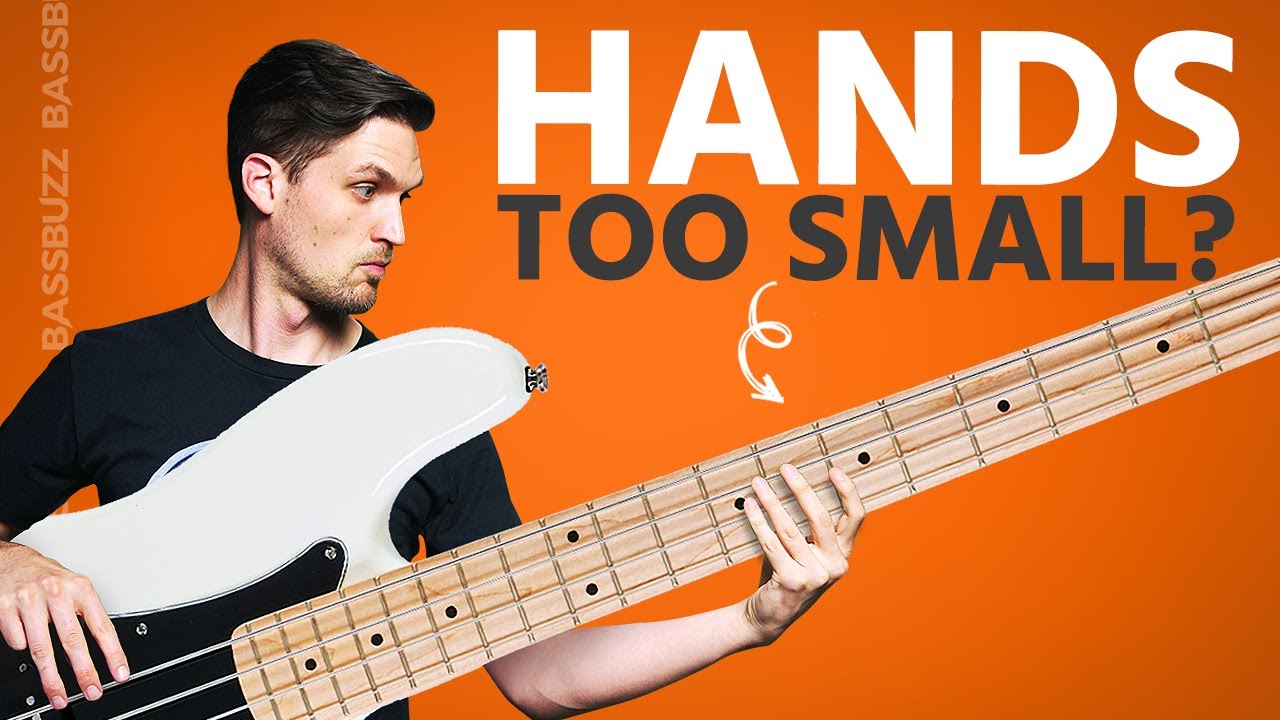
What are you struggling with?

Yeah, it comes with time. The more you play, the more your body will relax. You may not even recognize it at first.

And for the lower frets seeming so far away, I had the same issue when I started. That first and second fret were waaaaay over there. Feels like you have to stretch your arm as far as it will possibly go to reach them. But with time and repetition they get closer to you, despite the fact that they don’t actually move.

1 Like

If you haven’t already, check out this video from Josh which, among other things, covers bass positioning, plucking, and fretting. These may cover your questions. You certainly don’t want to injure yourself to play. It should be a fairly natural feel.

1 Like

Yes, playing an instrument is a journey not a destination.

2 Likes

On top of what others have said …

Neck dive can be a factor. If your fretting hand is having to hold up the bass while playing, that’ll stress your wrist too. If your bass has noticeable neck drive, try hanging some weights off your strap at the bottom. Nothing too heavy. And don’t be afraid to use something weird like a bag of coins. You’re just testing to see if it helps, you can change it later.

Neck angle matters too. Pointed higher towards the ceiling and more parallel to your body makes the low frets easier to reach, while pointing more horizontal and tucked in closer to your body makes the high frets easier to reach.

I’ve always been more comfortable standing while playing. I barely use my guitar stool anymore. But you might want to try “classical position” while seated:

I know this seems like it will make the low frets even further away, but the neck angle helps bring it in, and the position overall helps keeps your wrists straight.

You just started a few days ago, right? You will definitely get used to it the more you practice.

The problem is that “playing bass” is actually like half a dozen or more different skills at once. Holding the bass ergonomically is one. Fretting is another. Plucking is a third. Muting, fourth. The basics of rhythm, fifth. Keeping the exercise you’re working on in your head as you play it, sixth. You can’t consciously think about all these things at once, so whichever one you’re focusing on, the others will suffer.

The solution is to just keep at it. The more you do these things, the more they will shift into your subconscious, or “muscle memory.” And every time a skill transfers into muscle memory, that frees up your brain to think about another skill.

Try to go through at least half the course before deciding, if not the whole course. Worst case, the refund policy is very generous so you have plenty of time.

Hello everyone,

I’ve recently begun to hyper focus on right hand alternate plucking and raking technique when playing songs. I’ve got a lot of exercises to drill with, but I’m talking about when you transcribe a song and play it. When I do a drill everything is mapped out, but when I play a song I notice my plucking fingers won’t consistently alternate or rake (when there is the opportunity to rake). I also favor my index finger, especially when I need to string cross to the next higher string. Instead of using my middle I’ll repeat using my index.

When playing songs how much pure alternating/raking is required? Should the songs I transcribe also transcribe the plucking and precisely adhere to correct alternate plucking? Any thoughts. How far down this rabbit hole should I go?

Thanks!

It was just some kind of nerves… Bass is my thing of course - It was me who thought it would be more easy. But of course I just need to get used to things, to get my left hand work - and to work correctly

1 Like

To be clear - it will take weeks to months of frequent practice for your hands to loosen up. @John_E is spot on, this is not a race to speedrun. It takes time and practice. For some of us, it never really gets all the way there and we compensate by shifting. Everyone’s physiology is different.

In the end, if you are motivated enough, you can play bass with just one finger fretting and one finger plucking. No one says everyone has to be a one-finger-per-fret shredder. Take your time and find what’s right for you.

1 Like

Thanks for your ebcouraging words.

I’ve just found that as for a right hand the picking came almost naturally - pick holding and hand movements are almost there (of course - far from ideal, but here practice makes perfect). And same for thumb plucking (like Sting for example - even being more of a hard rock/metal guy, I’m still huge Sting & The Police fan) - movements and hand positioning are almost there but far from ideal (As i say - now I sound stinky rather than Stingy). But again - practice makes perfect.

So I will work to loosen my left hand and fing the comfortable positions for the bass (now they are on the way - just fund that to play standing for me is more comfortable, than sitting - seems that sooner or later I will have to concider buying some kind of high chair or stool just not to overload my back and relax it when needed)

Right now my struggle is entirely self-imposed. I picked up a drum kit, having never played drums in my life, and as I’m working through my “complete newbie” phase with them I’m finding it difficult to give the bass much attention. I’m finding the drums a lot more demanding both physically and mentally.

I’ve decided that as a compromise, I won’t keep trying to push my bass playing forward for now, but I should keep playing and learning songs at my current skill level to at least maintain where I’m at. But working the time in for both is still a challenge. Finding the time for one was a challenge, I don’t know what I was thinking. :rofl:

Anyone else here spent time learning two instruments at once?

If you’re constantly playing and learning new songs on bass you’ll improve naturally.

On top of that, learning drums will definitely improve your bass groove. Win/win!

2 Likes
2 Likes

well… now that guitarbuzz is live, yes :slight_smile:

2 Likes

Been playing sax for quite a while, still learning throughout.

Also picked up a banjo and learning that, as well as guitar through the GuitarBuzz Beta test and now going back to the lessons after they reworked them (they are great great great now). Time is the enemy of multiple instrument learning, and not developing a deep skill level is the price you pay to not focus on only one, but depends on your goals and mindset. I like bouncing around to my whims.

2 Likes

Bass and ukulele.
I want to understand how music works. Bass is my big love, but the uke lets me play with chords in another way.

2 Likes

I’m struggling to say “bass” as “behs” rather than “baaaaass”.

I briefly dealt with the bass fish and worked hard train myself to say “baaaaass” (instead of bass as in guitar). And now it’s stuck. I even say it to myself in my head when I read the word “bass.”

Ridiculous!

3 Likes

Even more fun is that many basses are made with basswood and pronounced differently!

2 Likes

The pronunciation makes it easy to spot the semi-phony AI-generated gear review comparison videos on YT, when the first use of the word sounds like the fish, and subsequent uses may or may not sound like the guitar.

1 Like

Besides, you can tune a guitar but you can’t tuna fish.

3 Likes

The service that moved and tuned my piano when we moved.

4 Likes

Thats amazing.