This is going to sound like a dumb question (maybe really dumb) but it’s been destroying my brain for too long. I can’t exactly wrap my brain around where any given note on a cleff should go on the bass frets themselves.
So, for Em, E should be on the 7th fret of A right?
This is the first time I’ve seen this, but it makes a lot of sense to me. I’ve heard, for example, if the note is an E there are multiple Es on the fretboard and you can play whichever you want. But this never made sense to me, sheet music has multiple Es and they are different and not interchangeable, so surely there is a difference on the fretboard between the E a ledger like below, the E in the middle, and the E two ledger lines above.
@GeebGrables As Jules said. If you know the song, just play all the E-notes on the fretboard, starting with the open E, until you find the one that sounds the same as the E from the song. From there you can figure out where the other notes are played.
Any E can be minor, minor is the shape of the scale.
I’ve learned so much more in the 4 months playing bass (doing the course) as I did in taking violin lessons for about 5 years as a kid . I just didn’t care at all how the violin would fit in with other instruments in a composition, I just wanted my playing to be beautiful.
Let’s add some math to this. Specifically, modulo math (modulo operator is %). Take the E note. Starting on the E string it is open. Let’s designate that as fret 0. Finding E on the next string up apply this equation: (0 - 5 - 12) % 12 = 7. E is on the 7th fret of the A string. 5 because the next string up is 5 frets above the lower string and 12 for an octave. Subtract when going up the scale and add when going down. Moving to the D string: (7 - 5 - 12) % 12 = 2. E is on the 2nd fret of the D string. Continuing to the G string: (2 - 5 - 12) % 12 = 9. E is on the 9th fret of the G string.
Going down, let’s start with the open G string: (0 + 5 + 12) % 12 = 5. G is on the 5th fret of the D string. Next: (5 + 5 + 12) % 12 = 10. G is on the 10th fret of the A string. Next: (10 + 5 + 12) % 12 = 3. G is on the 3rd fret of the E string.
Yup. Lots of musical concepts are well served by thinking of as modulus math when applied to a repeating linear scale. For example, chord intervals beyond the octave are mod 8. Same for stacking semitones (mod 12).
And of course this is also why circles are so useful in describing some repeating patterns.
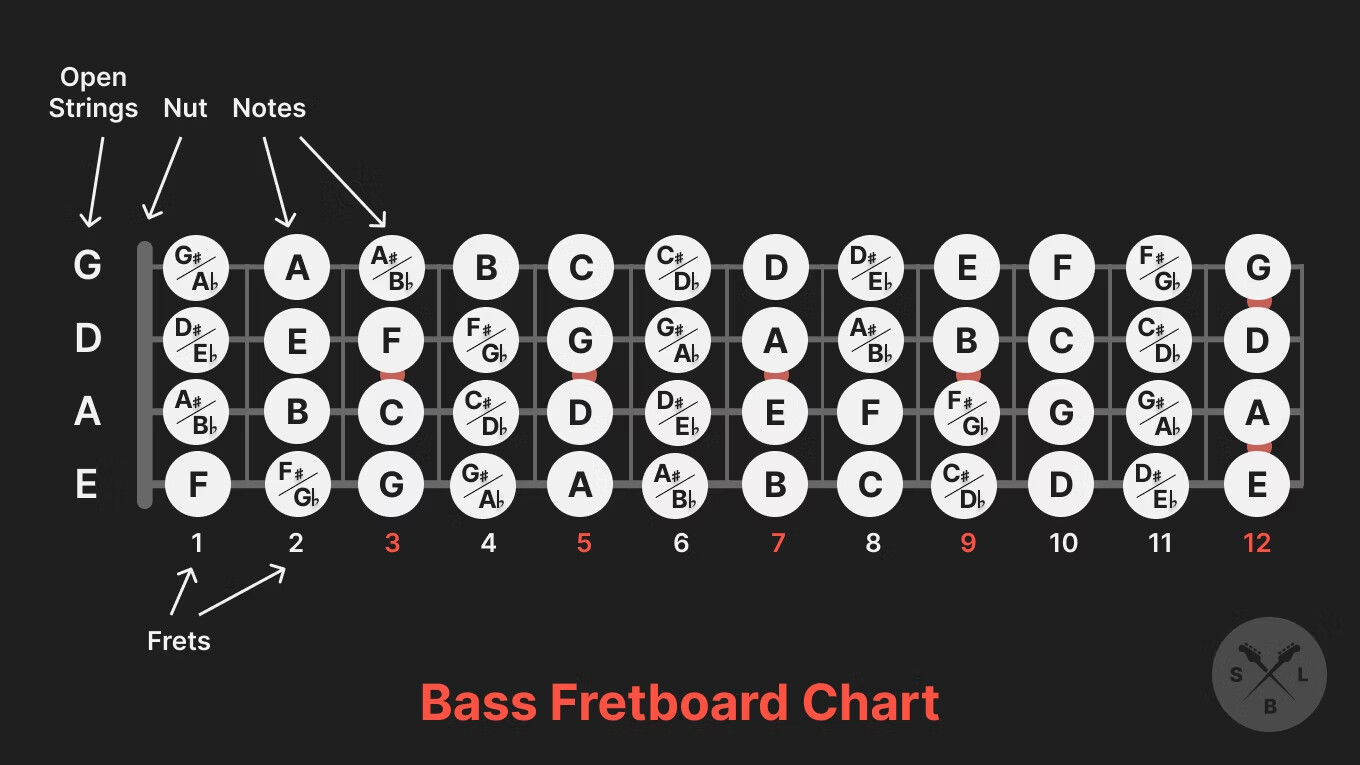
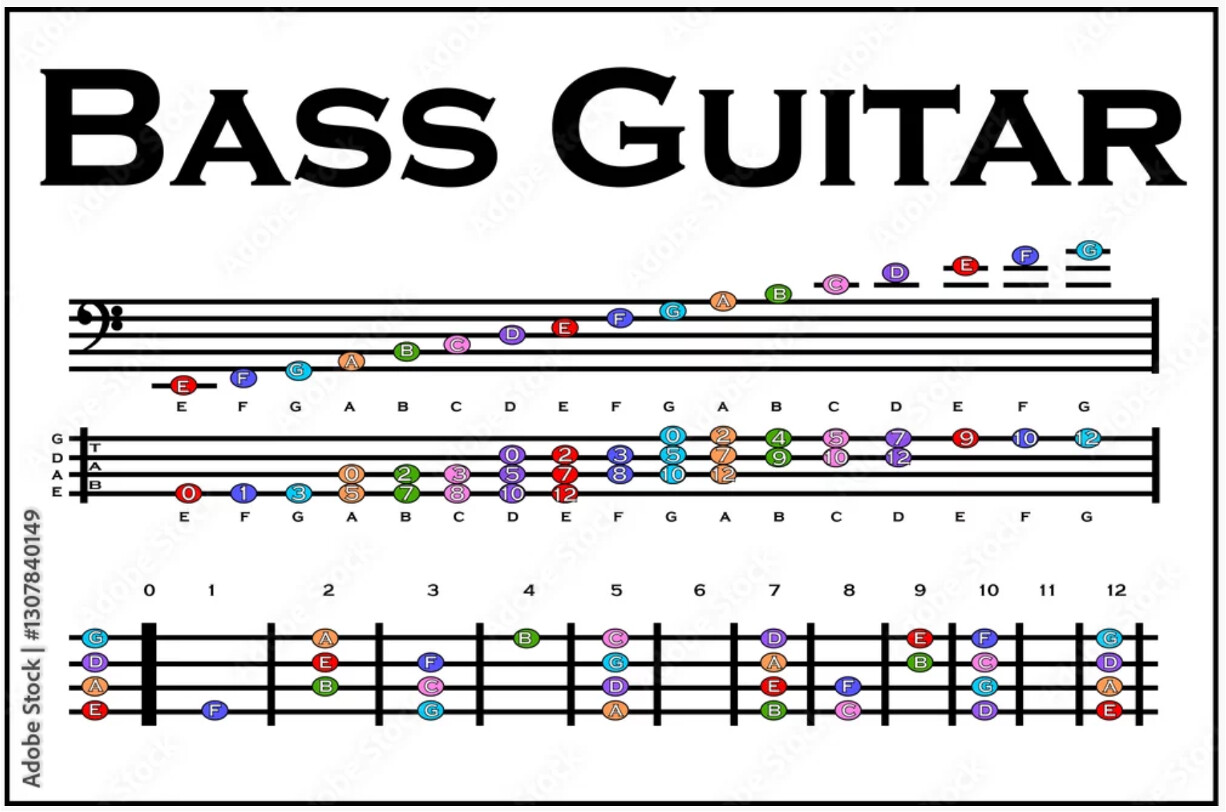
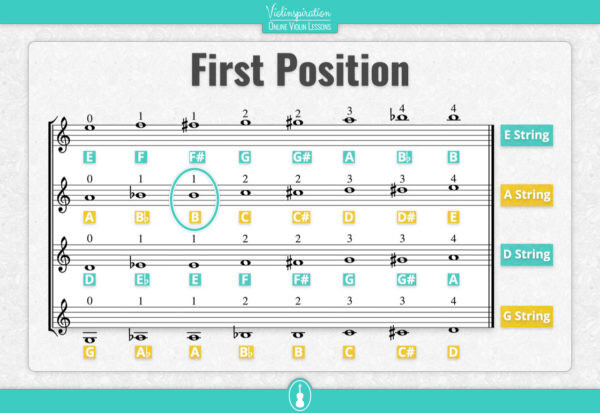
 .
.
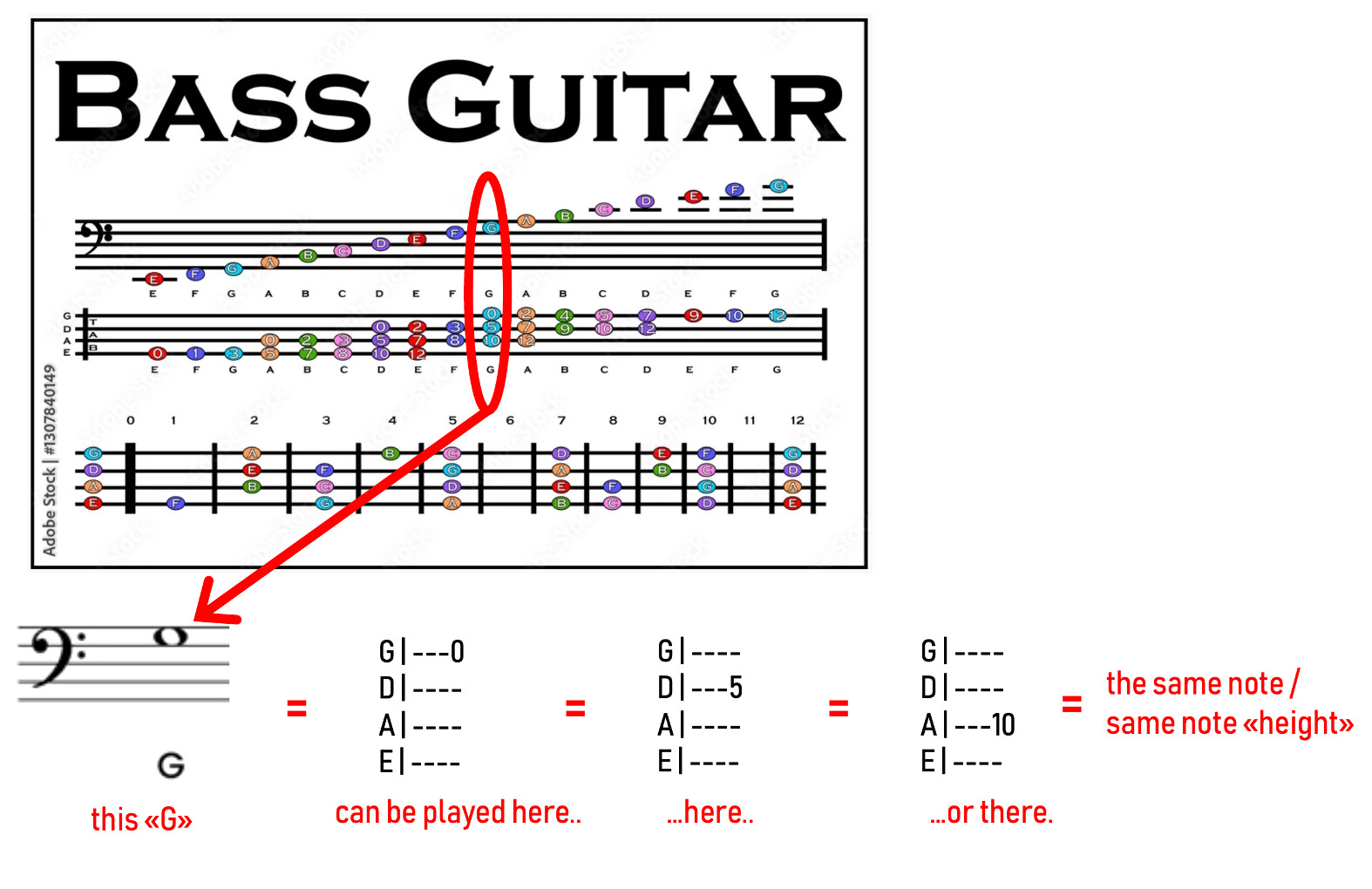
 . I just didn’t care at all how the violin would fit in with other instruments in a composition, I just wanted my playing to be beautiful.