Lithops!
Another Audio Technica ATH-M50X and Sony WH-1000XM3 user here with Bose QC 20 and sony wf-1000xm3 for outside the house
Lithops!
Another Audio Technica ATH-M50X and Sony WH-1000XM3 user here with Bose QC 20 and sony wf-1000xm3 for outside the house
That’s the one I would get if @Al1885 were not forcing me to buy the Fiio 
Y’all get into your headphone specs here.
Dang.
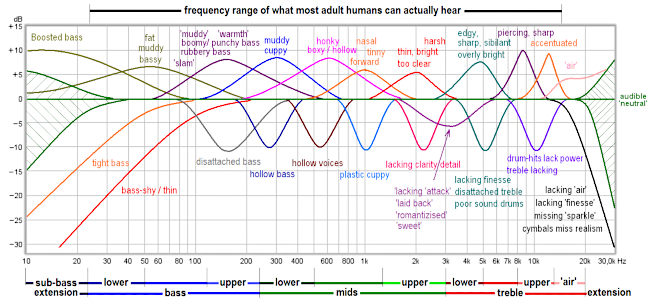
My ears are so shot from standing next to loud cymbals for years, I don’t think My ears can register any of the fancy frequency response graphs shown.
These were super affordable, and I’m pretty sure I’m hearing all the things I can hear:
Also, loved you on the Simpsons! The blue hair suits you
Yuck i hate gravel bikes lol
I don’t have a dirt bike but one of the mountain bikes is an emtb and I also have a large cruiser motorcycle I had a dirt bike when i was young but it’s a pain to take riding and i live very close to mtb trail network and i’d much rather do that.
You can save some money and get the B&K 4128, you’ll be fine. 
At the end of the day though, unless headphones are extremely terrible, all the measurement wanking doesn’t matter that much because our physiology and our brains change how things sound to us.
If I’m going there it would not be 4128 but the 5128, why go half ass when you can go full ass at twice the price, 
You are spot on about the measurements. Music you are listening to would sound good on just about every set you are listening to simply because it’s your type of music, and being a musician your brain usually fills out the missing details.
Did you get any hyped sets over the holiday’s sales?
I did not, I’m always looking at new stuff but I really haven’t seen anything compelling. I’m using my DT270 pro at home for most stuff and although I bought some Bose QC for working in the office where it’s really noisy, I’ve mostly been using my Timeless
I’ve been into Quest VR lately so that’s where I’m spending a lot of time (and money) 
I don’t agree at all!
For reviews, it’s extremely useful, cause:
I monitor
I treated myself to a pair of Meze 105 Aers over Christmas and I’m really happy with them.
Music sounds amazing now. The only problem is that my bass tone sounds totally different through them compared to what I was using before. I’m sure I’ll get used to it, but it’s a little offputting.
Well your hearing is excellent. I’m not sure if I can get all of 15k 
Headphone is a bit different than IEM especially the open back that’s why it’s a treat to listen to them sometimes. Some of my closed back are quite fun but that’s not what this hobby is about right,
Yeah per our discussion earlier, my puppies and I about to start one too, I’d most likely grab some graph from my reviewer friend to start. They are wildly different though. How you measure is very important and it just, at best give you the idea but not an accurate representation of what it really sounds like.
I like to sniff the graphs like everyone else but that’s merely serves as a glimpse into what it is. The vast difference comes with several more factors. Tuners who understand the drivers and their capabilities can bring out the best on the IEM. Sadly the graph can’t really show that.
When I was younger I took pride of being able to hear 20-20k. Now I feel handicapped, kind of, and it’s all downhill from now on … this is one of the worst things of getting old, really!
As music is my #1 passion, it’s really depressing that one day I’ll not be able to hear all details 
Just like you I read many reviews.
While I was hunting for the best noise cancelling in-ear available I stumbled over widely different opinions about the top in-ears.
It helped to narrow down to these: Technics EAH-AZ100, JBL Tour Pro 3, Bowers & Wilkins Pi8, Bose QuietComfort Ultra Earbuds 2 and good old WF-1000XM5. Maybe I’m missing one or two…
But than stuff got funky.
I tried Technics EAH-AZ100, JBL Tour Pro 3 and Bose QuietComfort Ultra Earbuds side by side and I could not confirm some reviews. Cause … opinions. And my opinion.
The Technics EAH-AZ100 were ok, but not great. Something is totally off with those earbuds, can’t explain. The Bose QuietComfort Ultra Earbuds were like warm comfortabe slippers, with excellent NC … but not neutral.
JBL Tour Pro 3 were quite neutral, with really bad NC … while some reviews said NC is great. I guess they never leave their bedroom to be confronted with street noise?
Every reviewer had their favourite tuning, but that was not necessarily my favourite tuning.
So, most reviews were nonsense (cause, different oponions) … but measurements helped me to get an idea of some aspects (NC, curve, etc.) … especially in comparison to the competition.
I like curves
They’re useful to a point but “brain burn-in” is a real phenomena and like i said, unless something is extremely terrible, our physiology makes a big difference eg HRTF (pinna, head shape, torso and shoulders (for speakers), ear canal, nasal/oral cavities and hair) but very significantly, our brains will do a lot to tailor the sound for us. What you currently hear is strongly affected by what you were previously listening to.
You might want to think it makes a big difference, you might want to think you’re special and you hear things other people don’t but it really doesn’t matter that much. It’s the same with lossless music vs hi br mp3, very few people can tell the difference. Those extreme upper ranges have almost nothing significant which is why psychoacoustics is always relevant.
https://www.headphonesty.com/2025/12/study-reveals-why-audiophiles-fall-snake-oil/
It’s true, that’s why it doesn’t take weeks to evaluate a set. In general it’s seconds. For me it takes about 15 seconds times two, one section of the song and another of another song. Then my confirmation bias would lock in. The bonus comes in the form of surprises and very few set would do that for me but the notable ones are the
Zigaat Horizon, disclaimer, I hate the brand because they release at lease one IEM per month. It’s a very disrespectful to the hobby. Anyways, the horizon has this wonderful “air” region it is very addictive.
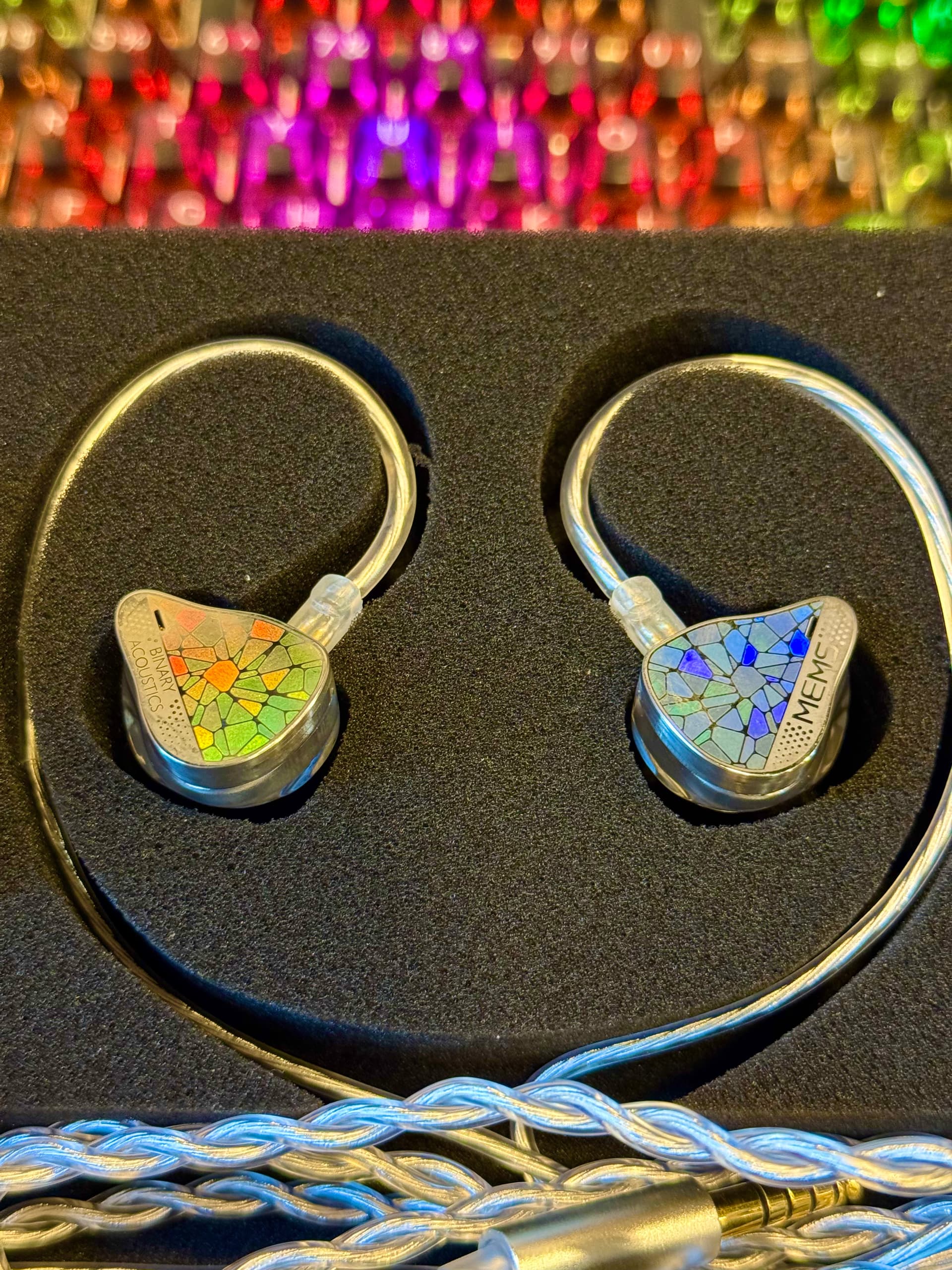
the next example is the new MEMS driver the Binary EP321, again this set is a disaster, the cable came installed but backwards so it would present nicely and the cable connectors do not have L/R indicator or very faint prints on them. That said the upper mid is so well tuned the details just reveals instead of boosted.
If it does not matter, EQ also does not matter, by this reasoning?
Or the difference between a Fender, an Ampeg or a Markbass? All discussions here about bass amps would be nonsense then, cause we adapt anyway to the tone, and they are all the same to us in the end?
I don’t believe that.
I don’t say that we don’t adapt (I’m a cognitive scientist/pschologist originally, so I do understand). Our senses tune quickly to the environment, that is one of the interesting traits of our perception.
It’s even clearer with vision, where we adapt to darkness …. or even better: hue.
This is why white things appear white to us, even in candle light. If you take a photo of something white in candle light (without using a flash light), it will have a yellow-ish tint.
Still, for reviews, it’s important to have an “objective” reference, otherwise it’s opinions. And you know what they say: opinions are like @ssholes. Everybody has one
That’s an interesting one, as we recently did a test.
I had a music track that I know very well as 192kbit/24bit FLAC, a 44KHz/16bit FLAC, as 192KBit VBR MP3 and as 128kbit CBR MP3.
I could hear the difference (on great head phones), even between hires FLAC and CD quality FLAC. And this is with my limited hearing of higher frequences, so I was quite happy.
I did this test 15 years ago on very good speakers (my current speakers s#ck), and had the same result.
Lossy psychoacoustic compression introduces all kinds of artefacts that can be heard, this is why it’s psychoacoustic…
If you confirm “brain burn-in” here, than this means: all your reviews (in terms of tone) are void!
People tend to listen longer to music than 15 seconds (except when they listen to Napalm Death :-)), so they would adapt quickly, and it would not matter anymore, with which headphoes they listen (ok, this is also true for Napalm Death).
So, if tone (= curve) does not matter, than it’s only important how headphones look, what kind of accessories they include and how much they cost.
You can get that from the internet, no reviews necessary.
So, what is the sense of heaphone review without a statement about tone?
Two are not the same. Do you look at the graph before buying? That’s usually a big No No in general. We are all guilty of this for sure.
True some set “grows” on you but in general the initial impression is pretty accurate.
It does not take long to determine
first, if I like the tone or not on an IEM or at the very least the impression.
Second, how it compares to my preference.
Brain burn in takes much much longer than seconds, it takes 30-60 hours and can be up to hundreds of hours. It’s not the same thing.
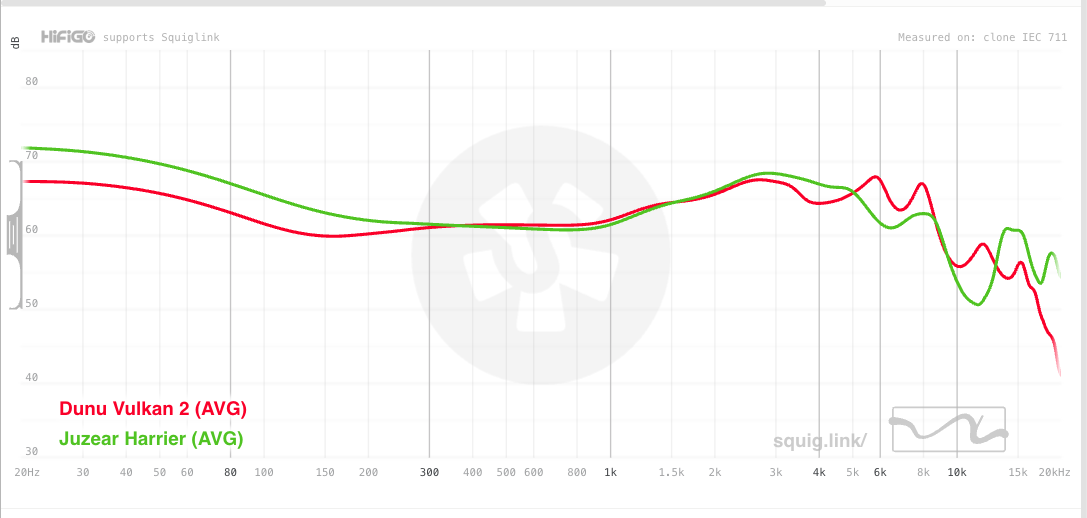
If you are using graph to evaluate your listening then the graph will dominate your listening experience and influence your judgement. Based on the graph below I’d never buy the Dunu Vulkan 2 because of the tuck under mid bass but the way Dunu overall tuning expertise they managed to maintain good amount of mid bass to enjoy and still maintain great lower mid rise on to upper mid and treble.
Actually, I do. But also I look, how it is measured.
And then, as I don’t believe in objectivity, I ressort to intersubjectivity: if different reviewers with different methods and different backgrounds say the same thing, I consider it a candidate for truth.
Then there are reviewers like Julian Krause, of course. His approach to reviews is the gold standard for me. He seems neutral, scientific, unbiased and never LOUD. He does not try to sell me anything.
He uses measurements and explains in great detail what it means … and what it does not mean. He seems to have no preference for brand nor hype.
This is how I expect reviews to be…
Yes, most of those things make a difference but they really don’t matter that much unless something is terrible. If i A/B something, i might say that one is “better” but if i wait 15 mins there’s not really going to be as significant difference. If EQ does matter then that’s the reason that the other things really don’t. It’s like cameras, some people live canon and hate nikon buy you can correct the colours however you like. Many of the discussions really ARE nonsense, yes. 
Some of the most popular monitor speakers are objectively terrible. Tracks from some of the most popular and well known songs are terrible if you listen to them in isolation. Unless you sit there intentionally listening to music, in an environment with no noise, you’ll never hear much of the differences because that’s not how we generally hear music… that’s the auditory equivalent of pixel peeping images.
You listen to something, you like it or you don’t but the constant quest for perfection that some people are on is just unproductive. When it comes to music, the things people want to change the most are the things that probably matter the least.