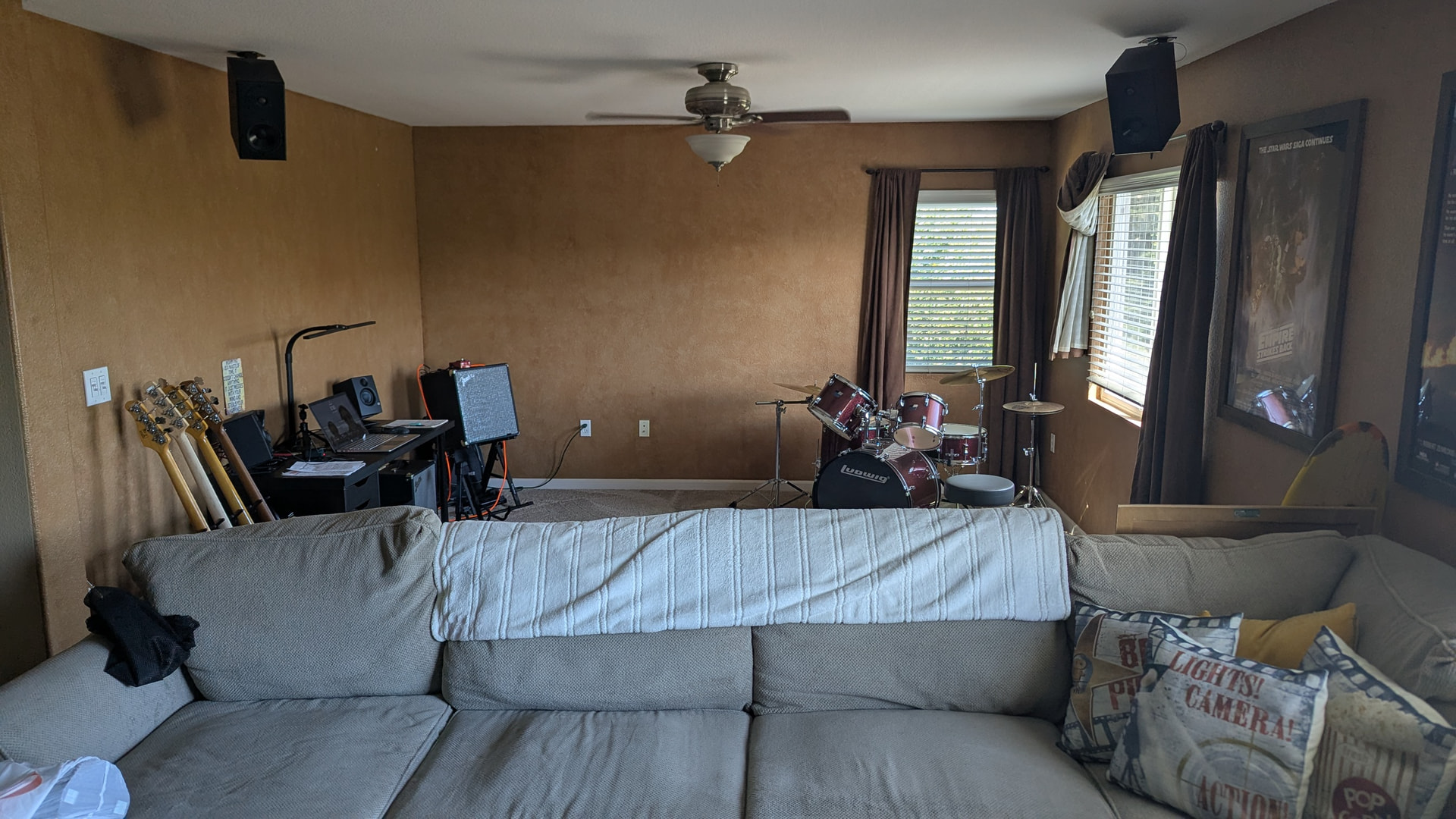
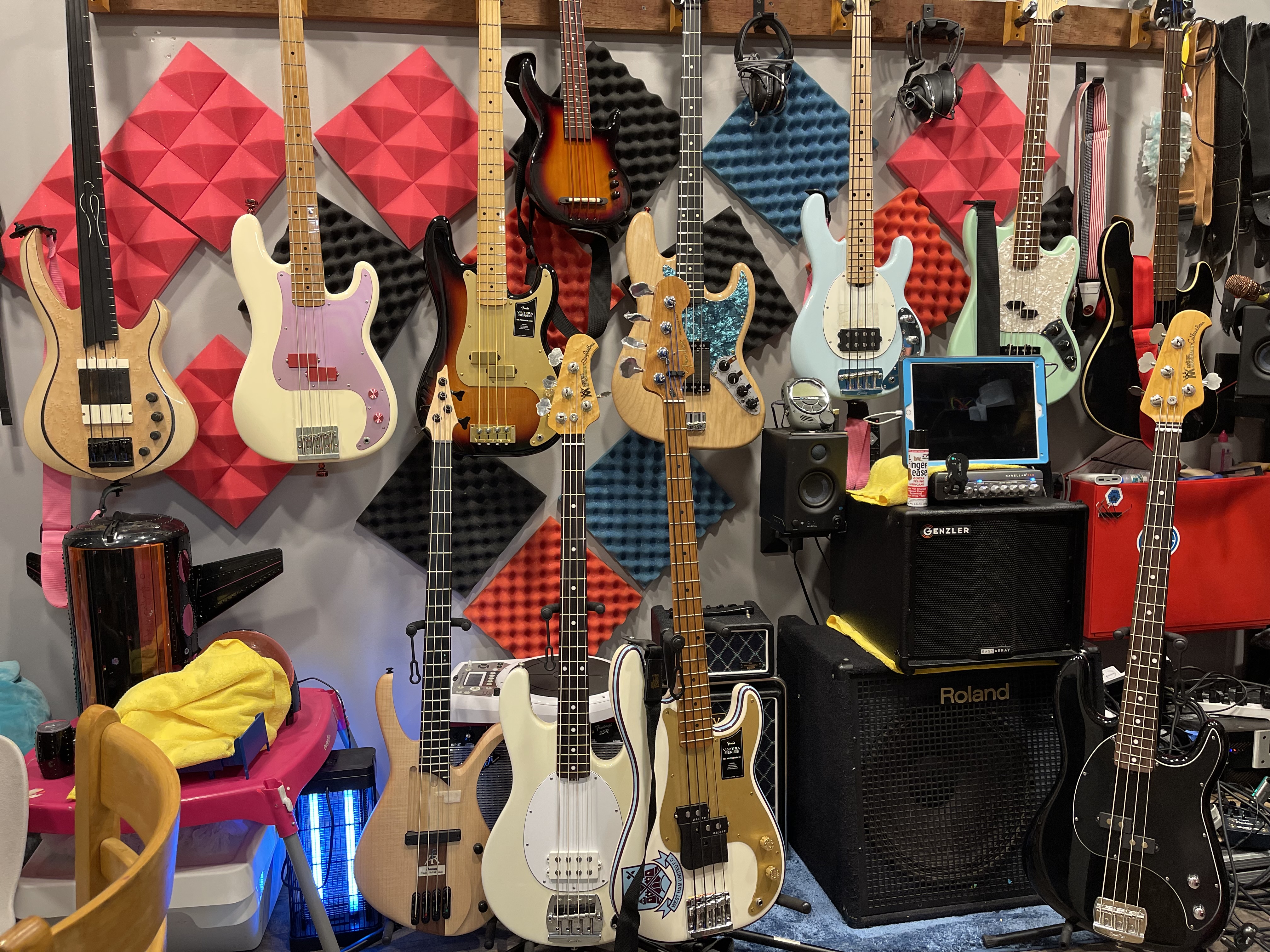
15x15 room open on far end and left side. My kids use the space to practice; bass, guitar, drums, sax, banjo, keys. The only recording they do is for themselves to see if the arrangement sounds ok. My daughter mentioned some boominess from the bass and drums.
Would this space benefit from some basic treatments and if so, where and what?
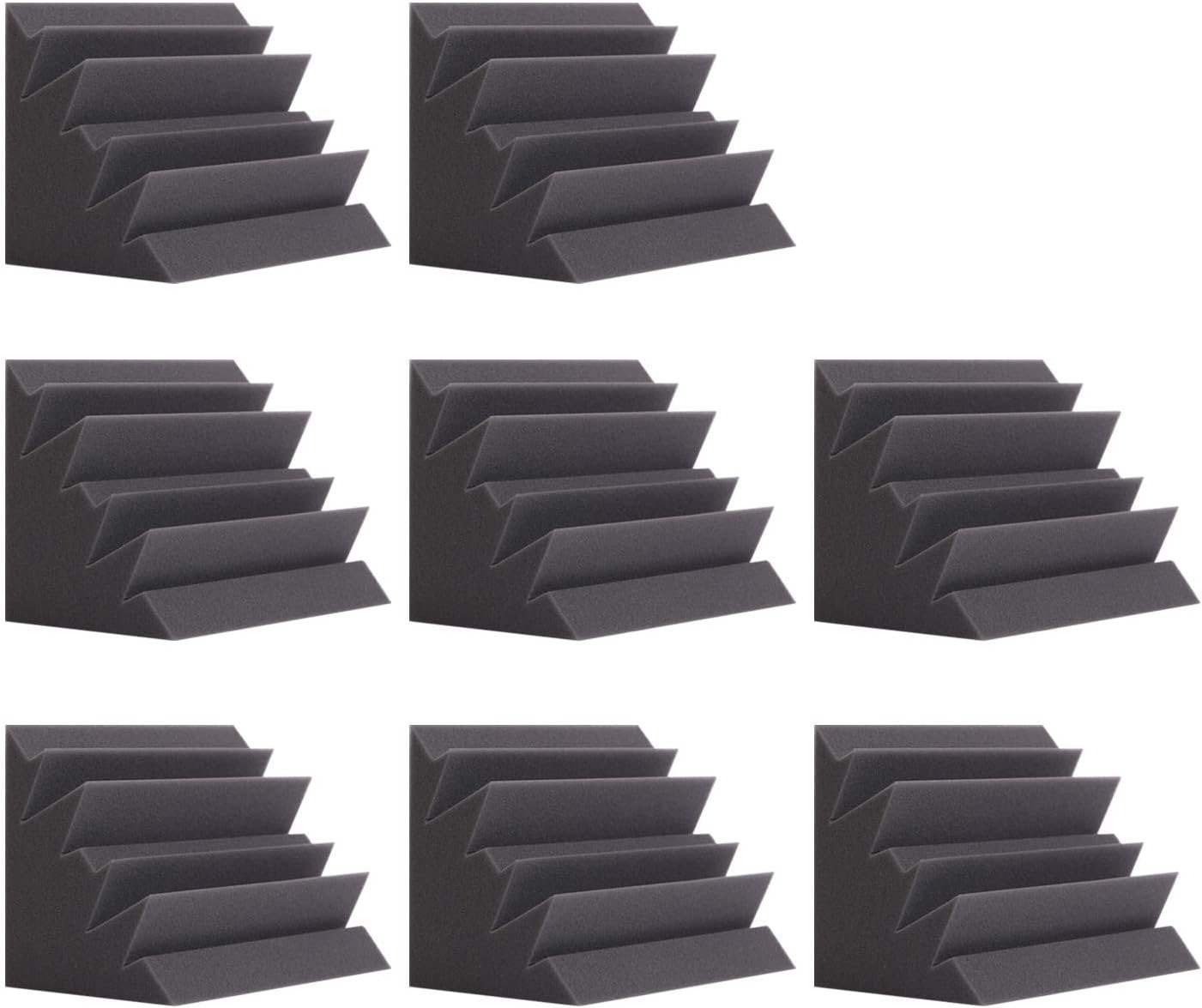
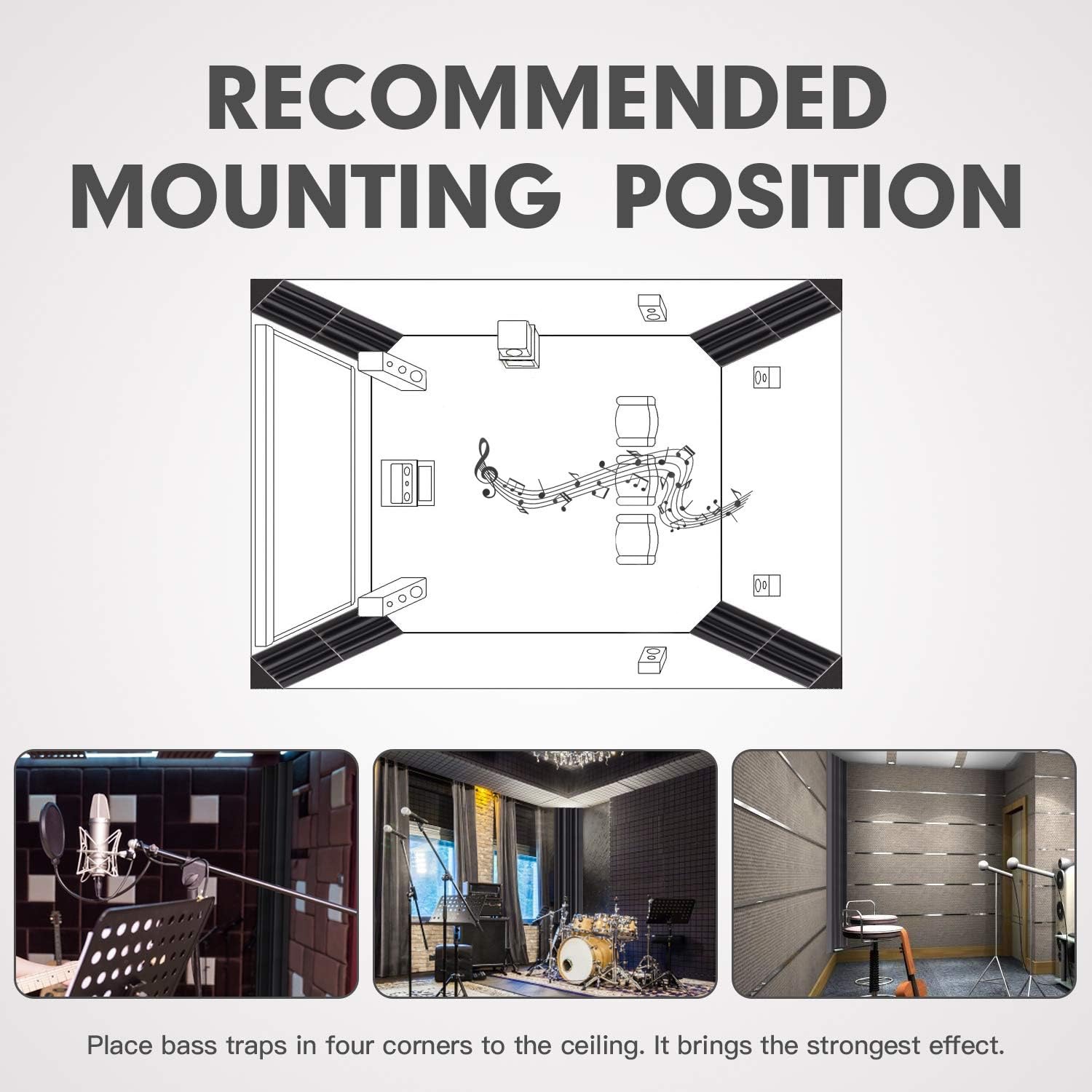
Start with the foams then when it’s too dry then take some out. Don’t waste your money on defusers. The flat ceiling may need some corner bass trap foam but that’s about it.
Short Version
Simple acoustic treatments like foam pads aren’t going to do anything to help with boomy bass. You can put more padding between bass sources and the floor to keep it from becoming a resonator, and experiment with where bass instruments are positioned and pointed in the room.
Long Version
Acoustic treatment is actually a lot harder to do effectively than people realize. When you look at a pro recording studio, and see the foam baffled surfaces, that is literally just the SURFACE. The full treatment is probably a layer of materials that can be 6-12 inches deep.
Bass frequencies are especially harder to absorb. The longer the wave length, the more depth of material is needed to absorb it.
What you can actually do that would make the most difference is to put more padding between your bass instruments and the floor to prevent the ground from acting as an amplifier.
Also try positioning bass instruments at different locations in the room and pointed in different directions to minimize how boomy they get.
Foam acoustic pads can have a place in recording, but not for bass.
I’ve got some foam pads as acoustic treatment in my HiFi listening space, but the goal of those is to help how well I can perceive the imaginary sound stage (where instruments are positioned in a stereo recording), but cutting back reflections of higher frequencies that can confuse my brain.
Foam treatment can also help tame issues of sibilance - very high frequencies like the sound of Saying Esses, high hats, and fret noise.
Love this.
Audio, audiophile and acoustic treatment is a selfish thing. It’s basically for one. One person, one source, and one specific location in the room. That’s why when you move from your “favorite” spot you hear the different mixed of frequencies.
For the most part, we just want to eliminate the unpleasant behavior. I like lively room acoustics, a dead room feels stuffy. The number one thing you need to eliminate first is the bass trap and flutter as some low frequency waves bounce back and cancel some active waves. Flats wall and ceiling is pretty much the worst when it comes to acoustic treatment.
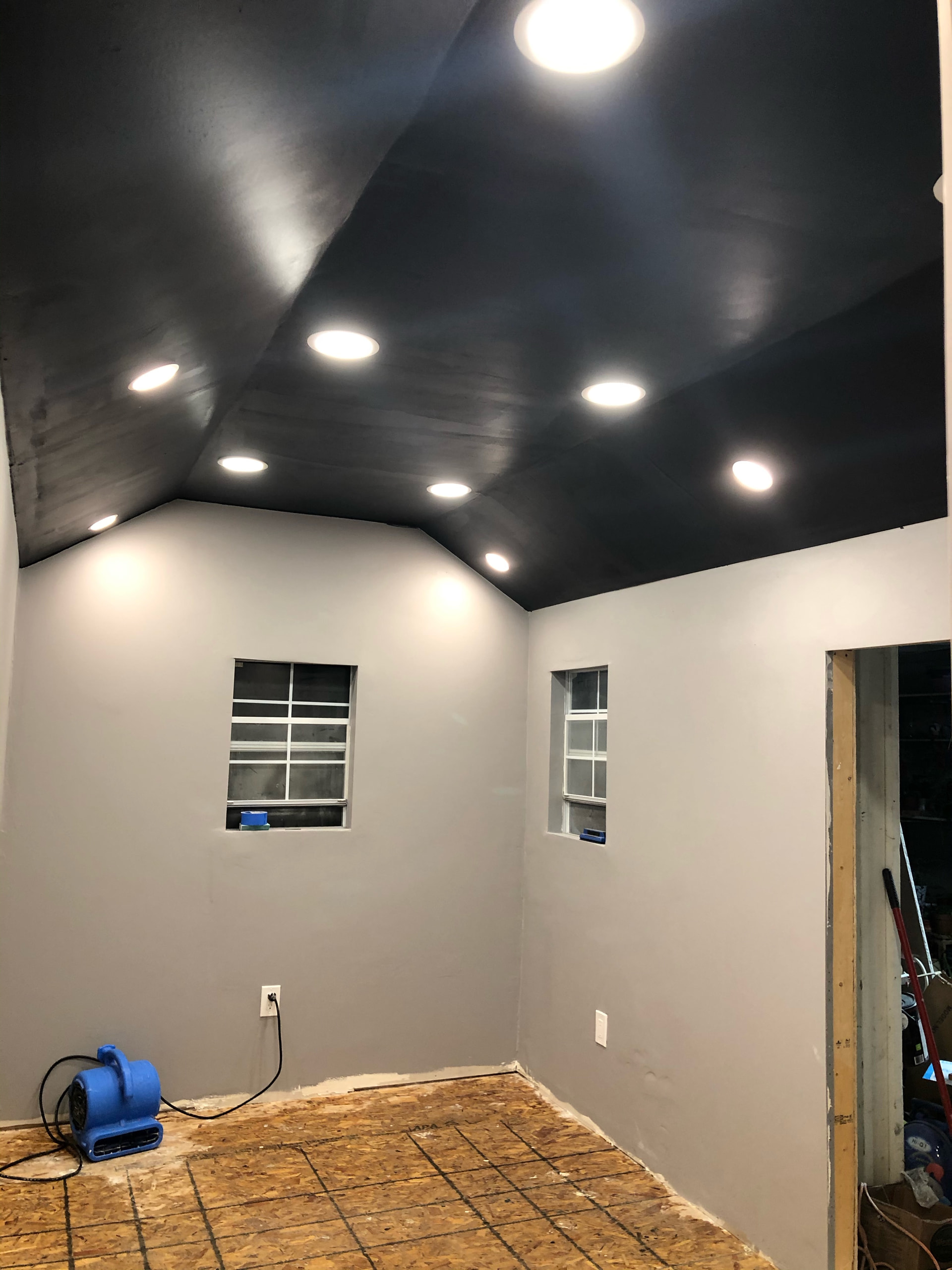
That’s why the number one parameter for me was the ceiling when I chose my shed shape, plus I glued on cheese cloth before painting the ceiling to reduce smoothness.
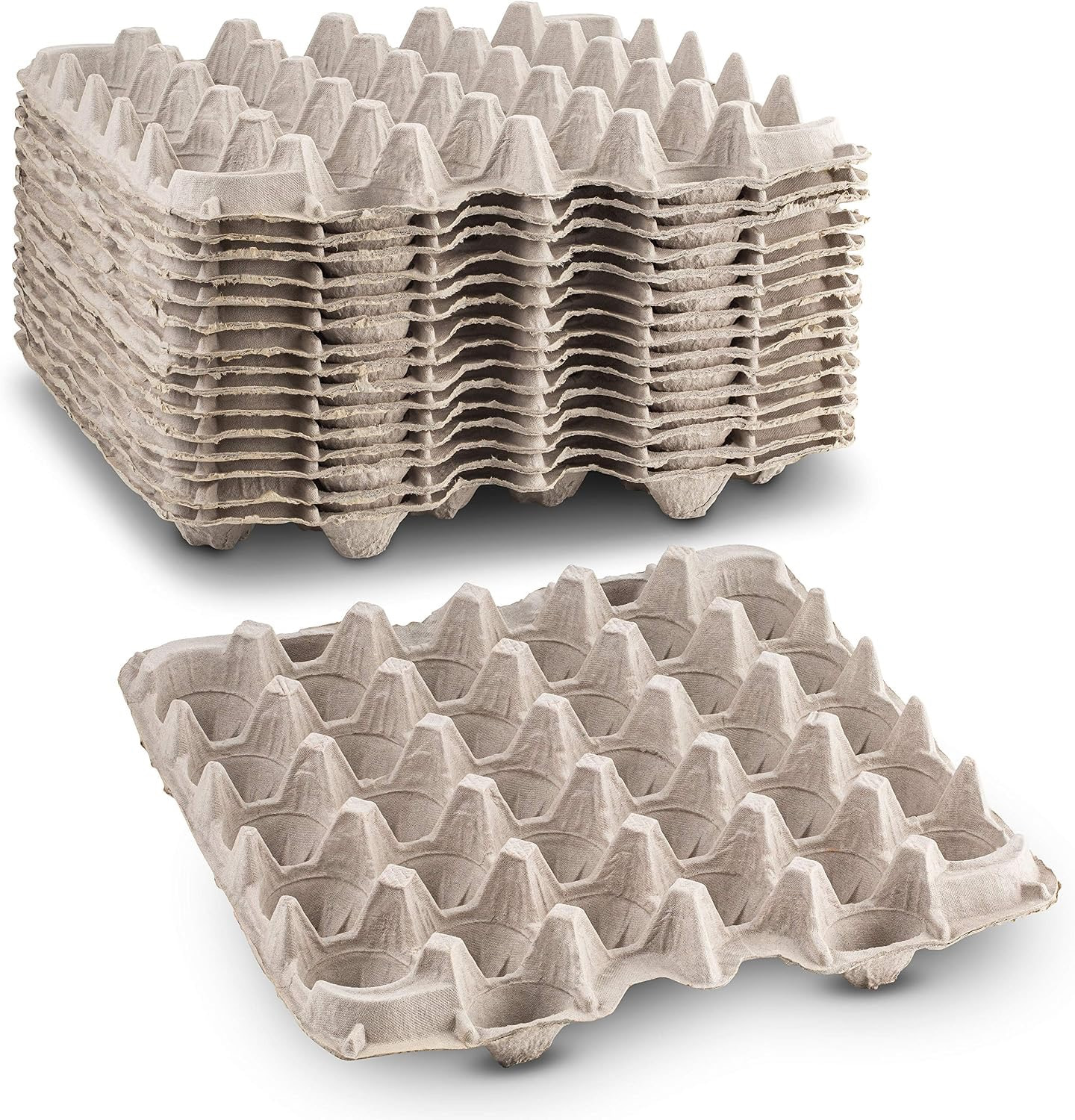
If you can figure out the way to get rid of the cardboard smell, the cheapest and most effective solution is the eggs trays because they act as both absorber and diffuser. I’ve done that in my first “home studio” vocal booth it’s fantastic. You can use water base paint to personalize it.
Yeah. I think I have posted before but my music space is a pathological worst case for this. All rectilinear flat walls with a big glass cabinet wall directly behind me. It’s terrible
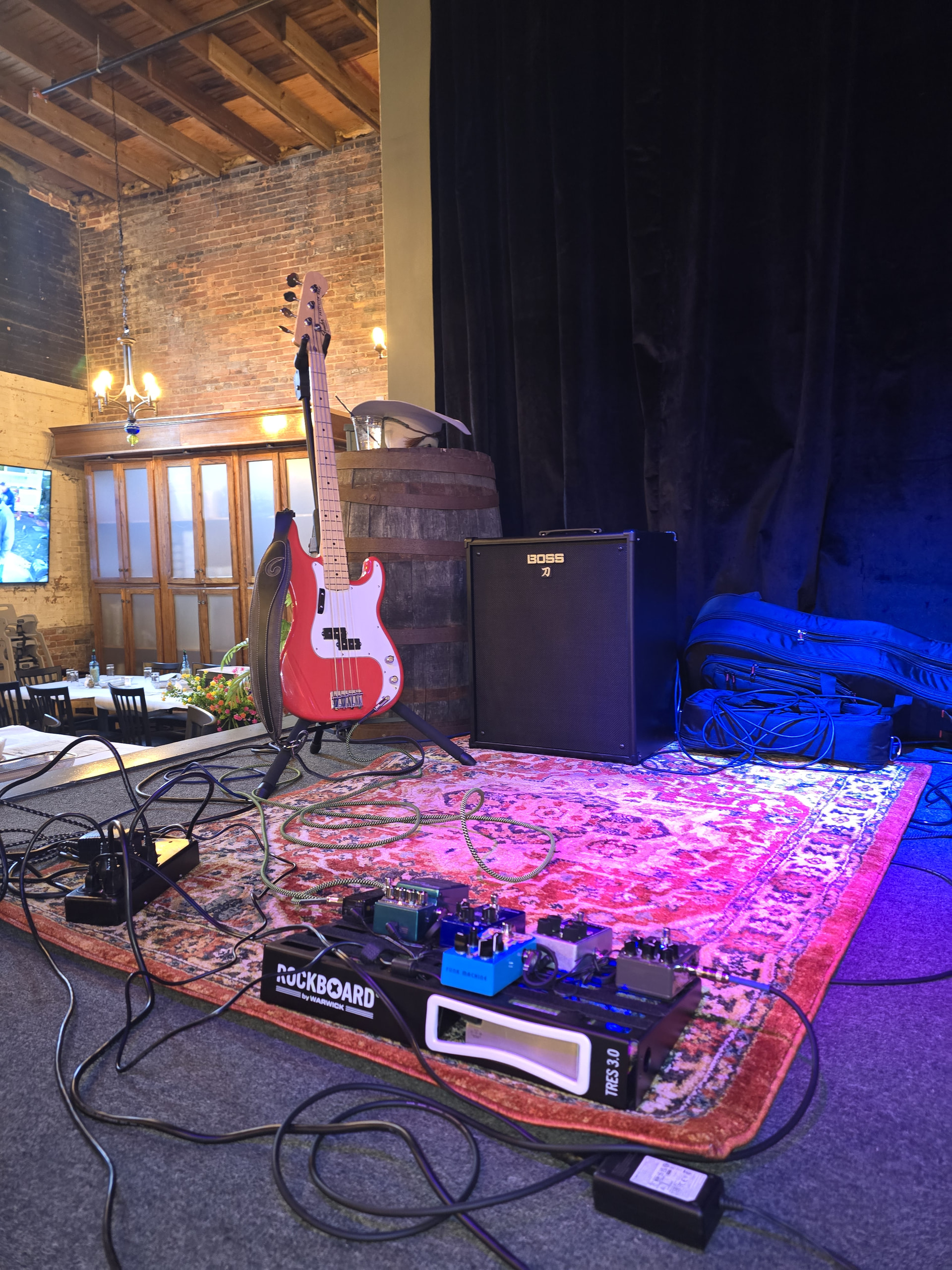
I like it, mostly I run it on clean setting and shape with pedals. Most of the gig stuff is clean with a little p bass growl. When i want more growl, ill switch to vintage settings. mostly country and southern rock in our band. I use the bass clone on the stuff with acoustic vibes as it gives a little depth and warmth to electric bass. Other than that it mostly just preamp and tuner. The other pedals are for fun and games. Chain of fools sounds awesome through the Funk Machine.
I haven’t messed with tone studio too much. There isnt much support for the bass stuff there so I wouldn’t buy it for tone studio alone. That said its fantastic as a stand alone. Loud enough for the venues we play, often too much as I run it at about 20-25%power. It will rattle fillings at 60% power. Tons of headroom. If you plug the bass directly to the amp, you can run at 100% with no clarity issues.
It sounds good with the upright too. I have a piezo on the bass going into a fishman acoustic stage preamp and run it flat on the clean settings on the amp.
It’s not light but I use a rock and roller cart to load in and out. I dont see a need to replace or upgrade at this moment. I don’t regret the money I spent on it. I got it on sale for 550 shipped from sweetwater. Even at full price 650ish its a good value buy for a stage ready amp.
The 1 watt practice feature is also awesome if its your only amp. All the connections are there for phones, computers, xlr, headphones and so on.
It should be known that there is no option to add an extension cabinet. While im not sure why you would need one, as this thing is loud by itself. You can however, plug in an EXTERNAL cabinet and power it with the amp. That will cut all power from built in speakers. I’m not really sure what this feature is meant for.
I probably should have noted that I have one already. One of my local guitar shops always sells the 210 at the same price everyone else sells the 110, so it was a no-brainer to get the 210 instead. I’ve just always used it as a practice amp at the 1W setting. It’s way overkill for what I’m doing so far. I’ve got the Bluetooth adapter and a GA-FC EX also. My only other pedal is a PolyTune3. It is heavy AF compared to a lot of the amps coming out now. I’ve been looking at trying to jam with others and doing the School of Rock adult band. Not sure if I’ll need (or want) to use my own for that or just what they have, which I think are all Rumbles at my school. Not looking forward to hauling it around if I use my own.
I’m not experienced enough to know if the tones provided in TS actually sound good or not as I’ve never used other pedals (or amps, really). In my small practice space they often seem very digital and unpleasant. Very likely user error.
I do find that for recording, I get the best results using the XLR out from the amp to my DI, then to the DAW, vs using the amp’s USB connection to DAW and just maintain USB for the TS config stuff. Better even than instrument into the Hi-Z input of the DI box.
And yeah, the speaker out as an either/or thing instead of as an extension cab just seems weird to me. I wonder if it can be rewired to do both….
Collect drink trays from fast food joints, they are probably better than egg cartons.
Also: Please keep fire extinguishers nearby and always have a plan to get out in the event there is a fire. The Station Nightclub fire opened a lot of eyes on fire safety.
Thanks everyone. Seems like it’s not really worth the investment of time and money for what the kids are doing. More money for basses sounds better anyway
as a house fire survivor, I really recomend NOT filling your studio with paper egg trays or similar to get better sound.. it may work for the audio side, but fire will eat it and spread like you cant imagine…
belive it or not but fire is VERY hot… lived in concreat well built house, and all the wires in the walls and cealings melted…
bass traps in the corners should help, and those foam things are fire retardant or atleast thats what they say
You probably have already tried this, but extra damping inside the bass drum that’s resting on the outer skin, and lower skin tension on the drums may work too limit the boominess.
Also, not sure if you have tried a deflector in front of the bass amp to diffuse the speakers beam…
Both these techniques make my living room a manageable jam space.
I don’t think this sounds weird. Consider if you take the amp to a venue with a 4x10; you would want to drive that instead of the internal 2x10 if possible.
The reason it can’t do both is that they wired it such that that would make the impedance problematic, likely because the two internal speakers are something like 8Ω wired in parallel for a 4Ω load (assuming the amp expects 4Ω). The other option is to wire it such that you can use both and then place impedance restrictions on the external cab.