
Thanks for the link, this was a very interesting and informative video!  This is very helpful before choosing a new bass.
One question. Do all single coil pickups produce a hum? I have a jazz bass. I don’t hear a hum, but I have some tinnitus, so it is possible it produces a hum and I can’t hear it. How can one be sure? I don’t know how the aforementioned hum is supposed to sound like. Is it something one can hear only when using a more powerful amp? Is it audible when recording directly to a DAW?
Single coils do not produce hums - they act like antennas that pick up EM hums from the environment.
The hum actually comes from electrical equipment in the environment - lights, microwaves, cell phones, things like that. There is different amounts of random EMF “noise” in different environments. I get tons of hum at work with flourescent light fixtures, and basically none if I stand on my back porch.
You can often change the volume of this by rotating your body so the bass is at a different angle.
If you add a second coil wound in the opposite direction you are picking up the same hum, but at an inverted frequency. Inverted waves cancel each other out.
Thanks, that’s good to know. So far I haven’t been able to hear any hum. But it is a good reminder to keep cell phones away while recording.
This reminded me of this other source of hum:

J basses get the same hum phase cancellation by using reverse wound neck and bridge pickups. And they then also invert the magnets so it does not cancel the string vibration. Clever trick and why many pickups are marked as neck or bridge.
It is my understanding that for this to work, the dual volume controls (V-V) need to be set at the same level. I’m not sure how that works with a single volume control with a blend control (V-B).
@Andrea_FI , the hum comes from 50/60 Hz A/C power. That’s why it’s in the low frequency audible range.
It’s a gradient. The signals need to be exactly equal to cancel each other out completely. But any amount of blend will cancel out some.
A blend knob acts the same as V/V. Centered, both circuits are (theoretically) equal. As you turn it toward one side or the other, it is the equivalent of turning down the volume on one pickup.
As you turn down the volume or adjust the blend, you will gradually hear more hum until you hit the maximum for that pickup.
So if you turn the guitar upside-down, it will hum? 
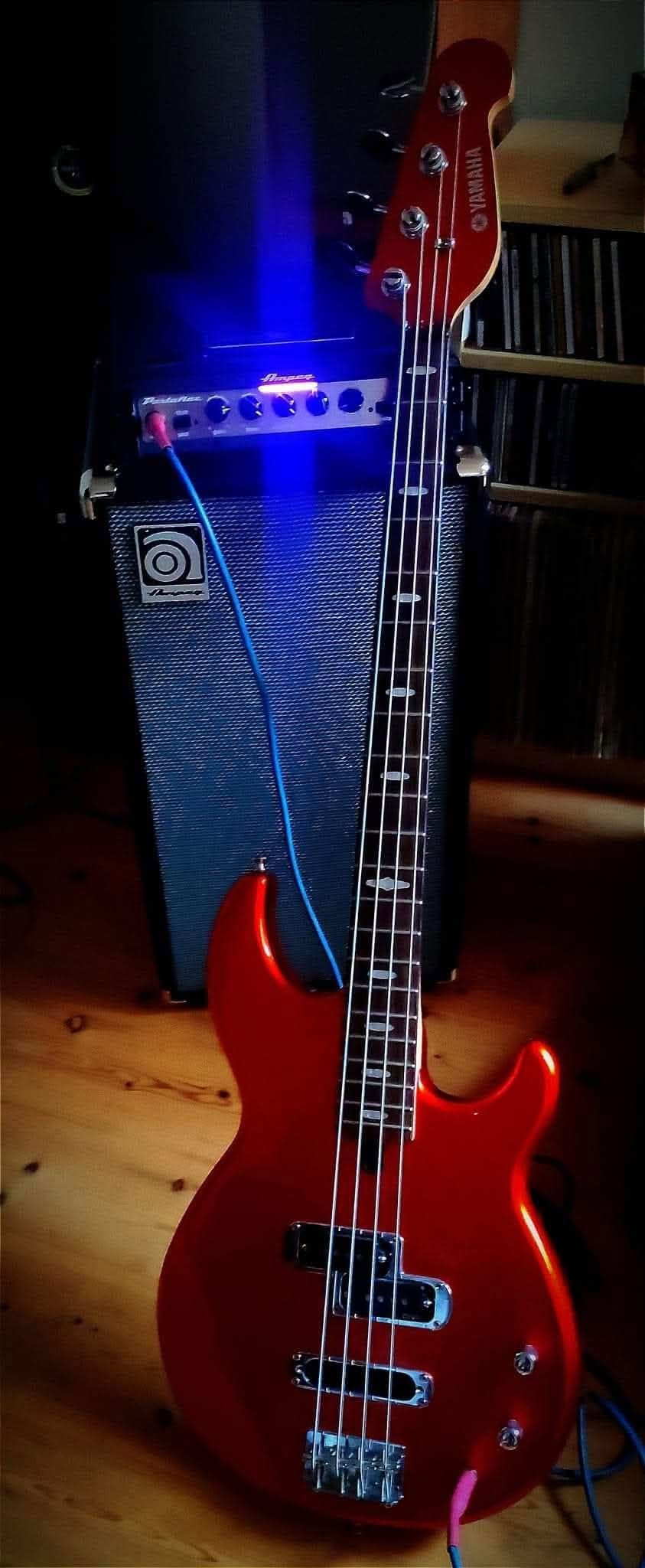
The A2 pickups in my JB-2 are both 95mm in length, but the A5’s in my JB (JB-4 actually) are 92 for the neck, and 95 for the bridge.
Also not uncommon; bridge humbuckers in guitars are often larger, and sometimes are called “trembuckers”, to reflect the strings widening towards the bridge 
Nice, what is it?
Not sure what model it is but it was built in Feb. of 1978. Nice find.
ETA: Saw the replies after seeing that beauty. My bad.
I think that I have noticed that before, thanks. 
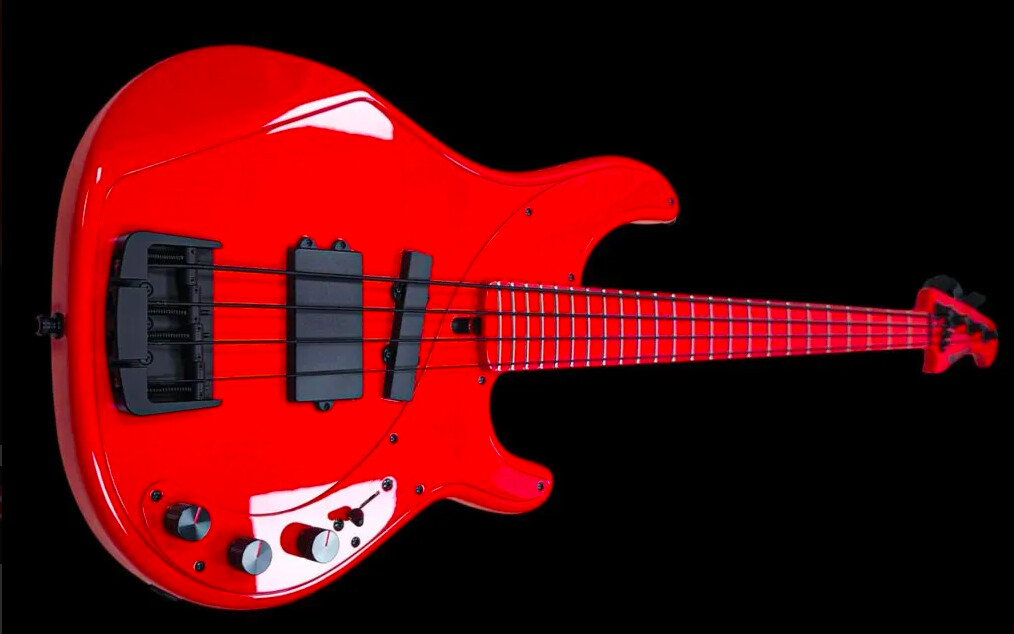
Alusonic Chris Wolstenholme 4 Signature High Gloss Ferrari Red
Should you have a spare £3,799, here the link 
Who’d a thunk it? Scott Devine signature basses from Overwater. Available at Bass Freaks for an eyewatering 6500 € each.
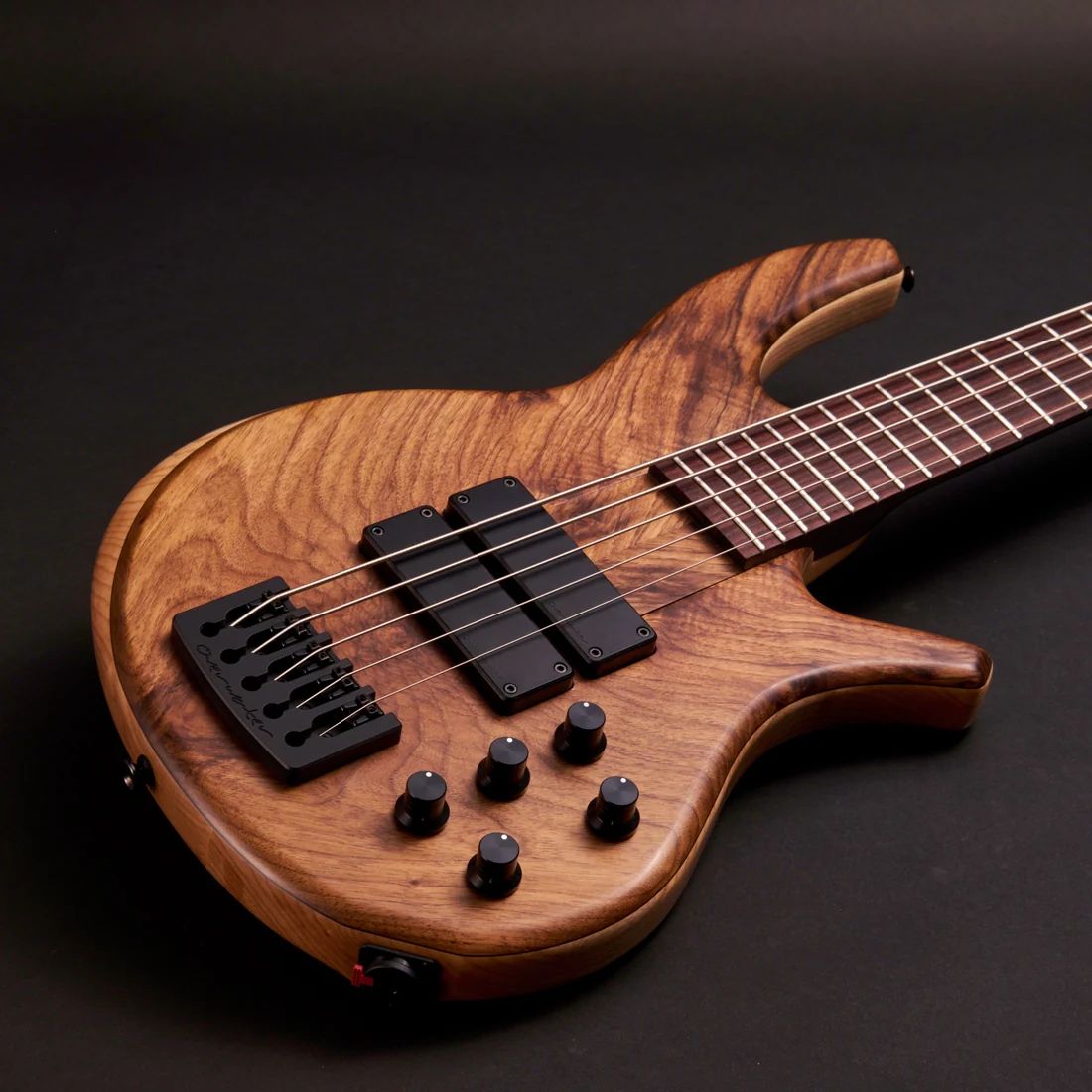
Overwater Scott Devine Signature Custom 5 - Figured Walnut Natural Satin
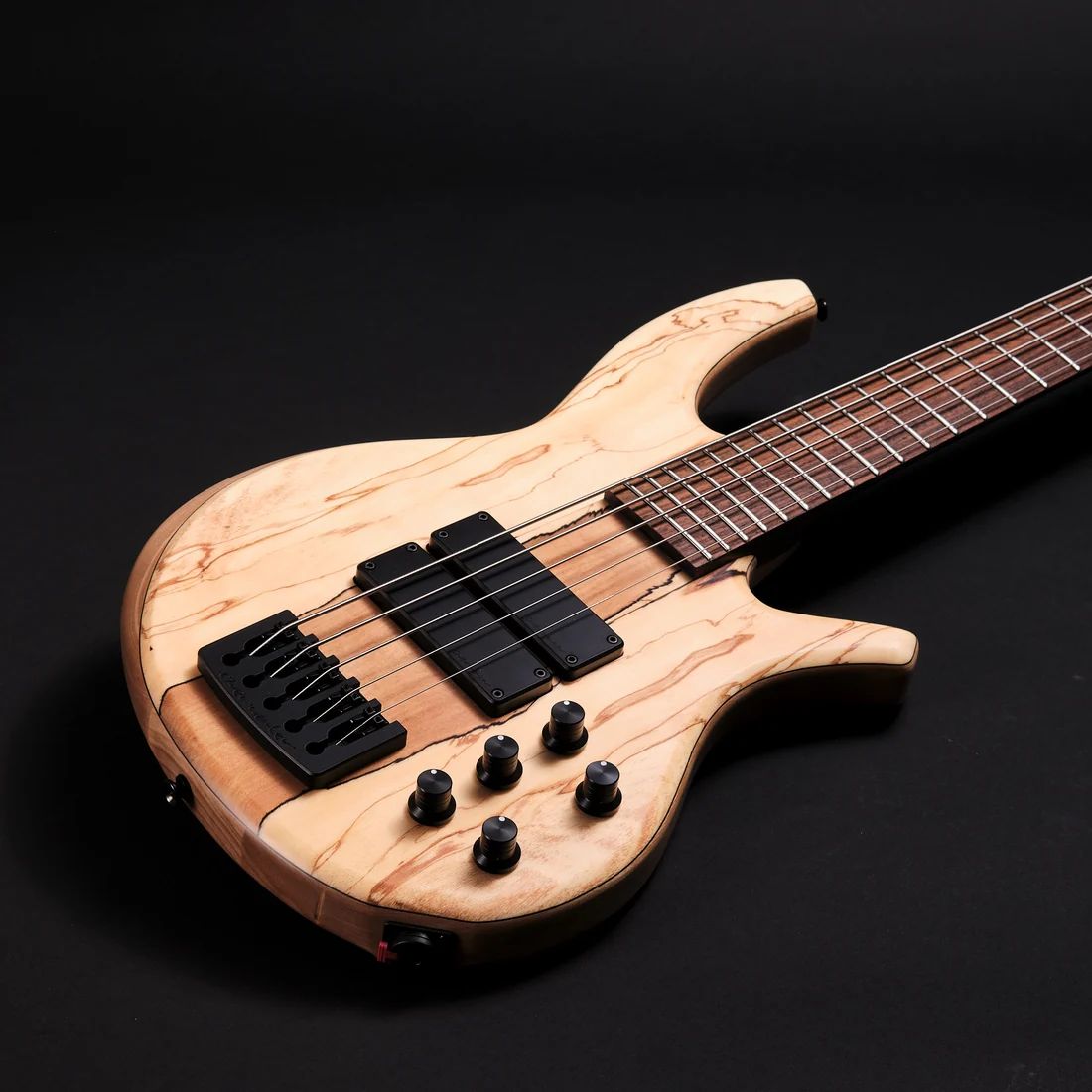
Overwater Scott Devine Signature Custom 5 - Spalted Beech Natural Satin
Does it have a switch that adds in excessive talking over your playing?
You know it!
Flip the switch and the bass automatically plays “Ramble On” on loop as Scott regales the player with a monologue about “…the time when I…” 
The walnut one is lovely, right up my alley! I am actually quite intrigued by the pickup placement. Tom Kennedy uses a similar one on his Fodera Signature.
Alas, 6500 eurodollars is nuts 
PS: Scott has had signature basses with Overwater for a long time. He used to work in their luthiershop.
Nope, not for me!