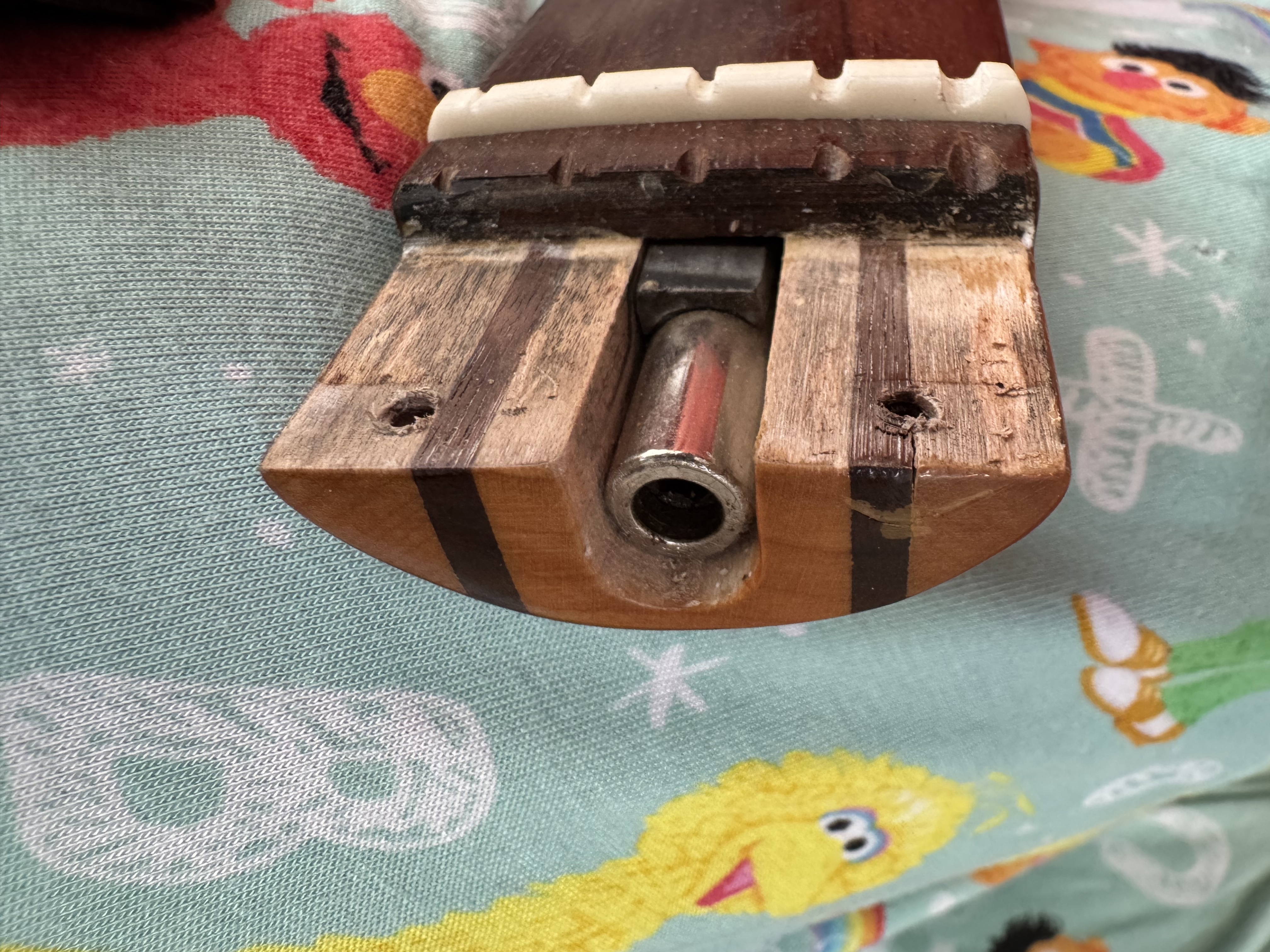
So I bought this neat used headless bass from a dude on Reverb, who did not disclose that he’d tightened the B string down so tightly that it lifted the headpiece off the neck and even put a little crack in it. I really want to avoid spending hundreds on repairs when I only paid $600 for the thing, and I have plenty of woodworking tools and supplies. Y’all know how I’d best about fixing this? Thanks!
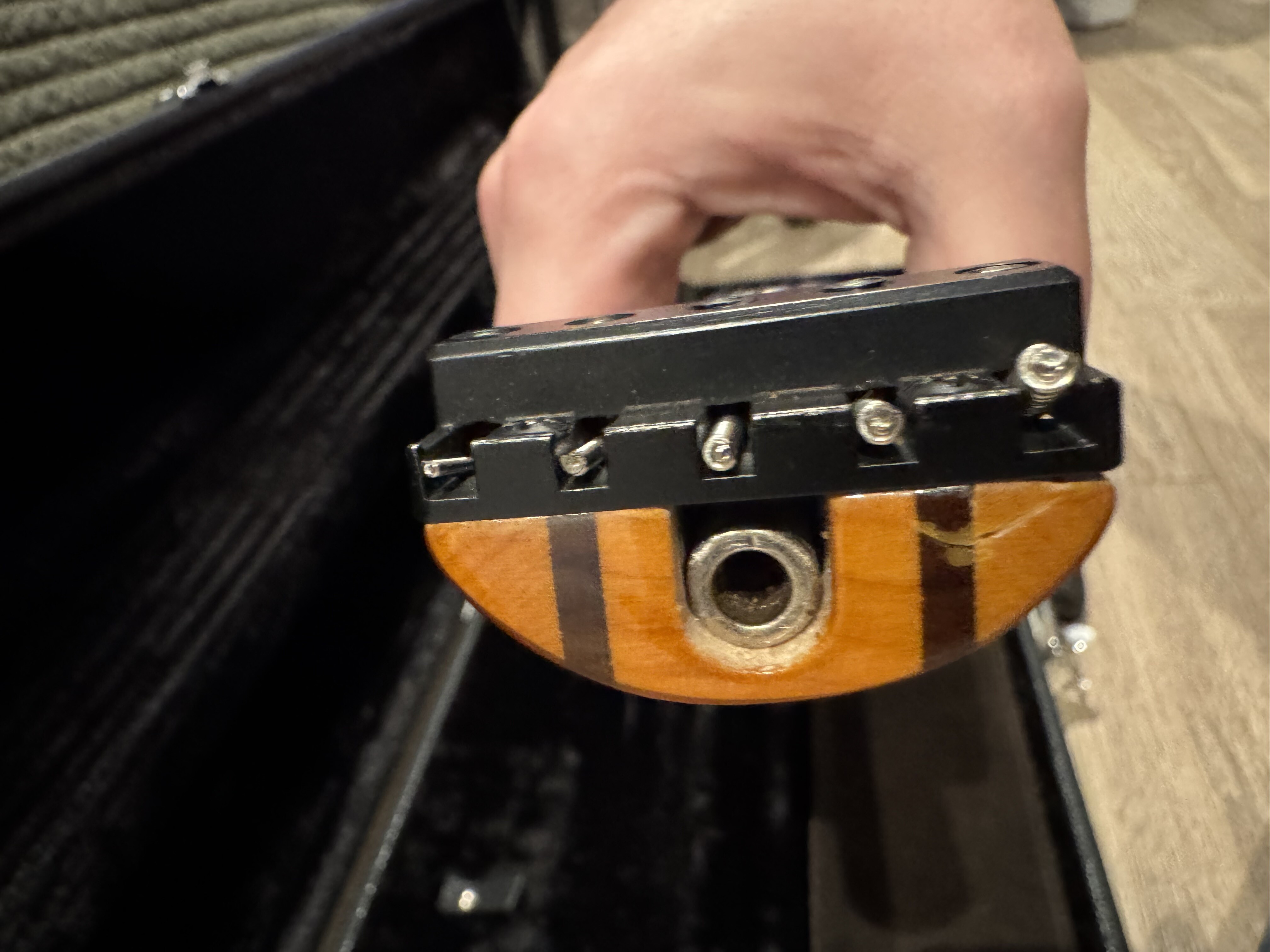
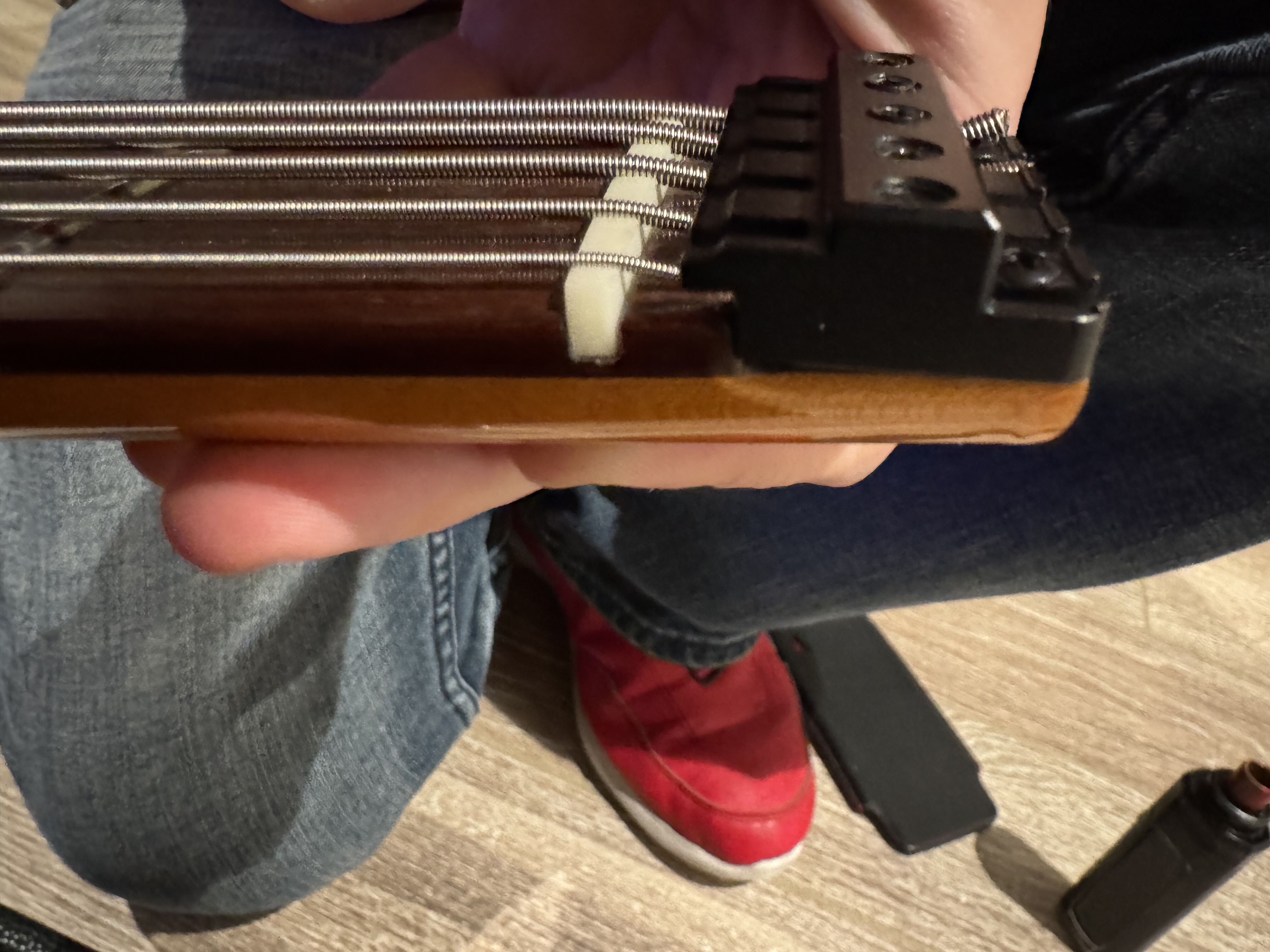
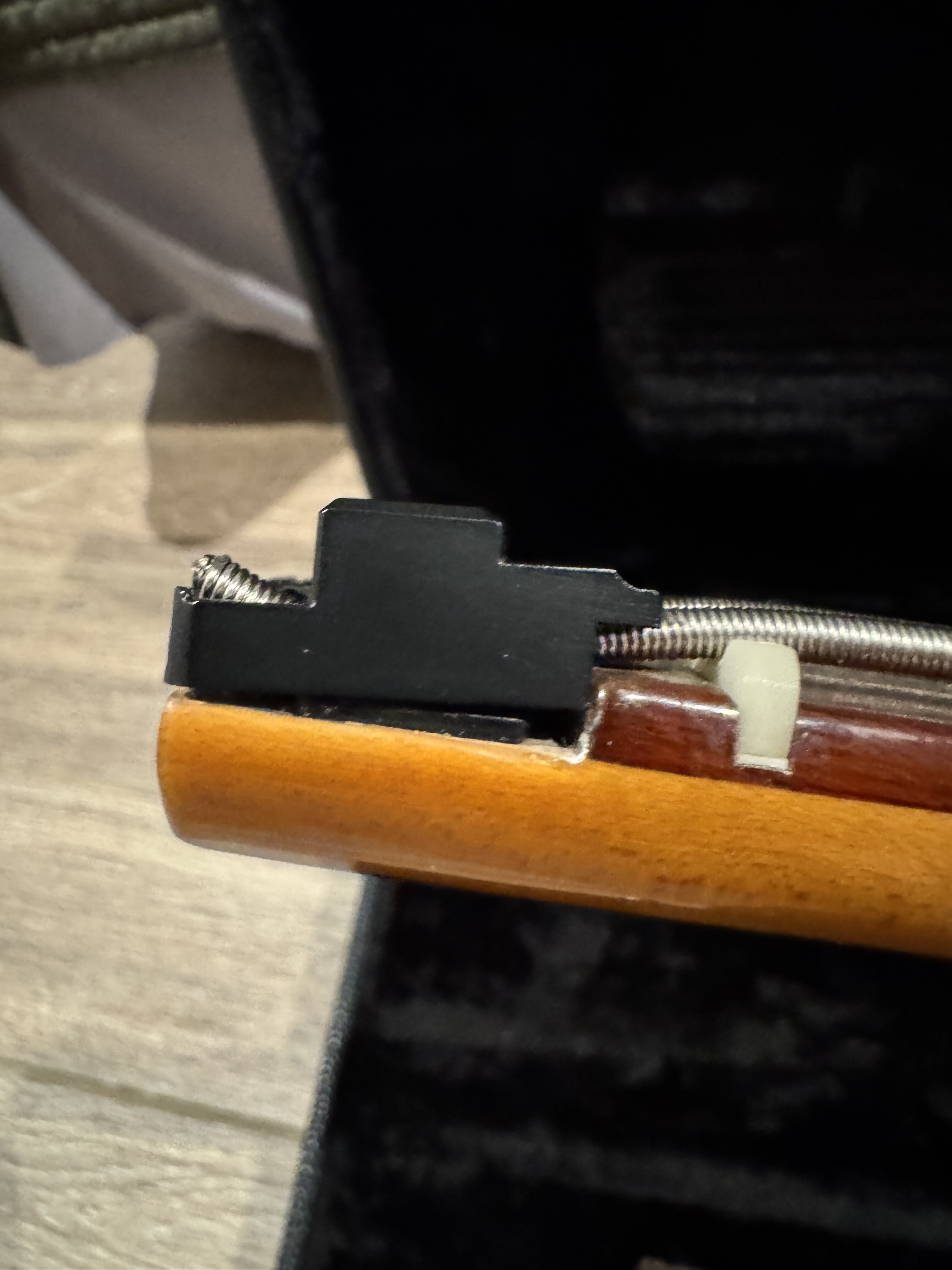
Oof! Tough issue to resolve… I am shooting from the hip, brainstorming here (engineer hat ON)…
In my opinion, the forces of the string on the bridge/ nut will be too much for any dowel and glue repair; I don’t think that direction will be sufficient to resist the forces.
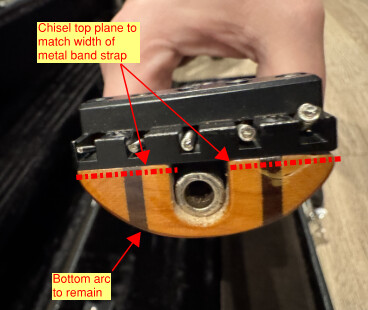
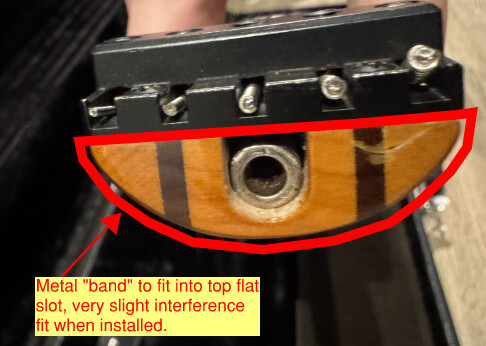
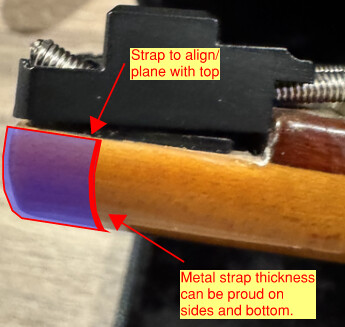
Perhaps a machine shop fabricated band or strap:
The top flat plane to be clearanced (chiseled down?) to match thickness of metal.
The sides and bottom shape to match the arc of the wood- it can be proud.
The strap can be shaped to have a very slight interference fit when installed (tapped into place) from the end.
I really think that because of the inherent force of the stings that the fix will need to “contain” the damage.
Images to describe what my mind is thinking:
2 Likes
Is that piece on in the correct way? Something looks off.
2 Likes
Wow, thanks for the excellent comprehensive solution. Yeah, the fact that the headpiece only has two screws near the end of the neck made me think that I don’t want to put it back as is, even if I were to glue and clamp the little crack and get a replacement plate for the bottom.
Honestly, it seems like the plate just wasn’t strong enough for the forces on the string and those two screws were nowhere near sufficient to hold it back in the event of a failure of that piece. The Rockinger headpiece that if appears to be based on actually has 4 screw holes on top, so it seems like it would distribute the forces better, but what I’m really interested in is whether theirs is a single piece or if it also has a bottom plate, because it seems like without that failure point, this wouldn’t have happened in the first place.
But yeah, your solution might be the best option to prevent this from happening again, especially if I were to keep this headpiece and just straighten out that metal plate, but honestly I wanna find a one piece headpiece so that this can’t possibly happen again, and preferably one with more than two screws right at the end of the neck lol
1 Like
Just realized I didn’t post the rest of the pictures. Yeah, so it was on correctly but I guess the headpiece was actually two pieces and the metal plate that covers the string channels failed on both edges. You can see how warped it is when compared against the straight edge of the headpiece top. The screws that secure the plate go in between the strings, but there’s nothing securing it on the “outside” sides of the B and G, and so the original owner must have tightened them down enough to actually warp the metal on those edges. That first picture is with everything screwed on correctly and tightly, mind you. The screws didn’t fail, but the metal edges on both sides of them deformed.
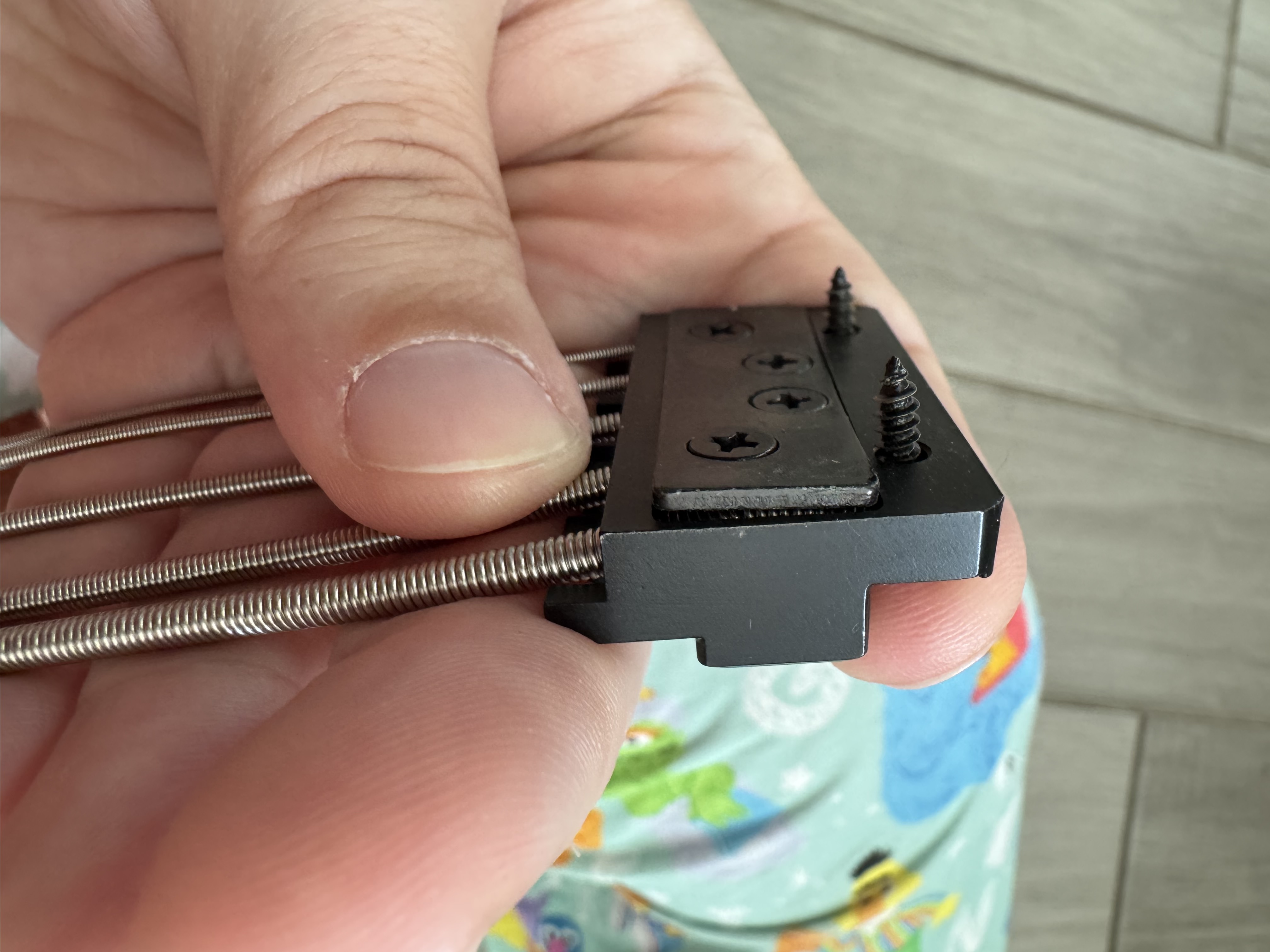
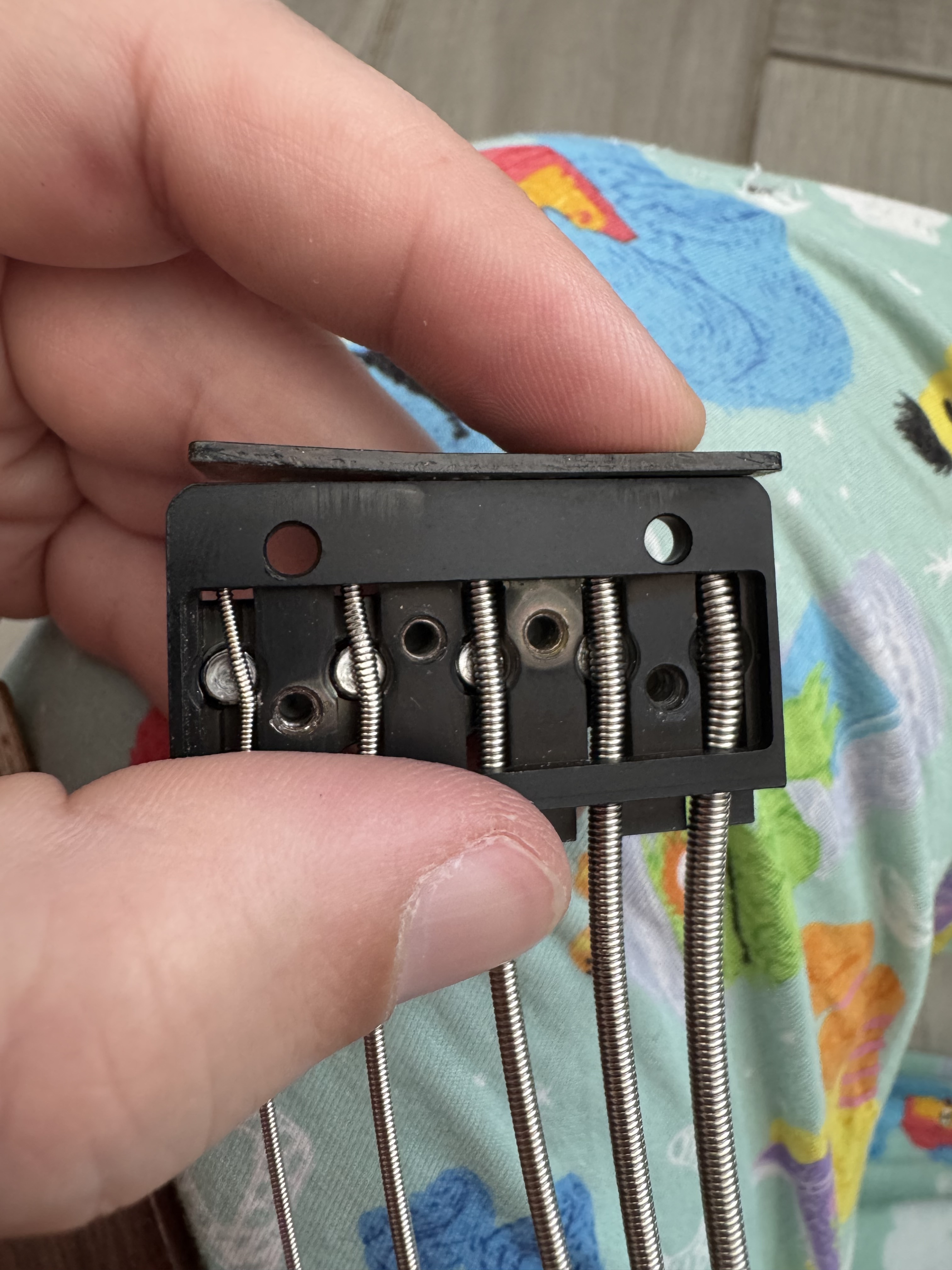
I agree, something doesn’t look right. I don’t have a headless bass myself so I’m just guessing, but from a mechanical standpoint it looks like the strings should pass on top of the headpiece and down through the slots visible in the second pic, instead of underneath the front edge like they do now. Then the headpiece would sit flush in the notch on the neck, since the strings won’t be in the way.
1 Like
I question the overall original design choices here in general. That’s a lot of tension for two small wood screws. I’d have expected a full end cap or something.
Consider that the typical bass bridge, which has identical tension on it, usually has five screws plus (if string-thru) the strings holding it down.
Maybe the thinking was that the primary force would be back into the fretboard? Seems pretty marginal, but I could be wrong.
3 Likes
Agree.
If a retro- fit/ repair is done similar to my sketch (or some other method) then possibly the steel band could be threaded to accept a short machine head screw… but you have to paint it a deep purple if one used that method 
2 Likes
I’d be asking for a refund. That things a mess.
4 Likes
Refund for sure. Perhaps a laege partial refund if you want to keep it but reverb would habe your money back in no time as long as you can prove you were not the one to fvck it up.
5 Likes
It looks like it’s intended to use the axial force of the headpiece against the fretboard as the main holder of the tension and the 2 screws just hold it in place. It looks like HipShot does a similar thing with theirs. Some others do the same but add 1-2 more screws. It’d be nice to see a pic coming from the fretboard down into the headpiece. The angles shown here almost look like the strings go under a bar and shouldn’t, especially with those divots gouged out at the end of the fretboard to try and allow the strings to get low (but obviously not enough).
This might be a good case for returning just so you don’t have to deal with it. If you keep it, maybe ask for a partial refund for having to fix it, and I’d get a better designed headpiece with additional screws and maybe some banding like @Frank_Beard suggested. But if the fretboard is the primary tensioning agent, some good wood glue and clamping will make that little bit quite strong in conjunction with the other screws.
4 Likes
Yeah let’s cut your loss and move on. The damage is at the smallest point of your bass that have to hold up to a lot of tension from B string and E string. Sooner or later it will comeback and bite you again.
What kind of bass is this again? It looks very DIY.
1 Like
I’m wondering, are most headless basses designed like this? I have never seen one except for videos and photos, but it seems the strings are fixed between two plates and screws. Now I’m wondering how good such a design is, and could the same kind of thing happen to other headless basses?
Also, are 5 strings headless basses more prone to problems? Considering how thick the B string is.
I’m curious. Do you have headless basses, @Al1885 ? Could you tell more about how the strings are fixed in the head?
Are regular basses (with headstock and tuning pegs) safer?
Up until now, I imagined the only possible bad thing about headless basses is if the person doesn’t trim the strings close enough, and they could possibly end up scratching people or things.
1 Like
I would return it and have a full refund. Even if this can be fixed. The seller should have been honest about it. A crack in the wood, and the metal is bent.
3 Likes
As it turns out I have a few, 
All of mine are either reinforced by metal cap or extra meaty wood. Same goes to the Steinberger headless, which is the closest to OP’s style of headless.
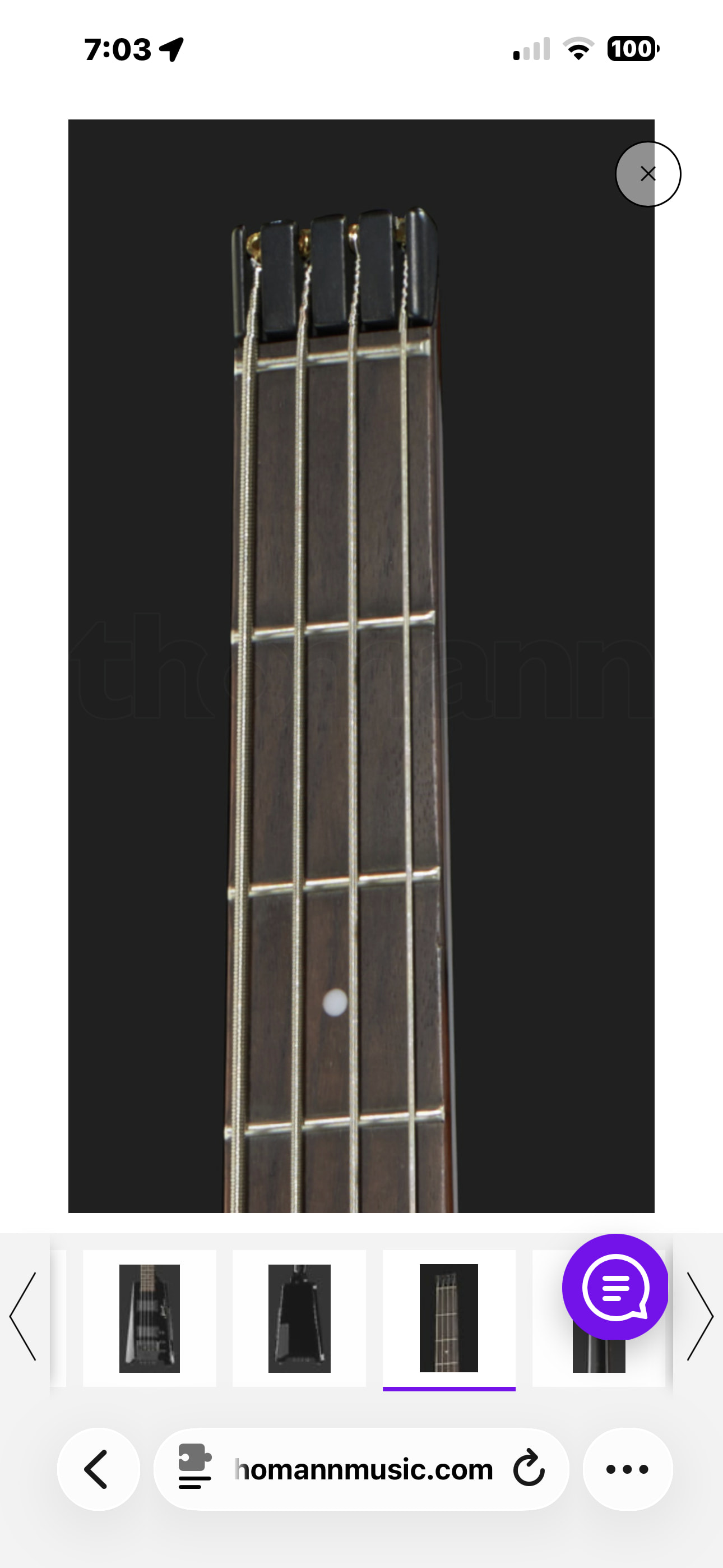

Here’s my TB-4P
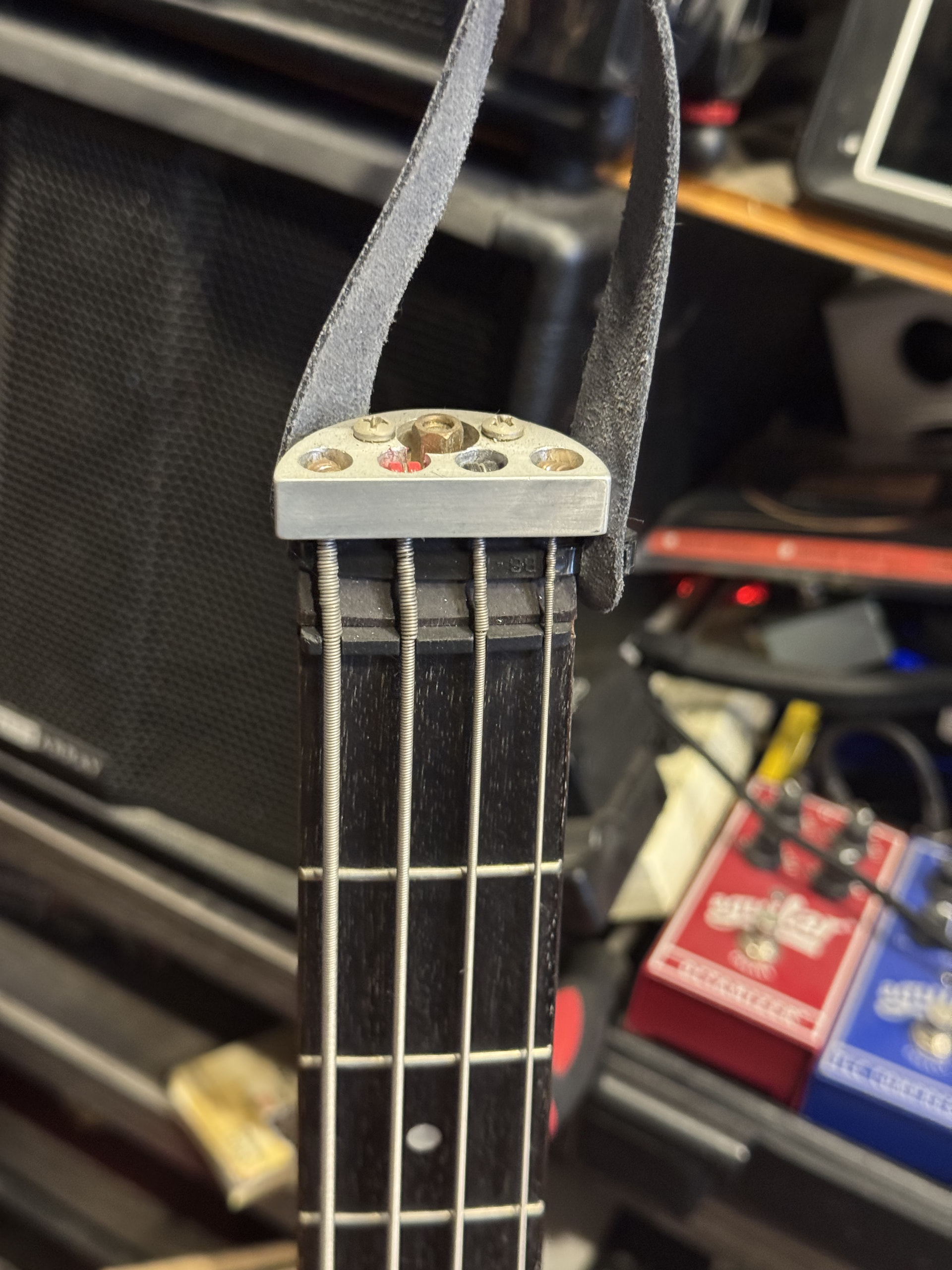
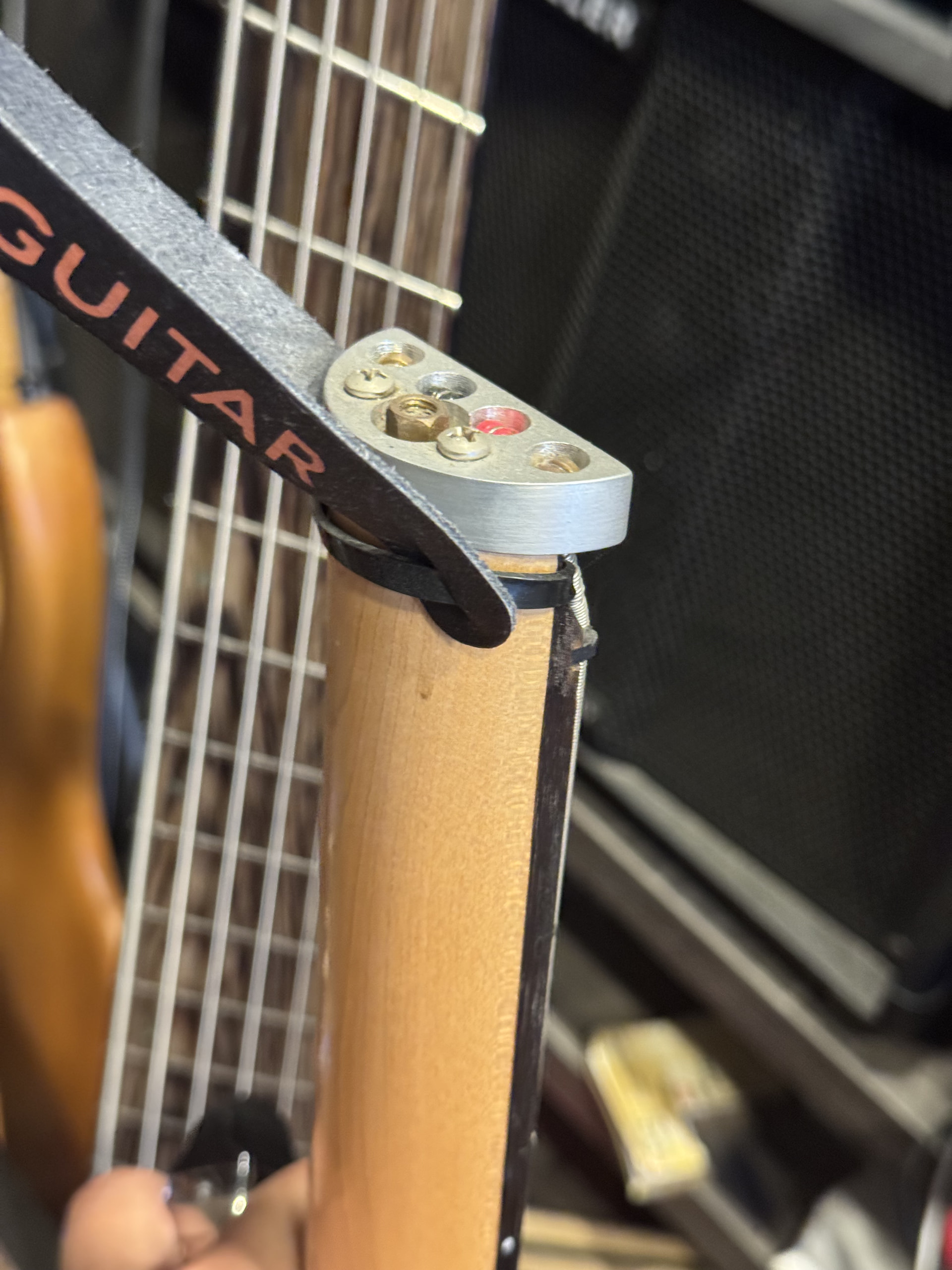
EG-1 custom
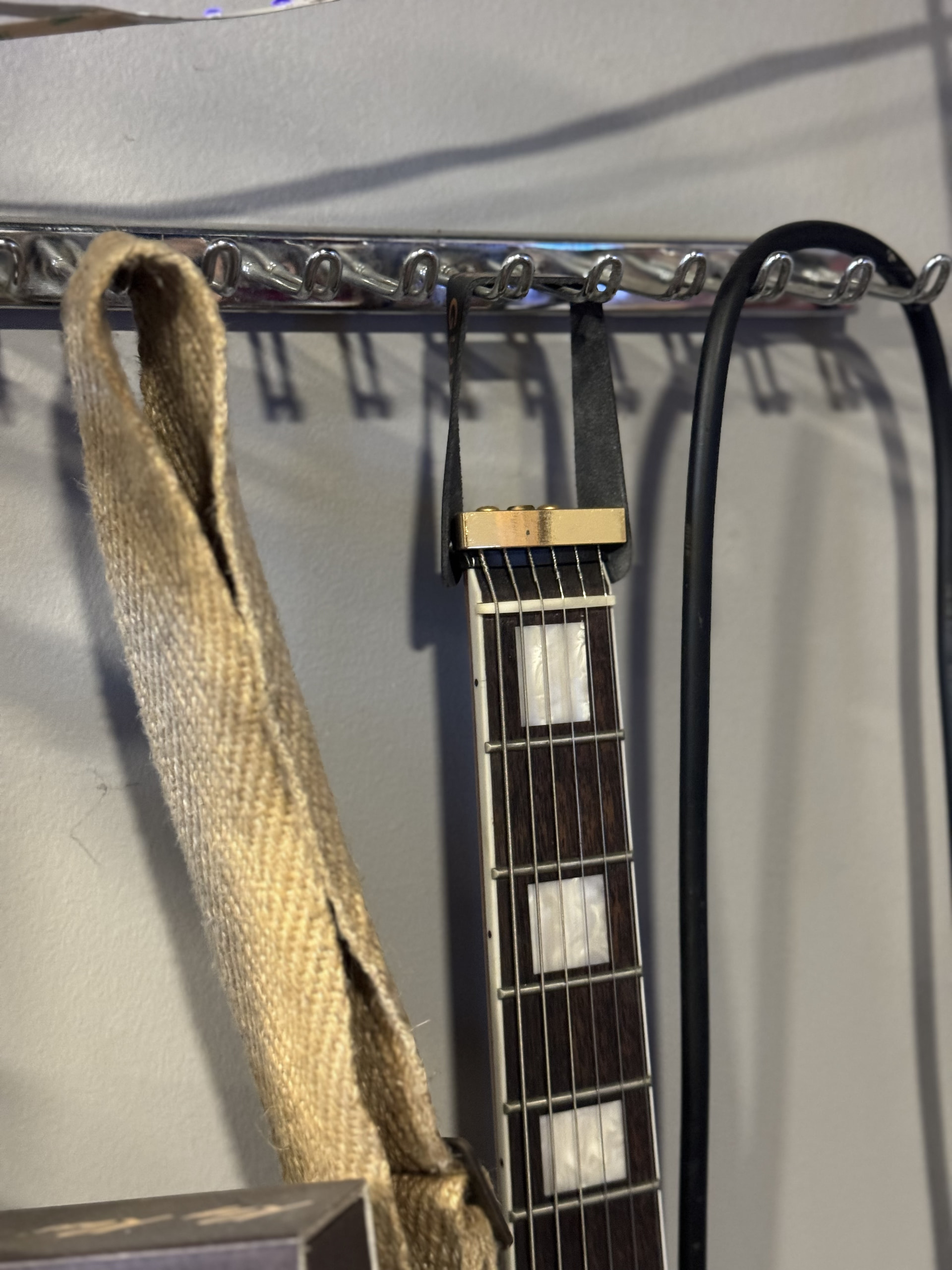
The Ibanez 1506 6 string bass
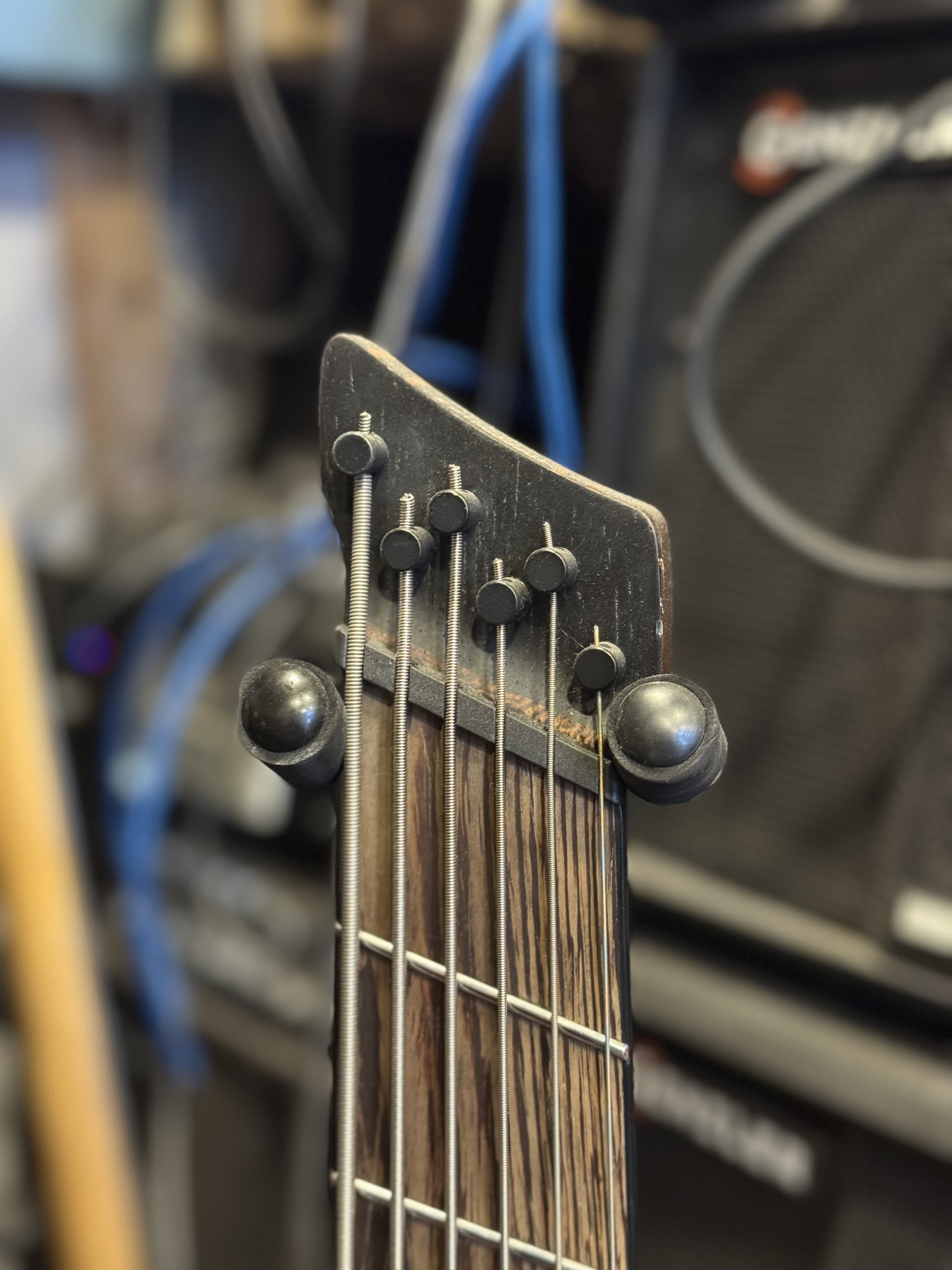
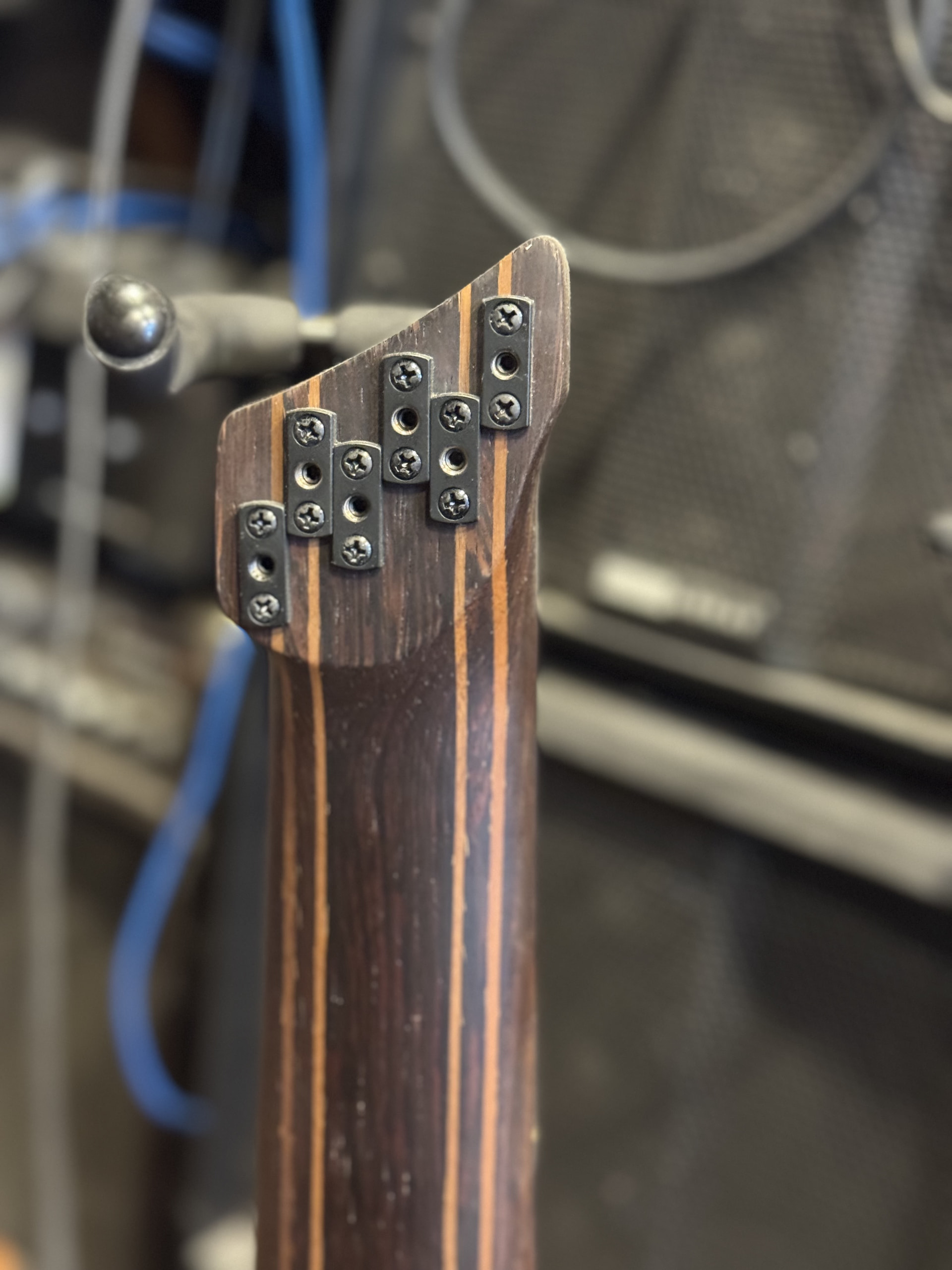
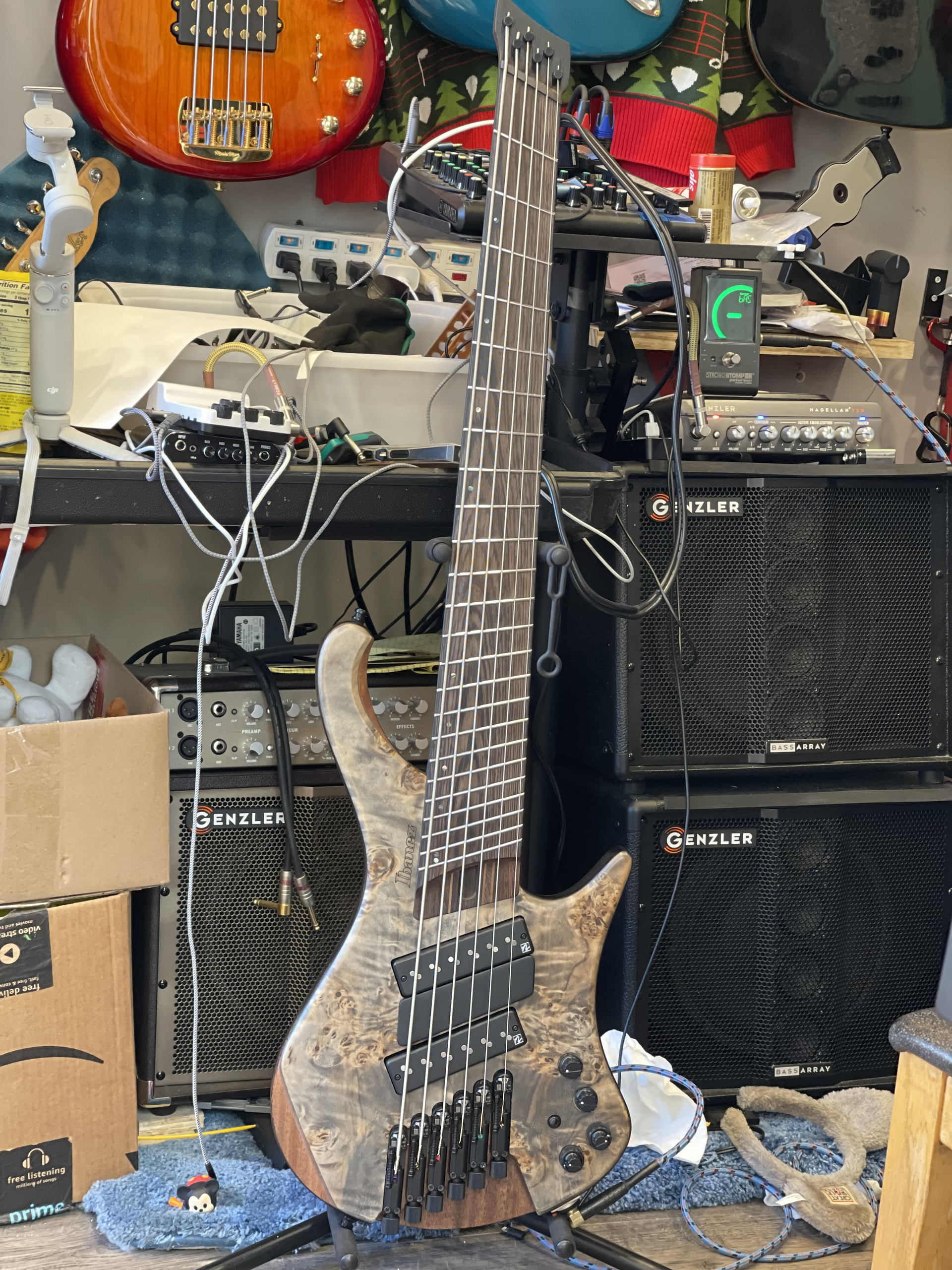
the stineberg* NX-6
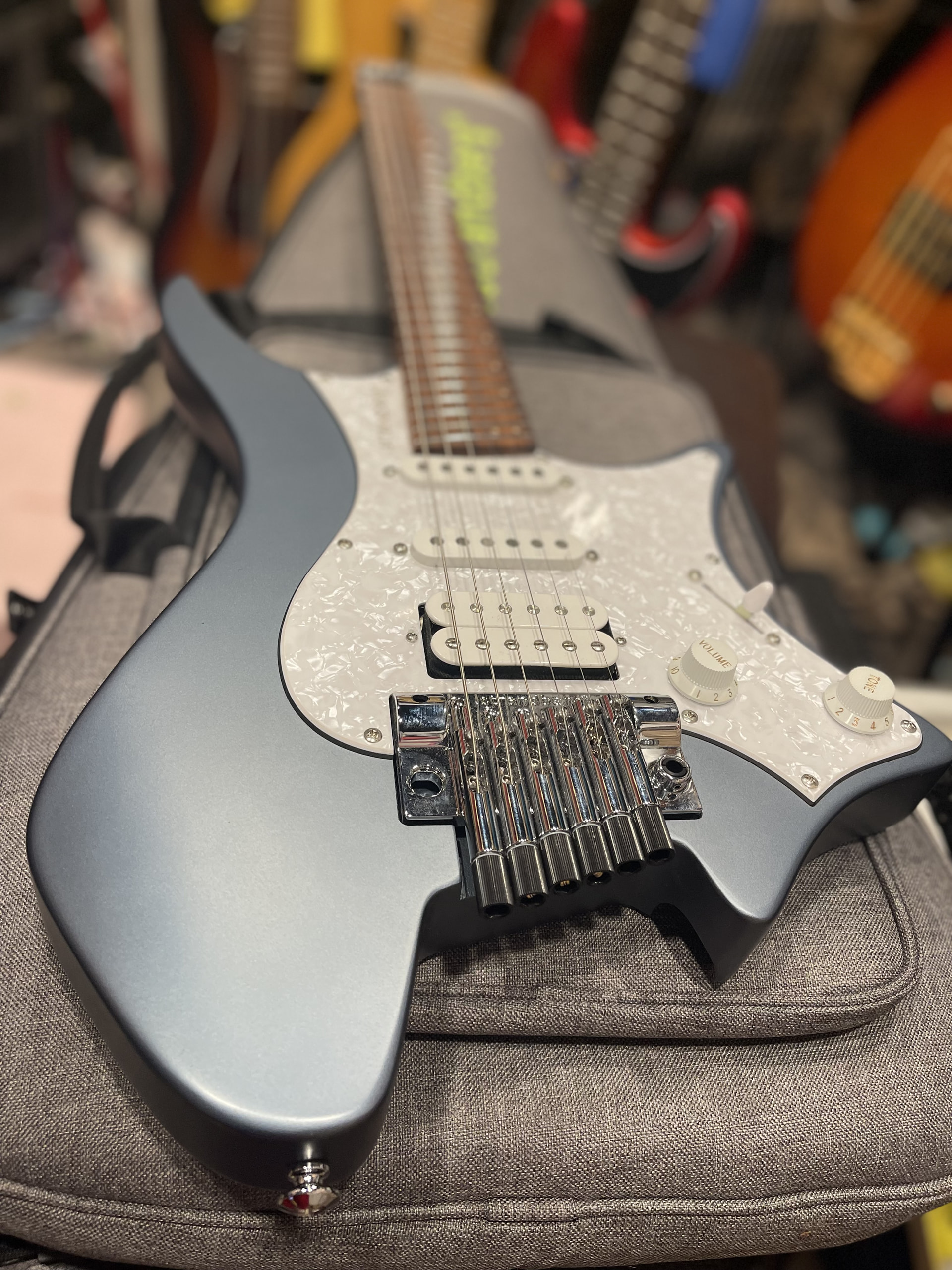
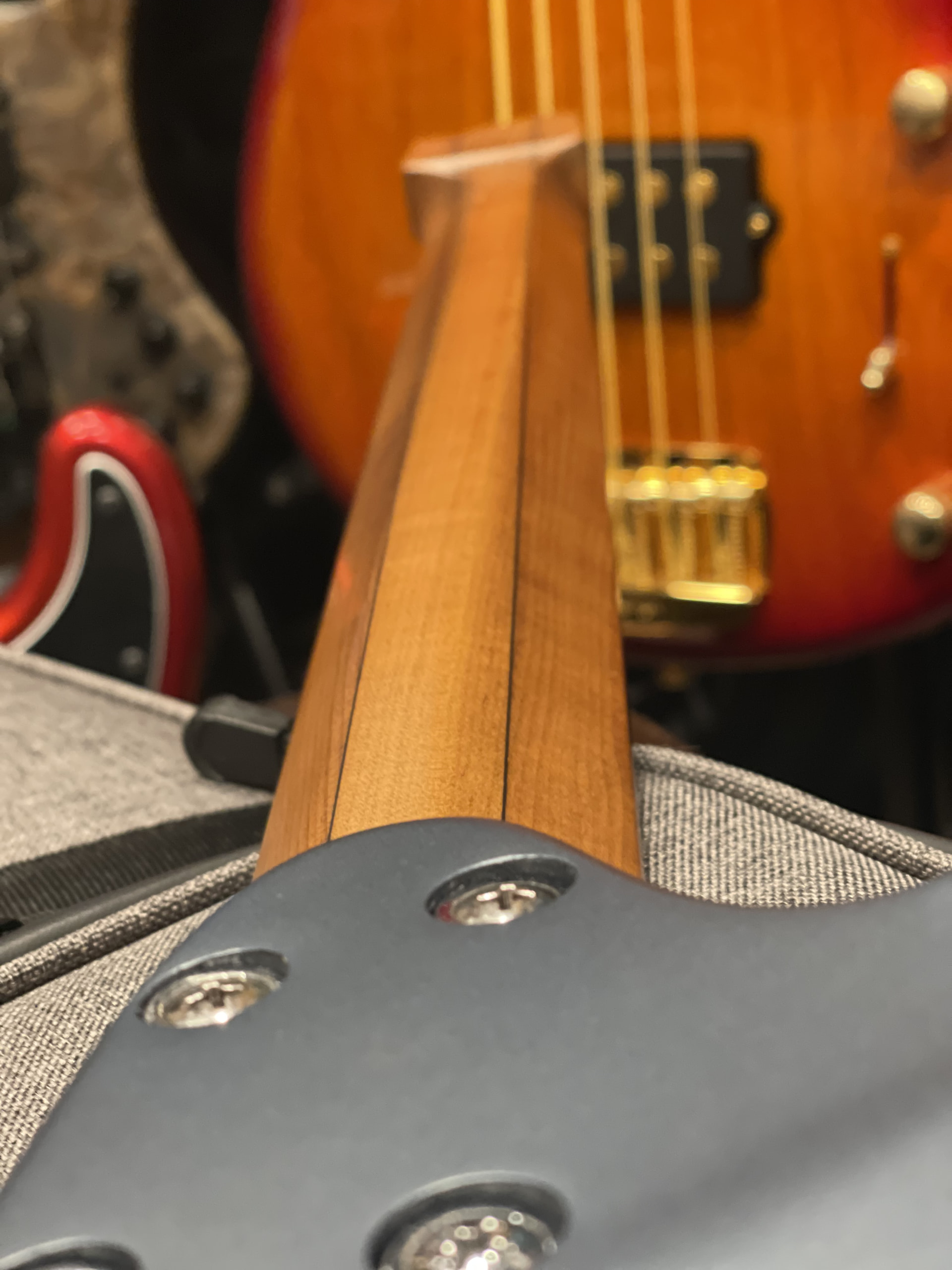
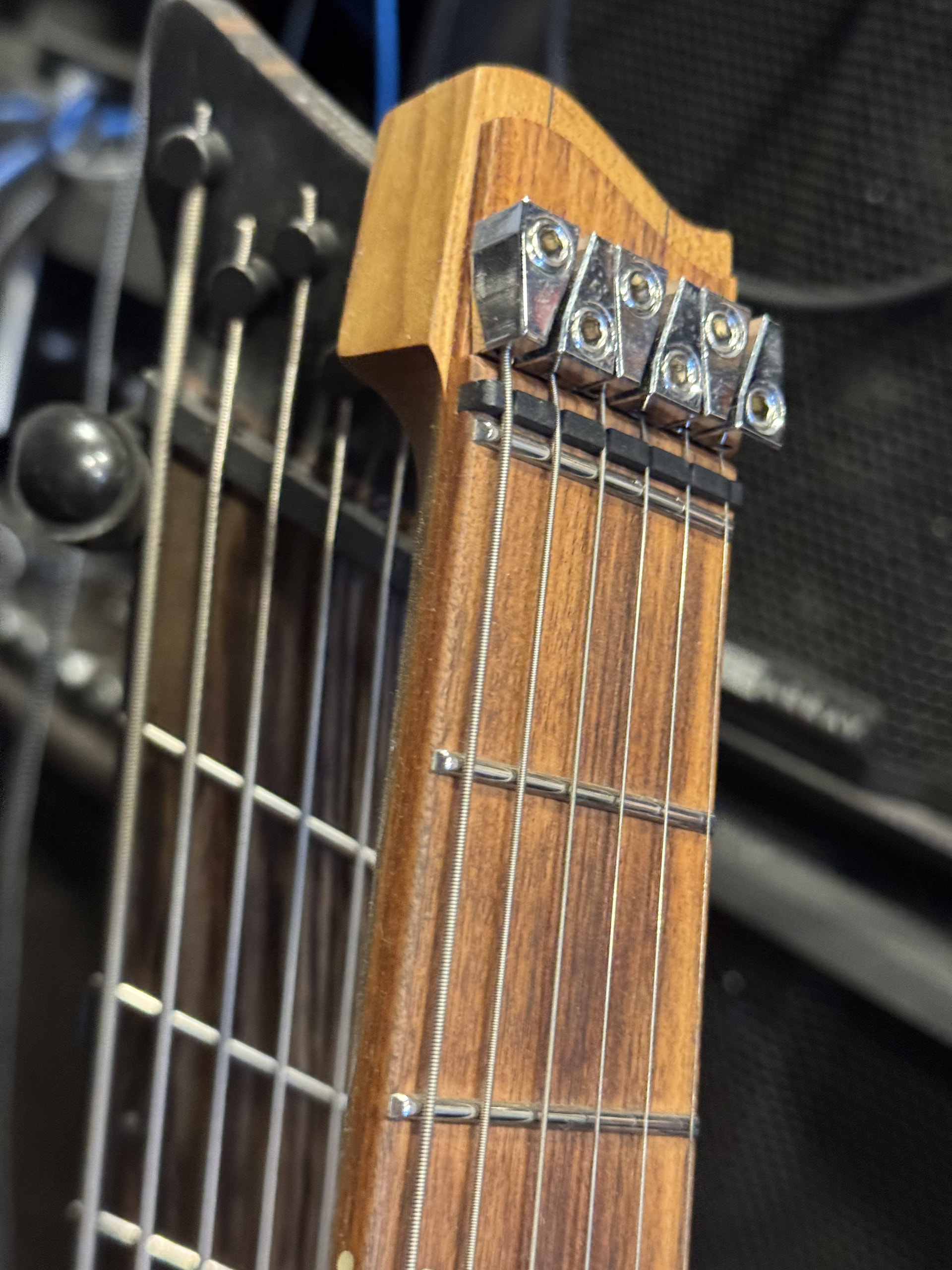
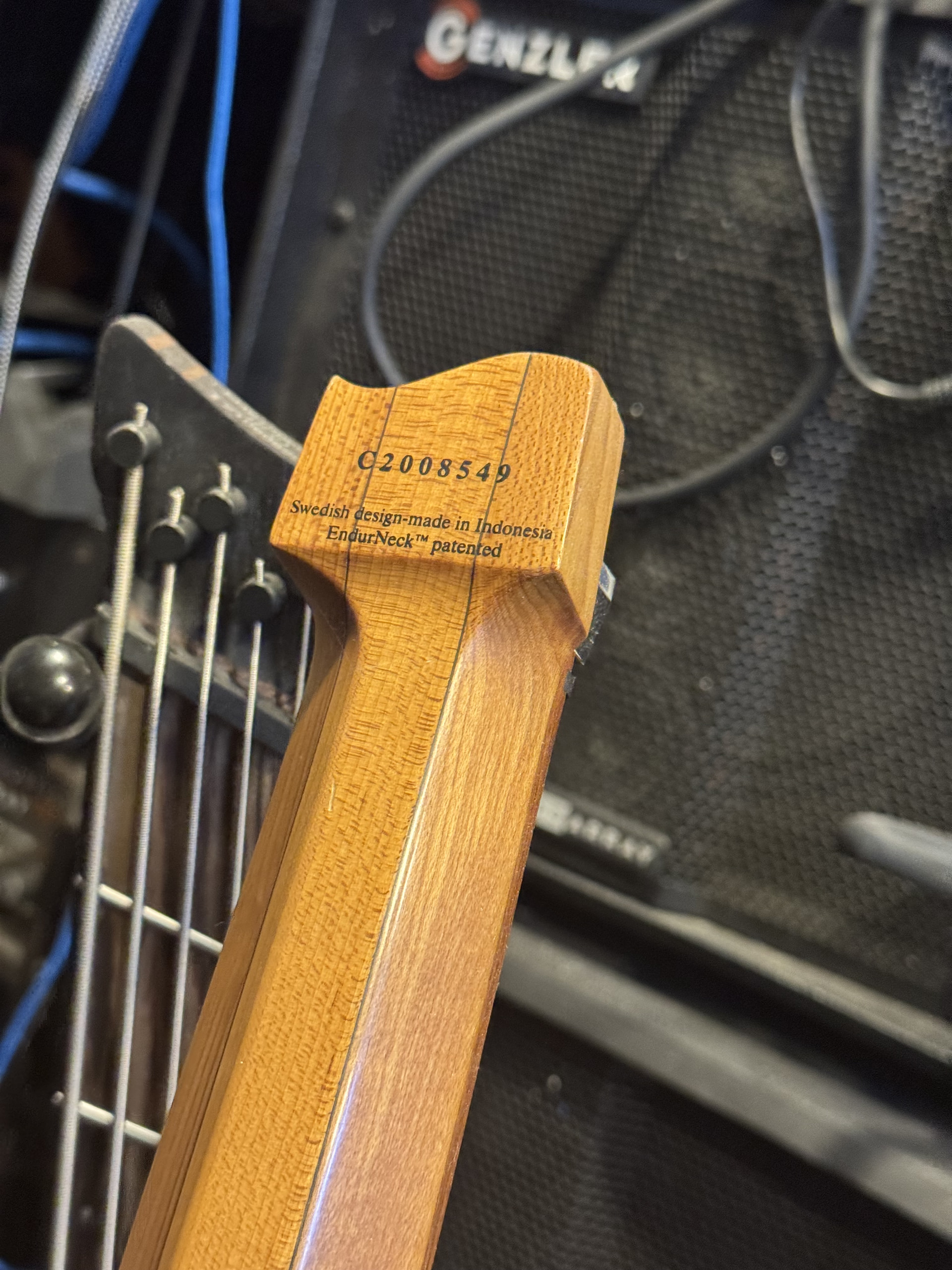
My custom 5 string Lignum
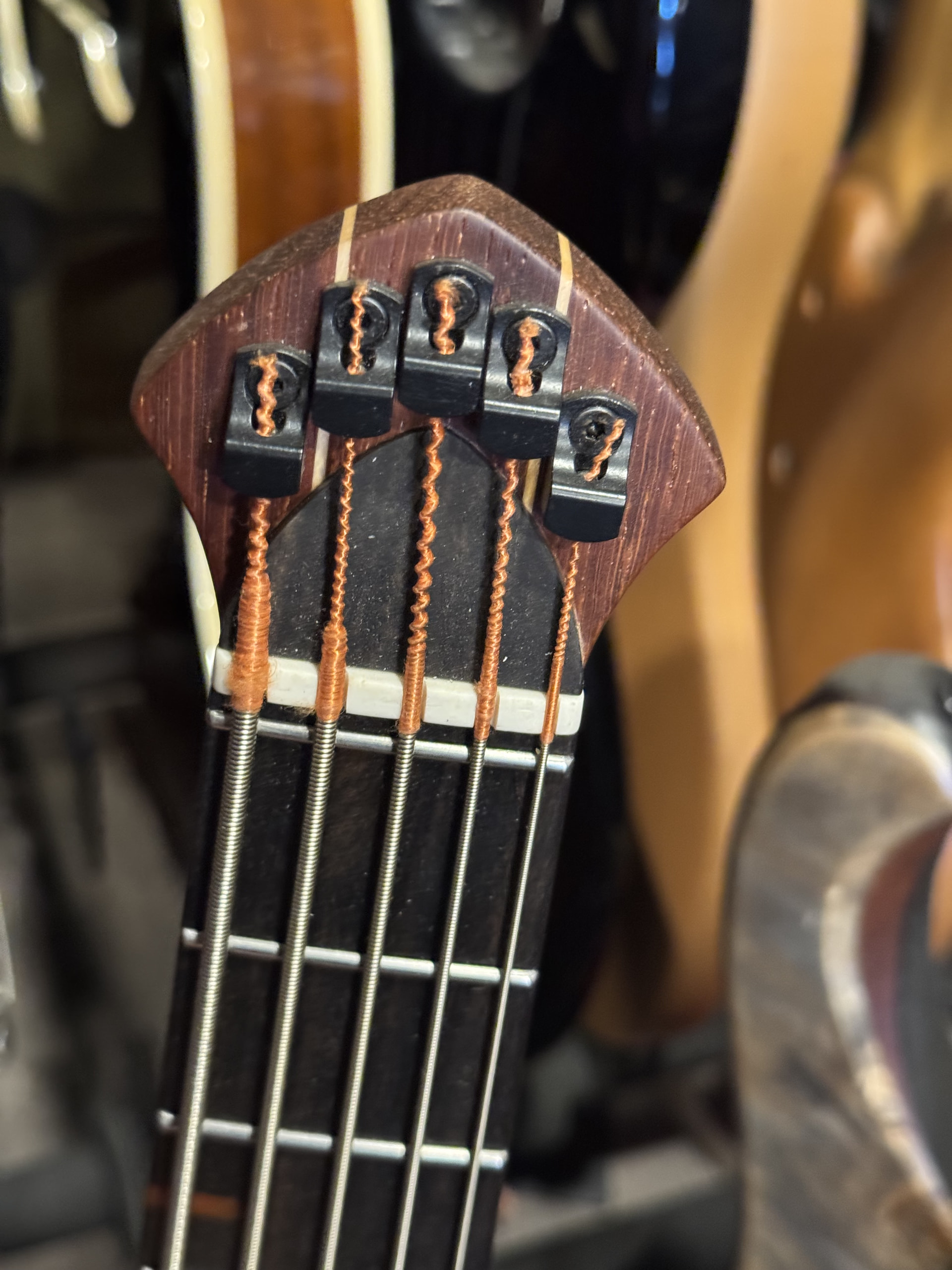

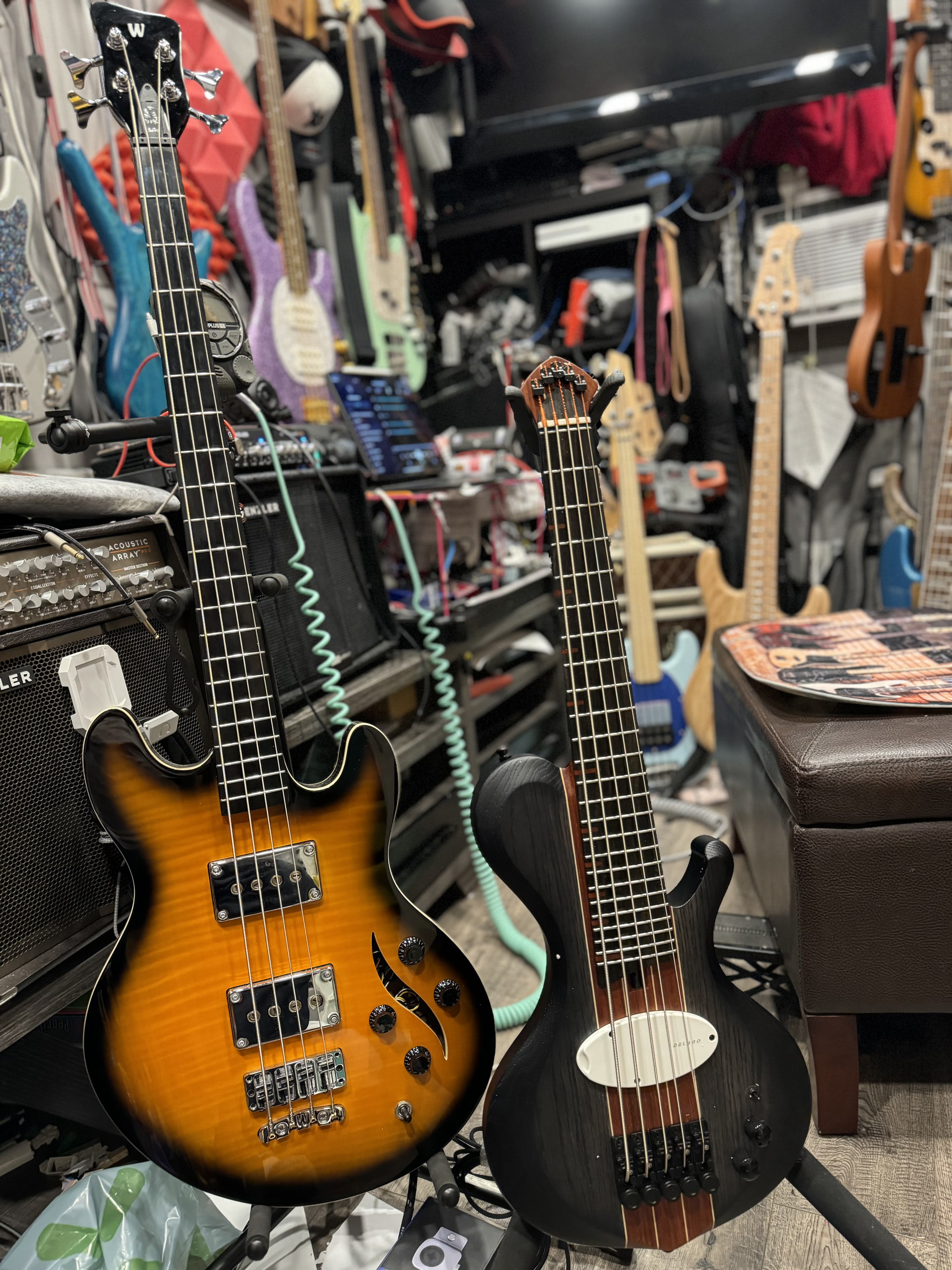
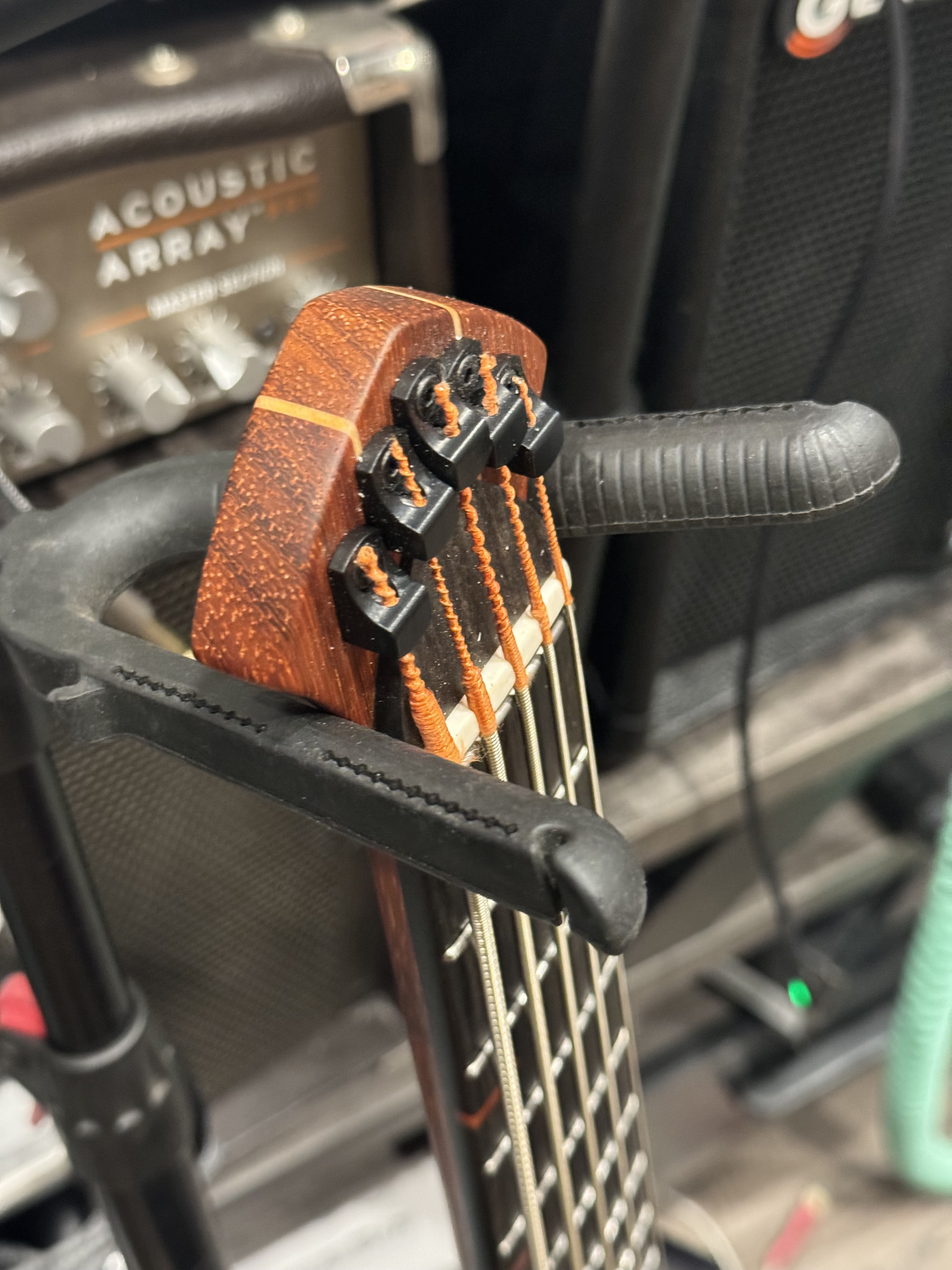
I guess I have a few headless, definitely a few more that I thought I have, 
5 Likes
Just happened to have a random Swedish instrument lying around, I see
2 Likes
Wow! Thanks for all the pictures, thus was very enlightening!  Cool that some are stringed from the neck instead of from the body. Those look like they will last for ages.
I see there is a lot of variation, but all of the ones you own are extremely well made.
 It was a silly question!
2 Likes
Too bad it’s not from Netherland then it would be DutchIndo,
4 Likes
Contact a luthier, they can be helpful and one may give you some direction.
Actually, I was thinking I might inset a couple bolts in the neck, put the metal band, and then run machine screws through there so that it’s secured to the band instead of the neck.
However, most of all I want to get a different headpiece that has four screws instead of two. The Rockinger one it seems to be cloned from, with the same exact dimensions, has four, but I’ve emailed them to see if theirs is also a two piece with the metal plate on the bottom or if it’s a single piece like most of the headless headpieces I’ve found. If it was a single piece, I don’t think this would have happened to begin with unless the guy somehow managed to screw it down so tight that he made a divot in a solid piece like that.