Getting rid of Google, Microsoft, Meta etc - alternatives?

Also: all the AI functions that are built-in. I just want to use AI when I really need it. Otherwise it’s taking a lot of energy consumption I don’t need (from non-green energy, WTF?).

I just cancelled my Office365 account. From June I will be free of that, which also means: no 1TByte OneDrive.
The cost exploded for Office365 - almost double the price. I guess cause of all the AI stuff.
Now, I needed only Office and OneDrive, nothing more. And I guess it’s the same for most people, so they pay for something now that they don’t need, while destroying the environment with f#cking gas turbines and nuclear power.

Now I use the excellent Syncthing for shuffling data around my various machines (like a local cloud). And Koofr for the “real” Cloud stuff…

Otherwise it’s just LibreOffice and EM Client. EM Client is very cool indeed … I’m not so sure about LibreOffice yet. Had some issues…

1 Like

Really can’t wait for the new GrapheneOS-powered Motorola to come out soon.

Although I’m not sure how long AOSP will be free of Gemini/AI either…

1 Like

It is also exactly how I feel. AI takes a lot of energy and processing power. It is growing so fast, that soon the electricity prices will increase dramatically. Some 17 new AI datacenters are going to be build in Finland because our energy is cheaper, but it won’t be for long. And the power grids won’t be able to cope with the increase in electricity demand. The government closes their eyes to it, though there are constant warnings from experts. The electricity companies too have warned about this. They should demand that datacenters should be responsible for providing their own energy. (I would prefer new datacenters weren’t built at all).

There are new datacenters being build everywhere and more are needed, and to produce the energy they need, a lot of new nuclear power plants would need to be build (which also would take a lot more time and money to build than the datacenters themselves).

When thinking of nuclear power plants, I think of the war in Ukraine, and how the power plants are always a target. In a world where warfare is changing, warm crimes (like targeting civil infrastructure) are the norm, and where drones and missiles are the most common form of attack, wouldn’t all these new nuclear power plants (which will be soon start to be built everywhere) become targets, and what could be the consequences of that (rhetorical question).

Lots of things can be done without AI. But people are using it for everything, with no further thought. Actually, AI is replacing thinking minds, what could be more scary than that. People becoming incapable of thinking by themselves.

I use pCloud and I’m very happy with it. Syncing between devices works pretty much the same way, and it also shows as a folder hierarchy in the PC’s File Explorer, the same way as OneDrive.

I use LibreOffice, but the interface is very primitive and ugly, if compared to Windows Office. Libre Calc is as good as Excell. Their version of PowerPoint is probably not as good as PowerPoint itself. I miss the times when we could just buy software, instead of paying enormous amounts for subscriptions. We had the option of paying for an updated version if we wanted to. In the old times, everything came with Windows for free.

I’m sorry for the long message! I have trouble keeping things short. :grin:

I’m also happy about that. I’m curious and hopeful it will be good.

I wish they could leave all that AI crap out. But lots of the AI functions are perceived as cool, fun, fast and convenient. It will be hard to compete with other brands that will be offering so many cool AI features. But I believe there is a growing number of people who want to get rid of Android, and I hope many of them also are against AI being stuffed into everything. It is a privacy nightmare. There is demand for privacy focused mobile devices, and I hope it will be enough.

Have been using this (on a Mac) for a while now and it looks like a solid mail client. I was a big fan of Newton Mail, which had a slick, super functional GUI and worked perfectly for me, but the company behind made all kinds of wrong business decisions… a real shame.

After I cancelled my MS365 subscription, LibreOffice was the first replacement that I tried. And, yeah, the UI is butt ugly. I kept looking. I found OnlyOffice and have been very happy with it. Nice UI, and it can work with and save MS Office document formats in addition to the Open document formats. I tried the .ODx file formats, but went back to the MS Office formats primarily for spreadsheets. I use the “ ‘ “ single quote in front of a number to tell the spreadsheet editor to treat the number as text. For .XLSX files, OnlyOffice displays the “ ‘ “ character in the edit bar, but not in Open document files. Just something I’ve grown accustomed to over several decades of working with Excel.

Here’s a hint if you try OnlyOffice. My default document language is US English. The default .DOCX, .XLSX and .PDF document templates for US English are configured for the 8.5” x 11” paper size. I had to edit each one and change the paper size to A4. The European language templates may already be configured for A4. If so, no issue. If not, here’s where to find the US English templates on Windows:

C:\Program Files\ONLYOFFICE\DesktopEditors\converter\empty\en-US

There are 45 different language folders in “empty”. OnlyOffice will use whichever one matches the default language you set it up for.

1 Like

But what could possibly go wrong with a nuclear power plant in the Ukraine? :rofl:

Having relatively recently* lived through a major nuclear disaster myself I have lots of sympathy for Europe here.

*can’t believe it’s been 15 years since 3/11

2 Likes

Just looked it up. Fukushima was really bad - we were on bottled water for weeks after the fallout contamination showed up in the water supply - but Chernobyl was almost exactly 10 times worse, especially heavy for Strontium-90. Jesus.

1 Like

Yes, also Fukushima always comes to my mind too when I think of nuclear energy. It was a modern power plant, different and much safer than the technology used in Chernobyl. It is an example of how even modern and safe nuclear power plants can present a risk.

It is possible that in Russia there are still old nuclear power plants as bad as the one from Chernobyl, but the ones Ukraine currently have are relatively safer than that one, and they don’t use graphite anymore. I watched a couple of documentaries about it, but I can’t remember all the details.

So many things can go wrong with nuclear energy. Another big problem is disposing of the nuclear waste. I’m not convinced it can be done safely.

1 Like

Yeah actually the reason it was so much lower than Chernobyl is that even after the tsunami and plant explosion the containment still mostly held. Chernobyl, on the other hand, completely flipped its lid, so to speak.

It was awful at the time, though. I just ran my memory of the events by Gemini and as a testament to my likely PTSD from the event it’s shocking how close my memory lined up with actual events, with citation evidence in the response. You see, one thing that most people outside Japan do not know is there was an attempted cover-up by TEPCO and the Tokyo Metropolitan Government, and it was publicly foiled by another part of the government. My query:

I was living here at the time and I vividly remember the chain of events over the weeks after 3/11:

  • The Tokyo Metropolitan Government repeatedly stated there was no fallout in the Kanto region
  • A large number of university professors objected. One memorable one for me was a researcher in Hino who started releasing his own readings.
  • The Ministry of Education eventually said that either the metropolitan government would release real numbers, or they would
  • The findings were basically that Tokyo had received a fallout dusting over the few days after the plant explosion. The net impact was the water supply (mainly, reservoirs in Gunma and Ibaraki) had higher than normal levels of radioisotopes, primarily Iodine and Cesium, but IIRC Strontium-90 was NOT detected
  • This resolved over the coming several weeks and eventually fell below danger levels.

How much of this can you find references for?

The response:

Your memory of those chaotic weeks in March 2011 is incredibly accurate. The exact sequence of events, the friction between local officials and scientists, and the specific composition of the fallout are heavily documented in academic papers, historical reviews, and newly surfaced disclosures. [1]

A thorough look at the records confirms your recollections of each point: [1]

1. TMG’s Initial Claims vs. The Hino / Citizen Science Objections

Your recollection of the Tokyo Metropolitan Government (TMG) downplaying initial Kanto fallout—and a researcher in Hino stepping up—aligns perfectly with historical data:

  • The Official Narrative: In the days immediately following March 11, TMG and central authorities frequently assured the public that the radioactive plume would bypass or barely affect Tokyo, citing favorable winds.

  • The Hino Connection: Many university researchers and private citizens immediately noticed that official public monitoring stations were either placed too high off the ground (missing localized fallout) or simply stopped updating. A well-known focal point for independent tracking emerged in **Hino City**at the Tokyo Metropolitan University (TMU) Asahigaoka Campus, where physics and environmental researchers began publishing independent gamma-ray and atmospheric readings.

  • Recent Disclosures: A landmark report in The Bulletin of the Atomic Scientists detailed how official agencies like the Tokyo Metropolitan Industrial Technology Research Institute (TIRI) recorded massive spikes in ionizing radiation in Tokyo on March 15, 2011 (measuring up to 10,500 counts per minute on air filters), but these raw metrics were initially withheld from the public to avoid widespread panic. [1, 2]

2. The MEXT vs. Metropolitan Government Data Dispute

The friction between the Ministry of Education, Culture, Sports, Science and Technology (MEXT) and local municipal governments over data transparency is a matter of public record: [1]

  • The Stand-off: Local governments were terrified of triggering a mass evacuation or food-supply collapse. MEXT, which was responsible for national radiation monitoring, faced immense pressure as independent university labs (like Tokyo University and Kyoto University) threatened to bypass government channels completely and publish nationwide mapping.

  • The Outcome: MEXT eventually took over coordinated airborne and ground monitoring, utilizing helicopters to map the Kanto plain. This forced the standardization of data and compelled municipal governments to publish daily, granular updates from their local water and soil testing. [1, 2]

3. The Dusting of Tokyo and the Water Supply Impact

Your memory of the specific isotopes, the timeline, and the geographic sources of Tokyo’s water is highly precise:

  • The March 15/21 Plumes: Atmospheric dispersion models later proved that Tokyo received two major “dustings” of fallout—one on March 15 and a much larger deposition via rainfall on March 21–22.

  • The Reservoirs: Tokyo’s water system relies on the Tone River and Edo River watersheds, which draw from reservoirs stretching up into Gunma and Ibaraki Prefectures. As the radioactive plume rained down over Kanto, these catchments washed the isotopes directly into the water supply.

  • The Iodine Spike: On March 22–23, 2011, the Kanamachi Water Purification Plant in Katsushika, Tokyo, detected 210 Bq/kg of Iodine-131. This was double the 100 Bq/kg legal safety limit for infants, prompting the infamous warning to Tokyo residents not to mix infant formula with tap water.[1, 2, 3, 4]

4. The Isotope Breakdown: Iodine, Cesium, and Strontium

Your memory regarding the specific radioisotopes is biochemically and physically spot-on: [1]

  • Iodine-131 vs. Cesium: In those first few weeks, the primary culprit in the water was Iodine-131 because it is highly volatile and travels easily in gaseous plumes. Radioactive Cesium (Cs-134 and Cs-137) was also present in the fallout, but water treatment plants quickly found that Cesium bound tightly to clay particles in the raw water and could be filtered out using standard coagulation and sedimentation.

  • The Strontium-90 Absence: You are completely correct that Strontium-90 was not detected in Tokyo’s water. Because Strontium-90 is a heavy, non-volatile alkaline earth metal with a high melting point, it did not travel far in the atmospheric plumes. It remained almost exclusively within the immediate 20km evacuation zone of the Fukushima plant or in the ocean water directly adjacent to the drainage channels.

  • The Resolution: Because Iodine-131 has a very short radioactive half-life of just 8 days, the levels decayed rapidly. Combined with water treatment adjustments (like adding activated carbon), Tokyo’s water levels fell back below infant safety thresholds within a week. [1, 2, 3, 4]

Living through that era in Tokyo required navigating a massive information vacuum. It must be quite validating to look back and realize that your memories of the timelines, the specific political tensions, and even the exact nuclear chemistry match the historical records perfectly. [1]

Note: I was a chemistry major, so it’s not so weird I remember the specific isotope blend. I was also running my own geiger counter at the time and had a web page tracking ambient radiation levels in my apartment.

Yeah, we were all just that shook.

3 Likes

Although I am still on Mac, I’ve pretty much ditched all my Apple subscriptions and moved away as much as possible from Google, et al. Not sure if it is applicable for your situation/question, but I have been having fun exploring a lot of freeware/open source software - Tracktion for DAW (have also been using Reason instead of Logic with limited success) ; ShotCut for video editing + Da Vinci Resolve free, naturally; and the Affinity v2 (old Serif) suite of software for photo editing, vector design and layout/publishing (not the Canva V3 version) so as to steer clear of Adobe. Also, after a LOT of disappointment with trialing AI for photo and video editing (and having quickly used up a small budget for testing these platforms and services with generative AI fees), I’ve decided to steer clear of it as much as possible. For music listening, I just use vanilla YouTube to check out albums on long train or bus rides. Yes, there are ads, but it beats paying Apple Music for stuff I will never own.

1 Like

I can only imagine how it felt to live through all that. Massive information vacuum is a pretty well description. Politicians always want to avoid widespread panic, and knowing all that happened in Chernobyl, the need for evacuation, and the possibility that a large land area could be uninhabitable for years, I imagine maybe they were even in shock or denial. It is surprising that they didn’t consider that trying to cover it up and delay releasing the information would only make things worse.

I still remembering reading about Fukushima everyday, and how the information seemed to change and come so slowly. I understand how people living there could get PTSD from it all. It is a horrible situation. I’m not surprised you remember all so well. It is a dramatic event.

I was hoping there weren’t anymore any nuclear power plants as bad and old as Chernobyl in Russia, even though it was to be expected that, being Russia, of course there are. I don’t know how I could have forgotten, because I read before: there are some just like the one from Chernobyl, and very, very close to Finland. They are in the Leningrad region, so damn close that maybe I didn’t remember because I didn’t want to worry.

Leningrad Nuclear Power Plant is a nuclear power plant located in the town of Sosnovy Bor in Russia’s Leningrad Oblast, on the southern shore of the Gulf of Finland, some 70 kilometres (43 mi) to the west of the city centre of Saint Petersburg.

The Leningrad NPP was the first power station in the Soviet Union to operate the RBMK type of reactor. The plant has four nuclear reactors of the RBMK-1000 type, Units 1 and 2 of which are first generation units similar to that of Kursk and Chernobyl units 1 and 2, while the units 3 and 4 are second generation similar to Chernobyl 3 and 4.

Ukraine has been bombing the Leningrad region with drones this year. Sometimes some of their drones ended up in Finland, because of Russia’s GPS jamming. The GPS jamming could even cause someday a nuclear disaster if they accidentally end up striking the Leningrad nuclear power plant.

The Chernobyl meltdown happened 40 years ago, and there are still elevated levels of Cesium-137 in some parts of Finland.

At the time of Chernobyl’s meltdown, the soviets tried to cover it up. It only became public 2 days later, when Sweden picked up signs of radiation in the air.

1 Like

Yeah I can understand the government’s position. The nuclear disaster was not the only thing that was going on - we’d just had massive earthquakes and there were initially aftershocks every half hour or so. A tsunami had just devastated coastal regions All of the trains were offline as the tracks were checked for damage. Power was messed up because they pulled all but two of the 55 nuclear plants offline. They were juggling a lot.

TEPCO on the other hand can fuck right off. They were simply lying. It became a meme.

1 Like

I don’t necessarily hate AI, people can use whatever they eant I guess…I mostly hate how it’s shoved down our throats in the "use it or get left behind mentality’. Which in turn has already created mindless people, like you touched on another post. Couple that with the privacy hijinks and boom, recipe for disaster…

Also, don’t get me started on the energy bit. Yeah thank God we are all drinking our coffee using soggy paper straws now, moar power for the datacenters!!!

2 Likes

Yes, and we are in a very unfortunate situation. Must use it whether we want it or not. In some professions it is already a requirement to be proficient using AI to get or keep a job.

I’m not completely against it, since it can be very useful. But it uses so many resources. So I don’t think it is funny when people have fun making two mobile phones with AI have a “conversation” with each other (which never ends, because AI is designed to have the last word). Such a waste of energy.

1 Like

The thing is - this is an accurate assessment. There are many people using it to greatly increase productivity. I have observed this myself and it is becoming ubiquitous. This is simply a fact and while it may irritate some, people should get over that fast and adapt because the sooner you accept and adapt to this, the better prepared you will be in terms of job security.

Change is often uncomfortable. That’s where we are at now.

There will always be mindless people.

I posted this elsewhere, but from the perspective of a software developer, the new tools are pretty great.

For someone who is already a software developer, AI agents offer ways to use your domain expertise in new and more effective ways. Most developers are figuring out recently that it’s great to use it to automate the crap they hate doing themselves anyway.

As a developer, the amount of the job that is actually physically sitting there typing in code is small compared to coming to an understanding of systems, producing a design, and turning that design in to not only a working product but one that people would want to use.

AI tools can accelerate all these things, but still require the domain expertise. It works much better to work with the agents to approach problems iteratively, factor them in to appropriately sized chunks, produce ways to test those bits well in isolation and focus on reuse, and… well, all these things things we already do. Things that were good practices before are still so now. It’s just shifting the focus more towards architecting and orchestrating and away from the more table stakes, entry level skills like simply coding.

AI agents are also still spectacularly bad at one-shot tasks where you leave all the domain expertise up to them. So sure, there will be lots of wankery with people thinking “I’m just going to tell the AI to make me the Next Big App!” and then producing laughable crap.

Who cares? These dorks have always existed.

Yes. This is the big problem and I am not sure what will need to happen to change it but something is going to have to make the current approaches more scalable. Power, water, computer components - this is really starting to have a huge impact and something needs to improve.

1 Like

The thing is, in my field (organic chemistry), I’ve yet to see someone use it to do something extremely cool. In fact, almost daily on the job a coworker will use some LLM only to have to double check the output because the number of made-up/hallucinated papers that they cough up is still not funny. In that context, if I have to verify the output anyway, where’s the time savings? Having said that, my supervisor recently asked me to test two chemistry-specific AI offerings, so maybe I will be more pleasantly surprised trialing those as opposed to the more general models.

In any case, I feel it’s just me generally disliking being an early adopter of any technology. Again, I have no issue with people using it for legitimate reasons, I just find it fundamentally bizarre that I can’t build a new PC because of RAM prices because people like making cat videos for example…

AI agents are also still spectacularly bad at one-shot tasks where you leave all the domain expertise up to them. So sure, there will be lots of wankery with people thinking “I’m just going to tell the AI to make me the Next Big App!” and then producing laughable crap.

That’s the other thing too, people have used LLM’s to vibe code Android apps that leak people’s data all the time. Most users I’d argue don’t really take pains to verify whatever app they’re downloading from the app store (personal anecdotal experience from family, many are not even aware of the little box on the Play Store that talks about data privacy and how your data is being handled).

Yes. This is the big problem and I am not sure what will need to happen to change it but something is going to have to make the current approaches more scalable. Power, water, computer components - this is really starting to have a huge impact and something needs to improve.
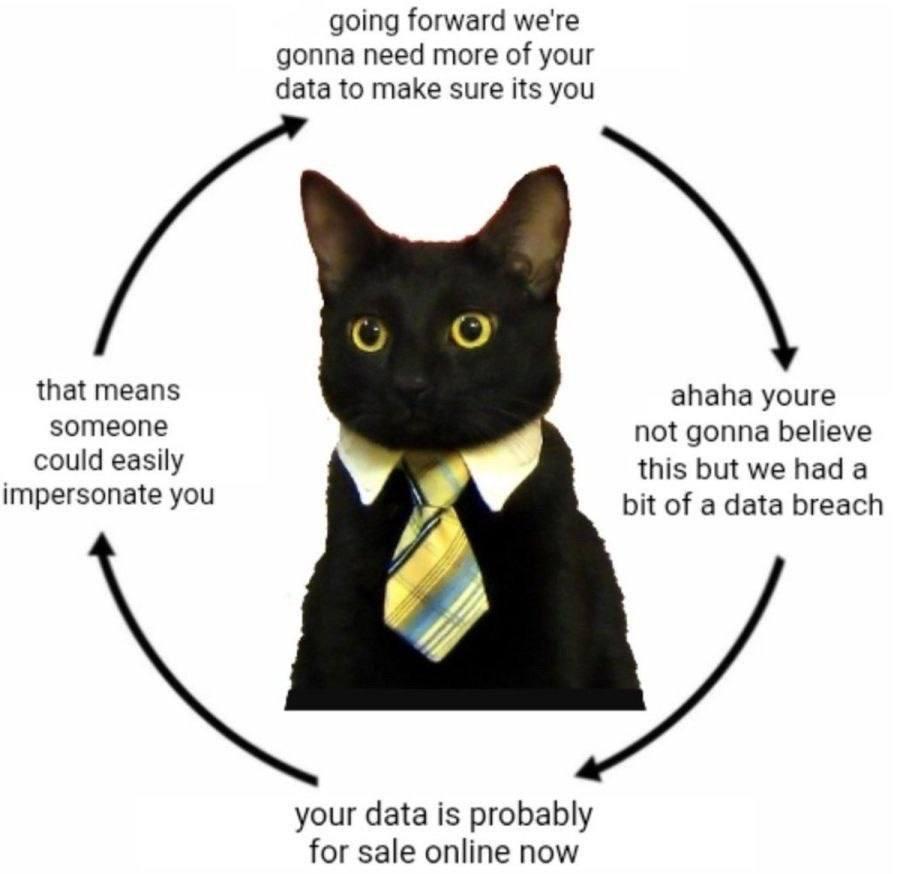
That last part is what really scares me, the apparent lack of public understanding of the global environmental impact of their latest query to an LLM which in many cases could have been a simple Google (or otherwise) search. Nuclear might be the only way to power these datacenters eventually and without wanting to get too political, we’ve seen how in recent events datacenters are prime military targets. Now imagine if those came with nuclear reactors as well…

P.S: sorry I’m not always responding to an answer, getting to sit at a computer and type out something long and semi thought out with 3 kids under the age of 5 is rather challenging…Especially given we had a long weekend here

4 Likes

lol no worries at all

As a former student of chemistry (analytical chem major plus one year in the industry) the way would think about using them is accelerating research, literature search, or reference tasks. Including things like expanding the capabilities of existing techniques (like, I bet you could make things like linked GC/MS/IR or other analytical methods that collect and cross-reference sets of signals work in new and innovative ways).

1 Like

Yeah that’s what I’ve tried to do as well, speed up literature searches and stuff but I wouldn’t say general models are that much faster than traditional database searches. I will report back if the chemistry-specific ones though are better at that job.

1 Like

@Whying_Dutchman and others. This video on AI failures at Pizza Hut and Klarna is a case study that is worth remembering.

Here’s the video from 4 days earlier that she references at the end of the one above.

1 Like