Apologies if this is the wrong category for this. I wasn’t sure exactly where to post it.
When creating a cover / learning a song do you aim for ‘exactly like the record’, ‘90% as good’, or something else? Why?
I’ve always tried to get as close to the record as possible when learning a song, but recently I’ve been thinking this might not be the best approach for getting better at bass. It feels like the perfecting the last ~10% of the song often takes as long as just getting 90% there, and it might be better to just move onto a new song. At the same time, I don’t want to get into the habbit of just half-learning a song only to end up with a bunch of songs I only sort of know how to play.
(Playing a cover 100% like the record is kind of silly… As long as you don’t take obvious shortcuts that both point to your lacking technique and show an ignorance of the original song bordering on disrespect, then you should be alright).
For me, one of the biggest benefits of recording covers is that it forces you to hear yourself honestly. You quickly learn whether your timing is solid or if you’re rushing or dragging, and I think that’s one of the most important things to focus on when learning a song.
I don’t worry too much about playing every variation exactly where it appears on the record. A lot of songs have multiple variations of fills or passing lines. I’ll often learn a few of them and sprinkle them in where they feel natural rather than trying to memorize every note in every measure, unless it’s a really iconic part that’s essential to the song.
Most songs I learn have at least two or three challenging spots. Often they’re fills near the end that can derail an otherwise great take if you’re recording live. There’s definitely value in practicing until you can nail those parts consistently in one straight take. That’s where a lot of growth happens.
At the same time, I don’t think there’s anything wrong with simplifying the really difficult parts. Style is often a product of our limitations. If a simplified version still captures the feel and groove of the song, that’s usually more important than perfect note-for-note accuracy.
So I guess my answer is somewhere between 90% and 100%. I want the timing, feel, and core parts to be right. Beyond that, I’m less concerned with reproducing the studio version exactly and more interested in playing the song convincingly while pushing myself on the sections that will actually help me grow as a bassist.
Are you looking to make covers or tributes? I think tributes are typically as close to the record as possible. As far as covers, I think you’re good if you get a good approximation of what they were going for. Famous basslines, etc, you’ll want to match up as best you can but some other things you can simplify if needed. You might notice a lot of tabs or notation and covers out there differ a bit from each other, and this is part of why. I’m not building a setlist for performances but I usually try to get as close to original as I can just to prove to myself that I can do it and learn it.
If you dig into a lot of the riffs during the course, you’ll notice that most are simplified from the actual song but still quite recognizable and very few people would be able to tell the difference, especially when in a mix with other instruments.
I tried the perfect note thing for the last time on Boom Boom Boom by John Lee Hooker. Listened to a bunch of performances, more than 6. No two were the same. Each bassist did his own thing
Not as worried about note perfect now. Get the hook down? Absolutely.
Yeah, I generally aim for 90-95%. Fills are kind of an optional thing, unless they are the part people know. And parts that are behind a guitar solo are prime for being simplified (e.g. 16th notes at 180 BPM behind a solo will probably sound okay as 8ths).
The one thing you absolutely must get exactly like the record are any iconic/well known lines. For example, you can’t skimp on the opening to Another One Bites The Dust.
I try to get as close as I can for most of the song, but having said that I will add my own touches if I feel like it.
Eg maybe wander up an octave for a bar or something like that.
Where I do differ is if the bass is doing something interesting in the background but it doesn’t need to be the same (ie a melody or such under the guitar solo), i am thinking War Pigs here. As long as you hit certain marks so the guitar can do what it needs to and you finish together all good.
Another one is NIB intro, I am sure Geezer plays it differently everytime. I play it to get the style, the triplet feel, the feeling of an old guy grumbling to himself and the little “hummy” melody in the middle.
I am there to make myself happy.
you taking about “whole song” or “half song”,
my progress is: how many play skills I learned from the bassline.
if you have problem playing to up 1 hour, which meaning real stage show required,
get in the fking gym, make your body better to handle muscle control.
Close as my abilities allow, 90% would be awesome. For fast hammer ons/pull offs I’ll skip or improvise as I don’t have that skill level yet. One thing I noticed after watching live performances and comparing to the album is that even they “modify” the lines at times.
I get close, and close is 4-5 notes / misses tops that I can punch in and fix. Why so close? Discipline of learning is all. This keeps me at a level of detail that keeps up my learning memorization skills more than anything.
I generally try to be as true as possible to the original as well. Why? Ear training (tabs are notoriously bad and wrong), and I want it to sound like the original.
This is just me based on what I’m trying to get out of it. That said, doesn’t matter, up to you to set the rules of what’s acceptable.
There’s only one rule, perfect or do not post.
.
.
.
Nah! Total BS
Not even original session players can play all the recorded parts perfectly.
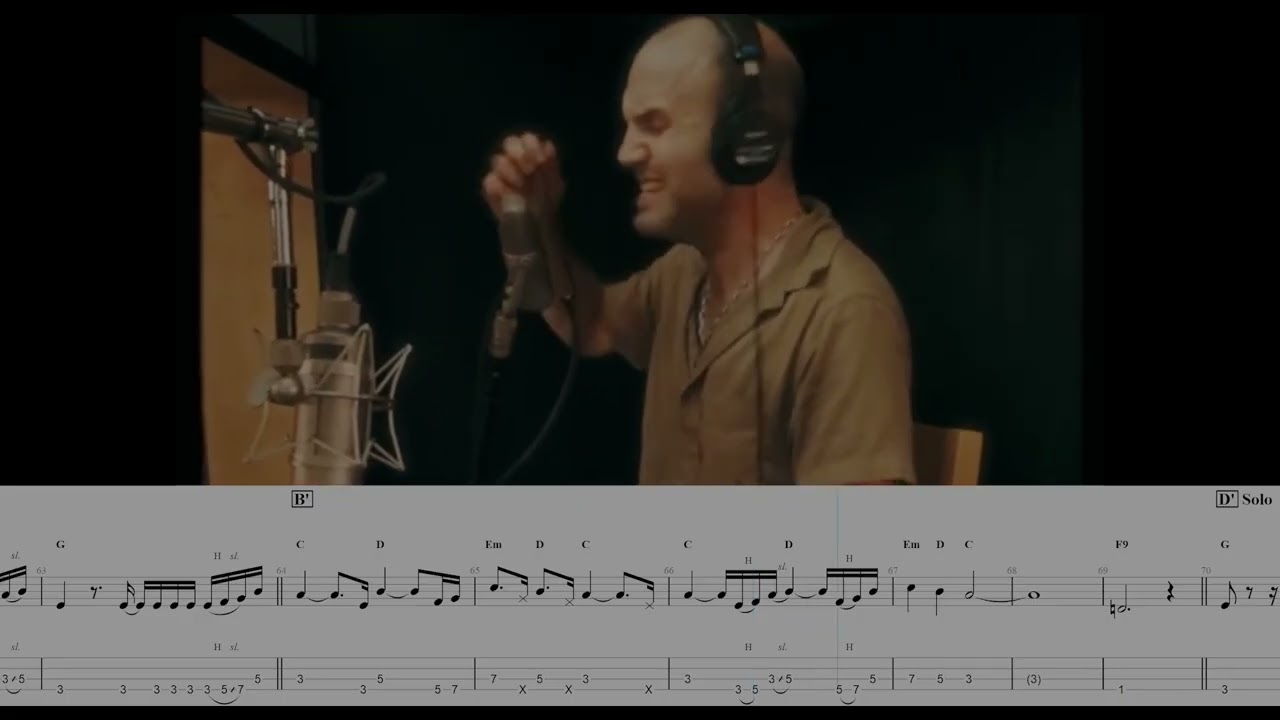
My personal goal is to transcribe the song perfectly but not necessarily play it exactly the same on every part. I made this one and slow it down to get all of the articulations. Compare that to my real cover. At least 10 notes were not played the same, check it, count it then we’ll talk about the most important point of covers.
My cover
How many did you get?
Nobody knows the difference.
That said, the iconic bass lines and legendary intros need to stay as close to the original as possible. Can you imagine mailing in the guitar intro of Sweet child ‘O mine.
I think it depend on a) your goal, and b) the context.
If you goal is to get note-perfect, then only 100% will do.
If your goal is to cover as many songs as possible, to force yourself to play, and play lots, then 80% to 90% is likely good enough. Capturing the essence of the original line, or using the line to practice a specific skill (e.g. chugging at 160bpm, or perfecting walk-ups between chords, at 160bpm - same song ).
If your goal is to play live, then what is good enough in that environment? Unless you are playing an iconic, recognizable bass line, nobody in the audience is likely to be scoring your playing, as long as you maintain the groove.
For me, I’ve done lots of covers … lots. Where the line is iconic, I will try to get a close to the original as I can, where it is not, the 80% - 90% is kind’a good enough. I am certainly guilty of simplifying some lines down in the band context, just to make life a bit easier. After all, in the band scenario, you need to hold circa 35 to 40 songs in you organic RAM, ready for instant recall, if you’re going to play for 2 to 2.5 hours, without trying to read music or tabs on stage.
Unfortunately the only fair answer to your question is a big “it depends.” Mostly it depends on what your motivation for recording is.
For me, recording has two purposes. One is to document my skill level at the time of recording. The other is to share that with folks for both recognition and feedback.
So when I make a recording, one thing that’s important to me is not having any obvious flubs. If I miss one of the opening few notes, I start over. If I make an audible mistake when the bass is prominent in the recording, I start over. But any mistakes that I could get away with in a live performance, I’ll keep. Small timing issues, playing the “wrong” fill in a place where it still works, anything that doesn’t mess up an iconic or recognizable section of the song and still sounds good. On the other hand if I keep having to start over because I keep making mistakes, I’ll stop recording entirely because I clearly need more practice.
To me that feels like a good balance between making recordings as an honest demonstration of my progress, and also putting out something I can be proud of.
Maybe because I do perform live regularly, I try to deprive myself of any chance of starting over. It’s not a healthy mindset when “the show must go on”
That said, recording a cover is 10 times harder than performing live psychologically. Things happen once live but video can be played over and over.
Most if not all new songs I listen to are either live or live studio recordings because that’s a one time performance from everyone so you have to bring it and deliver it the “first” time so to speak.
Solos by nature are not supposed to be the same, its only when rock came along and some became iconic enough to suggest folks follow them directly as the fans wanted to hear ‘the record’ in concert. Jazz ain’t never done that. Sure, you transcribe and learn solos but not for playing, for studying concepts within the solos to use as building blocks for other solos.
Oh absolutely! A little over 20 years ago I played bass and was entirely self-taught. One of the bad habits I set myself up with, was stopping any time I made a mistake. The result was I trained myself to stop, and had to un-learn that to actually play anything through!
Now if I make a mistake, even one I know I’m going to stop the recording for, I keep going for at least one more bar if not longer.
That’s a big factor in why I stop/start my recordings. Even if it’s something I could get away with live, having that mistake on permanent display is a bit different.
But I do try not to be overly picky, and leave the small stuff in.
Yeah you need to perfect the art of “Not giving a Sh!t”.
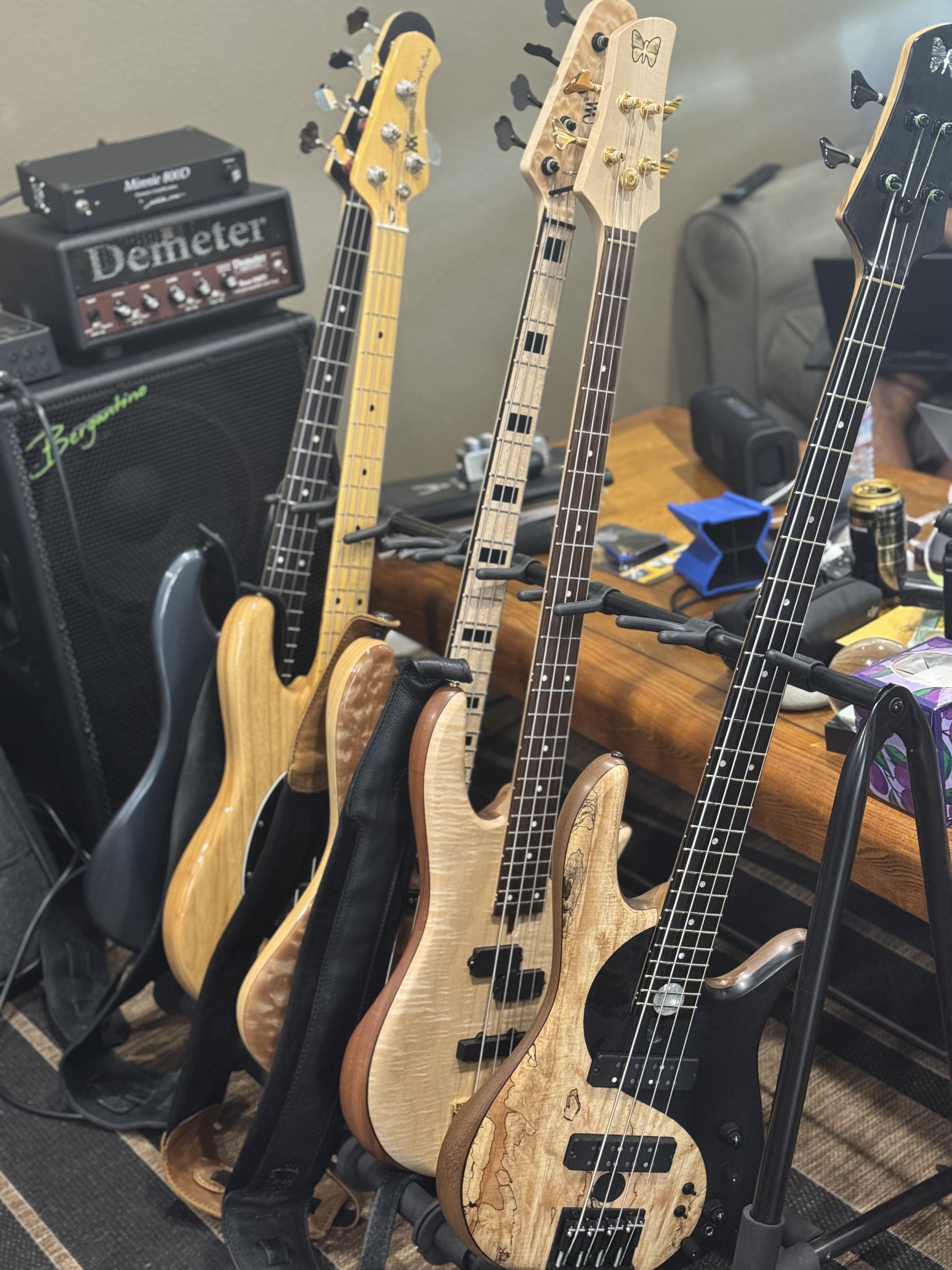
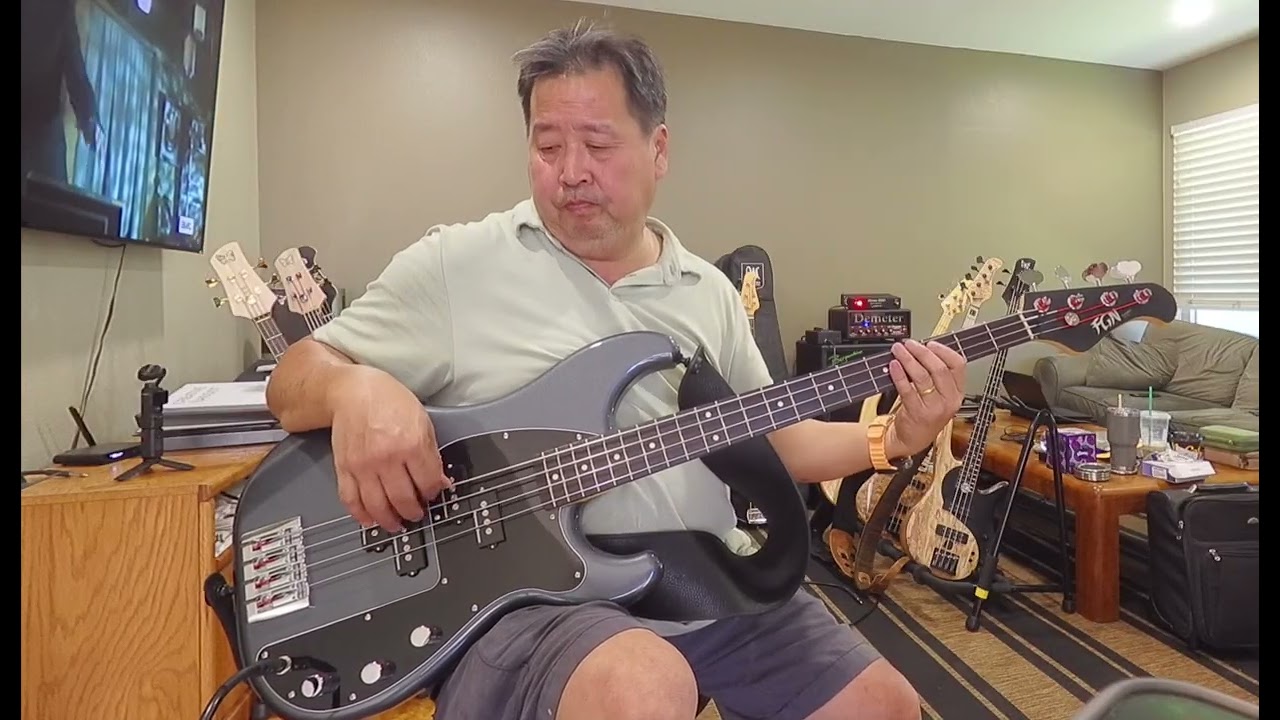
Yeah! Full commitment. I did one take on each bass for that song. That’s 7 basses. That’s not the hardest part, the hardest part was each bass seems more interesting than another. I was not playing 7 Squiers back to back. 3 of them are Fodera, a custom Mayones, a retro 70 Stingray, and 2 FGNs. All with premium strings.
Every ghost notes and slides gave me a little reaction because of how responsive each was. Not to mention the sound quality from the amps. If I recorded directly from the Bergantino and the Nobel pedal I’d be in even more awe.
Ultimately it depends on the music. For a blues/rock track, often it’s preferable to make it different if you are “covering” it - otherwise it’s a tribute. Keep the iconic lines, and then show your own style in the other aspects. Ideally, the other players will be doing something similar with their parts, to make a unique version of the original.
If you are playing as part of an orchestra or larger band, then each part is written out, and you play note-for-note.
I don’t know what style you are playing, but if it’s only me on the bass line, then I get the key themes right, and enjoy making it mine everywhere else. If playing the same line as the keys or guitar, then I have no choice but to learn it note for note.
Also take my thoughts with a grain of salt, as I am not a touring musician! I jam with friends, any write my own stuff, so feel free to disregard!

 ).