How slow is too slow?

I want to grow my song list with material that pushes my technical limits a bit, while still giving me the satisfaction of playing a full song I actually enjoy start to finish.

The standard advice is: slow it way down, then creep the tempo up to 100%. Fine. What I can’t figure out is where the cutoff is.

If I can only play a line cleanly at 20% of the original tempo, I assume the honest answer is “not your song yet” — I’d spend months grinding two bars. But nobody says that out loud. The advice is always “go slower”, which is true and not very useful when you’re deciding whether to commit to a song at all.

So for those who’ve been at this a while:

  • Is there a starting speed below which you just don’t bother? Something like “if it’s not clean at 70% on day one, it’s not a two-week song”?
  • What’s a realistic tempo gain per week on a line you’re actively working — 5 BPM a session? Less near full speed?
  • When you hit the wall, do you keep hammering the song, or pull the hard bar out as a separate exercise?

I finished B2B and I’m comfortable on things like Crocodile Rock, Flowers, and the easier Beatles stuff. Now I want to move toward faster material, and that’s where I keep misjudging what’s actually within reach. My problem isn’t motivation, it’s picking the wrong song and feeling bad about it two weeks later.

Thanks !!!

You might like taking a look at this:

5 Likes

I may be missing some nuance to what you’re asking in which case I apologize!

I think some of the expectations above are setting up for frustration. I don’t think setting up a rigid metric of linear growth and perfection is necessarily going to get the long term desired outcome for growth as a musician.

But to answer your questions specifically:

  1. No, there is no bottom floor to how slow I will play something when I am learning as long as I am enjoying the learning process. I have dropped some songs all the down to like 20% until I could get my fingers and brain coordinating. After that it jumped way up. If it becomes misery I will temporarily shelve a song no matter what speed I’m at. I always give myself room for imperfections in playing even with songs I’ve mastered. Victor Wooten has good wisdom about the value of wrong notes.

1b) Not understanding what a “2 week song” is (unless it needs to be mastered for a gig). There are some songs I master in one night, there’s others I’ve been chipping away at for years. I personally find enjoyment in both otherwise I wouldn’t keep at it.

  1. I don’t see linear tempo gains as an end all goal. Sometimes I have to speend weeks at 83% and then can jump up to full tempo. Sometimes I have been at full tempo and dial it back down to work on nuances, correct sloppy technique etc.

  2. I always try to work on the hard bits more than the easy bits. If I hit a hard wall I will temporarily shelve the song to work on something else. Usually by the time I come back to it whatever block I’ve hit is gone.

Mostly I would advise be compassionate with yourself as a student. No matter what style of learning works for you it has to be something that you want to keep doing.

Don’t know if any of that helps but hang in there yeah?

9 Likes

It depends on the song and why i have to slow it way down. I often slow songs way down for the first day or two (or more) just so that I can get the notes/patterns/etc into both my brain and fingers. And then after I have that part figured out, the speed can ratchet up quickly.

Again, depends on the song–especially what the final tempo is and where you are at. I have songs where I’m doing 5 or 10 BPM a day, and I have others where I’m happy to pick up 1 BPM every couple of weeks

Both. Focusing on the hard measures on their own is important, but (IMO) it is also imortant to keep playing the whole song, if for no other reason than to keep the hard passages in context. There have been times I’ve been focusing on a hard passage and got it down, only to put it back into context and realize that how I had been playing it doesn’t work with what comes before and/or after.

To kind of echo what @myowlhasantlers said, setting a hard deadline to learn a song should only be if you have to learn it for a gig. If you’re just learning it for fun playing by yourself at home, then you can take as long as you want and the only person who will know is you. I have songs that I worked on every day for weeks or months and then just shelved for months before coming back to.

5 Likes

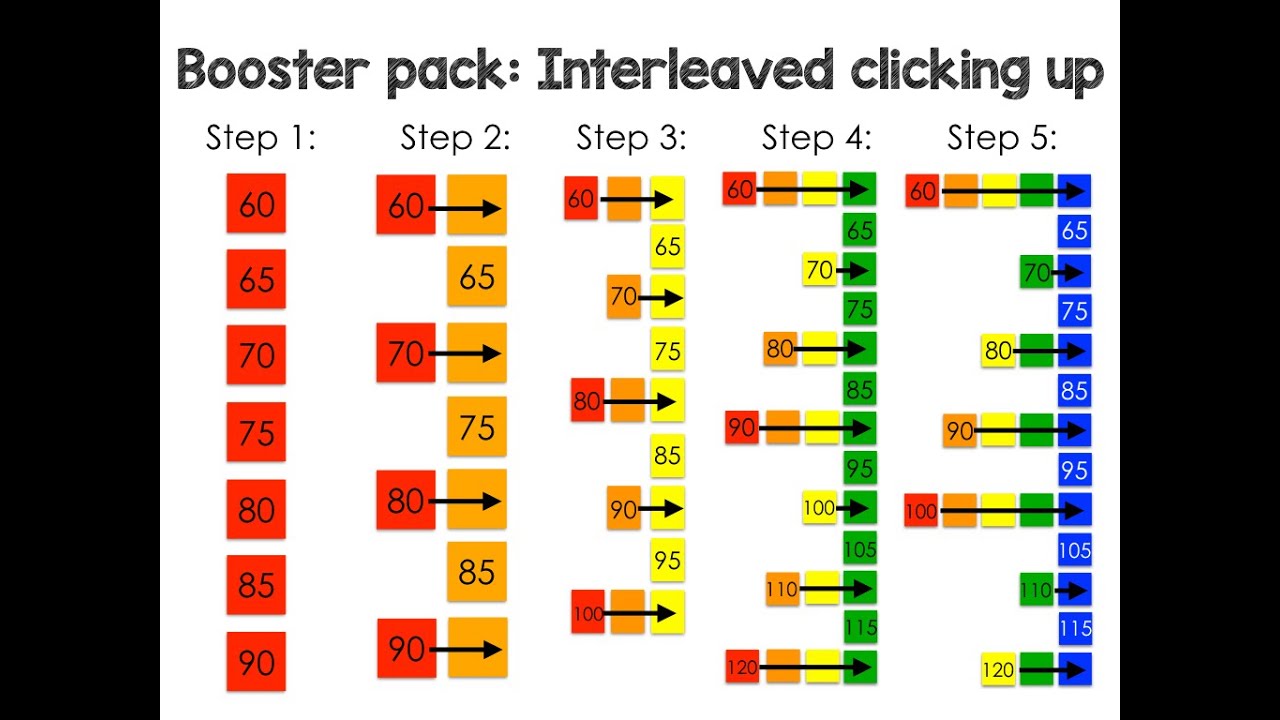
@Al1885 describes another method in this thread last week and called it his ‘Cheat code.’

As slow as you need, and don’t even think about rhythm at first. Work your way up. Eventually, play it much faster than you can, then slow back down.

Personally, I also introduce rest. I’ll work on a chunk for 10 minutes or so. I might work on several chunks in one session, then put it down. Then after I meditate, take a nap, or sleep for the night, I do it again. It’s always improved after rest. Much better than getting frustrated. :yawning_face:

3 Likes

You know, I personally find I sometimes have more trouble if I try to play too slow, like I can’t find the rhythm or patterns or something. I’m like an airplane that has a minimum stall speed to stay in the air! :joy: Where that point is varies widely depending on the song, so I can’t give an exact percentage. One song might be fine at 20%, another I struggle below 50%.

7 Likes

YES! Rest is vital. I like practicing at the end of the day so I can go to bed after and let everything marinate. I feel like no matter what I’m trying to problem solve on sleeping on it almost always helps far more than unsuccessfully trying to power through.

Great point! I’ve totally had that happen too where at a certain point when it gets too slow it feels like the groove just vanishes! Thank you and a good reminder to be fexible in problem solving when stuck :slight_smile:

2 Likes

You should play as slowly as you need to in order to play the part smoothly, but no slower. As a couple of folks pointed out, going too slow can actually be more difficult than going too fast. Especially once it’s so slow you can’t feel the groove anymore.

If a section seems a little complicated I’ll go through it without a metronome at all a couple of times, just figuring out the fingering for it. Once I start getting a feel for it, I’ll tap out the tempo on my metronome and round up to the nearest 5 for my starting point.

Once it starts feeling smooth, I’ll bump up the metronome 2-3bpm until I start having just a little trouble with it again. Then I’ll smooth it out at that speed, and bump it up again.

Nope. I don’t judge based on that, but on complexity of the line I’m trying to play. If I can’t get it under my fingers well enough without a metronome, that’s a “for later” piece. If I can do it slow but have trouble getting it up to tempo, I’ll do my best to isolate the specific thing I’m having trouble with - is it a hammer-on, a tricky bit of string crossing, a syncopation, etc - and try to do some exercises to work on that, then come back to it.

If I’ve spent a week on the same thing (song or otherwise) and I’m not feeling any progress, that’s when I put it aside and do something else.

Sometimes that’s all it takes. Plenty of times I’ve put a song aside, learned a different one, then came back to the first one and nailed it.

Others have been on my “to do” list for a long time.

Even if you don’t achieve the full song, the time has been spent practicing your technique and gaining experience. You may not have reached your destination, but the journey still has value.

3 Likes

I agree. On several B2B lessons I was not able to get the timing and rhythm right until either Medium or even Full speed. The Intro and Slow speed demos just tied my fingers into knots and didn’t work, but speeding up made the timing work easily.

2 Likes

No slow is too slow if you don’t have the line under your fingers…and between your ears.

That’s the very first step required to learn a line, regardless of the instrument one might play.

It has zero to do with rhythm or groove. Instead, it has to do with establishing and ingraining physical muscle memory in your hands and fingers.

The key is to break down the line into its simplest form. Depending on a player’s current level of proficiency (newbie, intermediate, advanced), that “simplest form” could be just a single note in the line. Or two notes, a measure. Or an entire section of the song.

The point is: Isolate whatever portion of the riff, line, or song into a stupidly simple bite-size form and play that. No metronome. No catchy groove. Just that easy-to-do simple form.

Then play that over and over until you can do it with your eyes closed. And, yes, slowly until it’s second nature.

Then add another simple form to the one you can play. Rinse and repeat.

The muscle memory you develop by following this process is deceptive. It seems like you’re just concentrating on placing fingers in frets while you pluck the proper string — which, although true, is not all that’s happening.

By giving yourself permission to slow down as you practice, you’re relaxing your mind, allowing it space to absorb what your hands are doing. And relaxing your mind and body is what allows music to ultimately flow from within you.

Now, this likely sounds like a slow and potentially boring process. It can be, without a positive frame of mind. But it is also extremely rewarding and exciting when a riff, line or song “suddenly” starts to take shape: you have the physicality of playing it under your fingers and you can hear the bones of it! Holy shit!

Then you can start slowly introducing the rhythm, the groove, the soul of the line — at your most comfortable speed. Not the recording’s speed. Stay relaxed. Practice the physicality of playing. Listen. Give yourself grace to learn from your mistakes.

Just take your time and it will come. This is a marathon, not a sprint. You got this.

5 Likes

70% is probably the slowest I’d dip down to when I need to work out the difficult fills, normally I’d do 85 on the slow end. 90 and 95 is the norm for me just to get my finger to relax. 85 is already significantly slower. On some songs playing too slow will prevent you from developing the proper technique and time. I get too relaxed if it goes too slow.

Don’t forget if you are learning notes there’s no “time”. If it’s difficult learn it without time and don’t practice with time until you know the notes.

6 Likes

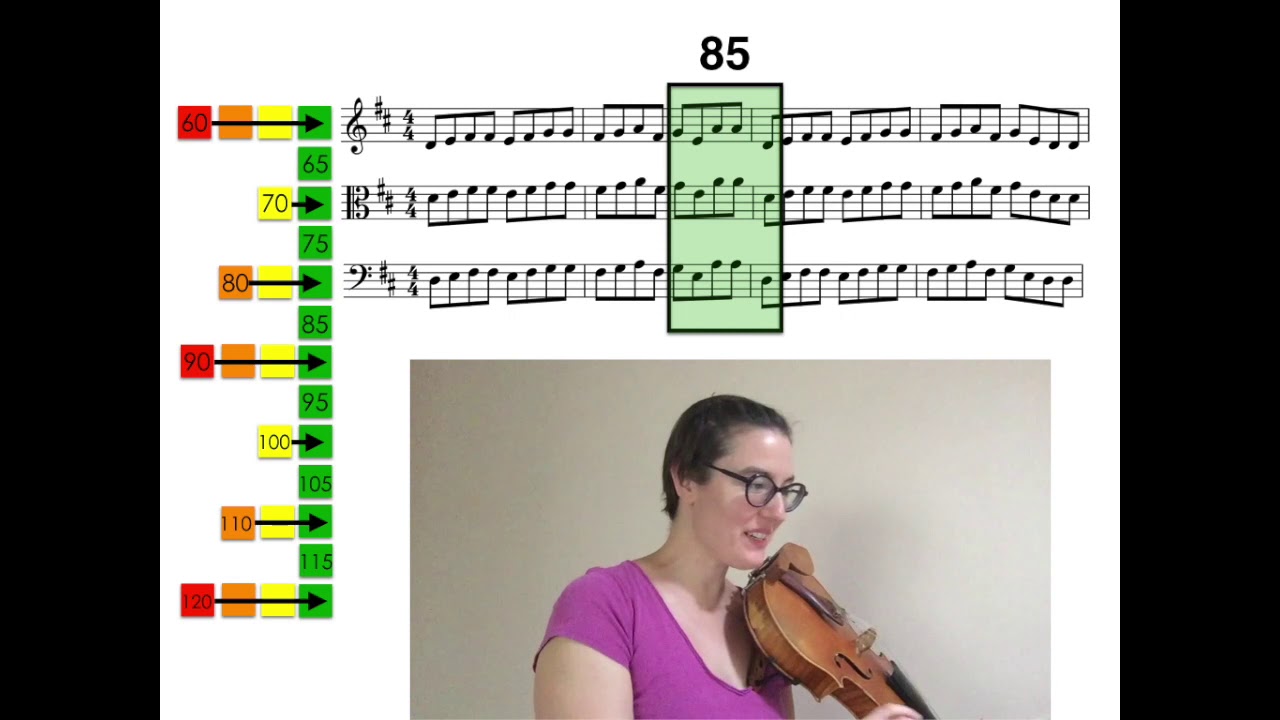
I found these videos below very helpful. The same practice technique can be used on bass. You can either choose a beat or a measure (bar) at a time.

And here she shows how it works while playing:

She is a professional musician and teacher, with a background in neuroscience. She developed this method adapted to how the brain and memory work, and how the brain learns more easily.

4 Likes

I’m still pretty new but I have a similar issue. When I go too slow I forget what the song is even supposed to sound like and cannot get any kind of good rhythm going at all causing it to just sound terrible.

1 Like

Again, trying to maintain the rhythm of a tune (especially at recorded tempo) without the notes being under your fingers is like trying to swim the English Channel when the only water you’ve ever been in is a kiddie pool.

Learning a line is a process. It takes a dedicated approach, time and patience.

How slow is slow to a given player is relative to that player’s level and experience. For example, @Al1885 has said he slows down a line to 70% in order to learn it. But for those who might not be aware, Al is an accomplished musician with years of performance experience and musical training. What works for him would likely not work for a beginner or a less experienced player.

It’s human nature to want/expect to play a song of interest. I mean: There it is; I hear someone playing it easily and beautifully. So why not me, too?

The thing is, it is definitely achievable. But not automatically, right away. It takes breaking the line down into easily playable bits; getting your hands and mind working together under no stress.

Sure, doing that won’t sound like the song you’re used to hearing in the recording.

Yet.

But working on chunks and stitching them together will get the mechanics and construction of the line in your fingers. Then, once that happens, you can try playing along with a slowed down song track, and you’ll start to hear the song.

Playing at tempo with a recorded artist is the goal for many. It’s achievable IF you have a plan and work that plan.

6 Likes

Thank you all for your precious advices (I was too busy with work / family / bass playing to come back here regularly) !

Why 2 weeks ?

Because my son is “kindly” asking me to work more and learn songs in 2 weeks so that we can progress as a band. And I somehow need to get a feeling if I can make it or not.

Tbh, he is a pain becasue he never played bass but by practicing the same line over and over, he is now much faster than I am on a 2 of songs after 7 years… but less clean (not tempo wise as he is a drummer but more fret buzz, not muting strings…) :sweat_smile:

Video & ideas

Thanks for sharing the video and books - I already have the book, just need to find energy to read it (English not being my mother tongue, i requires more effort in the evening when I have time to read

Too slow

Agree it can be more tricky to keep the right rythm

My 2 aims in terms of songs for the next 2 weeks

  • I want you back (interesting sequence at bar 52 - “bridge” (I’m at 70%)
  • Homage Mild High Club - quite melodic bassline and fun to play (I’m at 80%)

My plan

  • Work these 2 songs
  • work on the new groove accelerator program from SBL with IMA
2 Likes

That is about finding the finger path you are comfortable with. There are several paths I didn’t get it at first but changing the fingering helps keeping me in the pocket.

1 Like