Ooh that’s nice. Aerodyne?
3 Likes
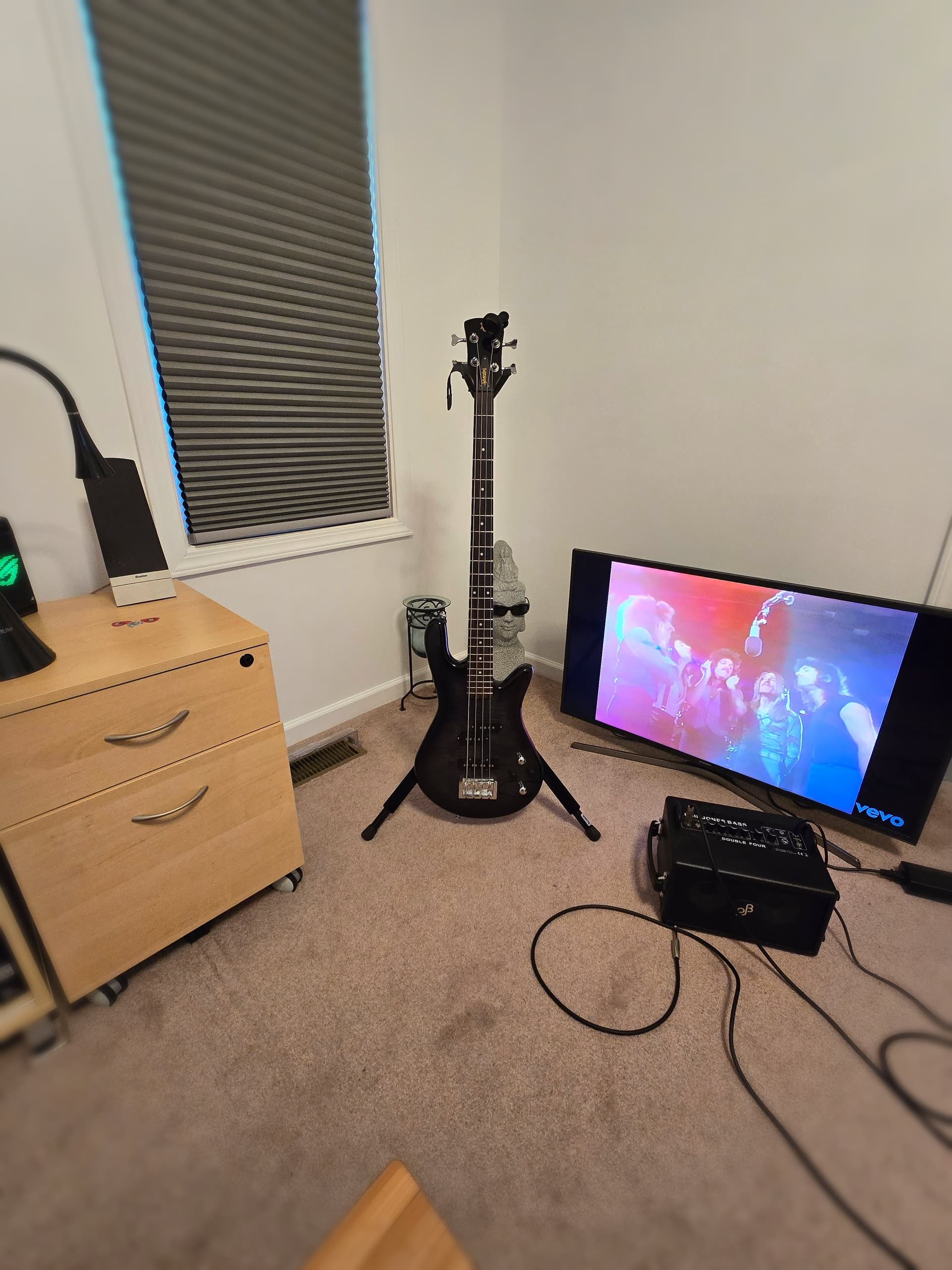
Yes! Made in Japan, old candy apple red, non-export. Bought it on Reverb from a guy in Berlin, Germany. Condition was listed as “excellent”, but it might as well have been “mint” if you ask me. So stoked!
13 Likes
Sweet.
4 Likes
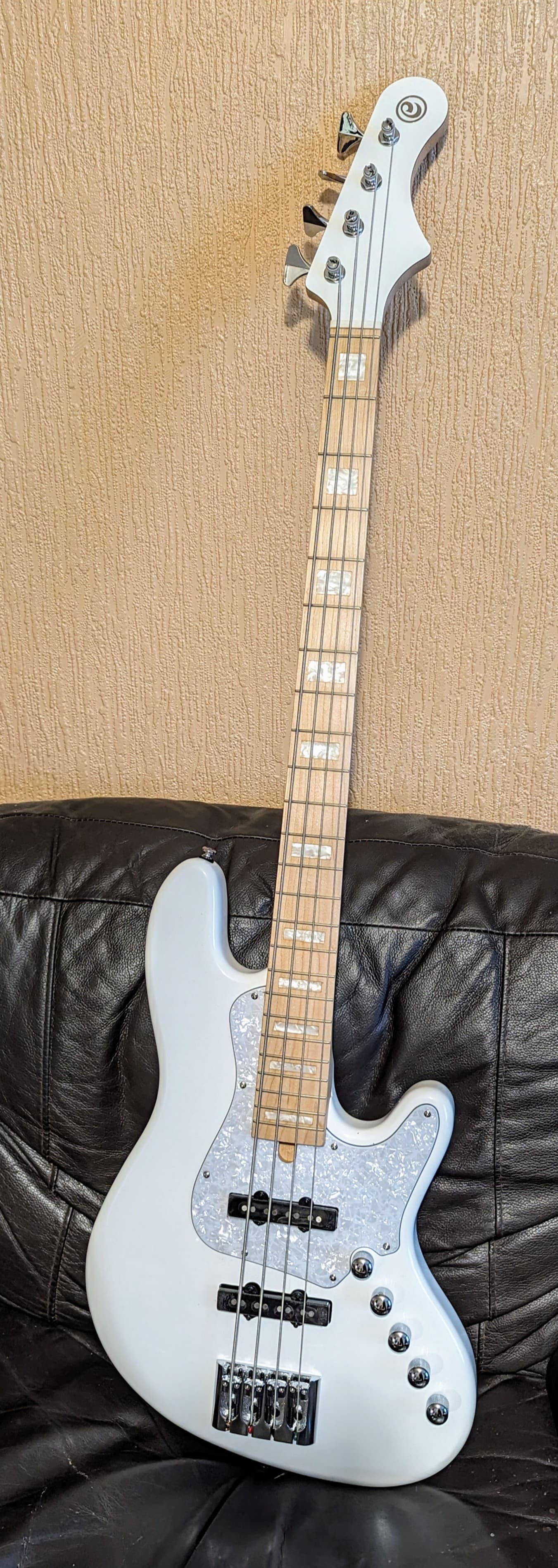
Hey man, good to hear from you again. That doesn’t look like a Sire! 
Beautiful bass, man! I dig the headstock shape and the zero fret. And the deep cutaway. Basically like everything about it. Congrats!
6 Likes
Lol, I may have just been converted to Cort!
Same super smooth neck & rolled fret edges like Sire, but the zero fret, hipshot tuners etc. convinced me 
Sounds killer! Had multiple eargasms already  Now I HAVE to get good!
5 Likes
Can you explain a little what it does and what the pros and cons are?
I just google “zero fret”, and after reading about it, I don’t get why not all basses have that feature!
3 Likes
Lol, I don’t really know the full ins and outs of it either really, but open strings sound good, serves to set the strings at the right height at what would normally be the nut, no messing with the nut height in a setup (never had one that’s not too high lol), nut apparently is also just a guide, so changing string guages is as simple as just putting them on, no need to file it 
It’s just, to coin a phrase… Badass! 
5 Likes
This does remind me I need to sand down my BB’s nut, it’s way too high. Just keep forgetting I want to when I change strings (which I just did).
4 Likes
You had me at “Badass” 
4 Likes
weren’t you buying a brass nut for your project basses, though? Zero fret would add nothing over that.
3 Likes
Lol, wish I wasn’t so busy today (and out of practice ), but recordings will be coming soon…
5 Likes
I sold it instead long story short, life happened lol
5 Likes
no I meant the Nederlander
4 Likes
Oh
5 Likes
I would - if I could find one that fits. Remember, I wanted something like the ABM 6240. That one is 42mm (I need 38mm) … and would need me to modify it beyond anything I am prepared to do…
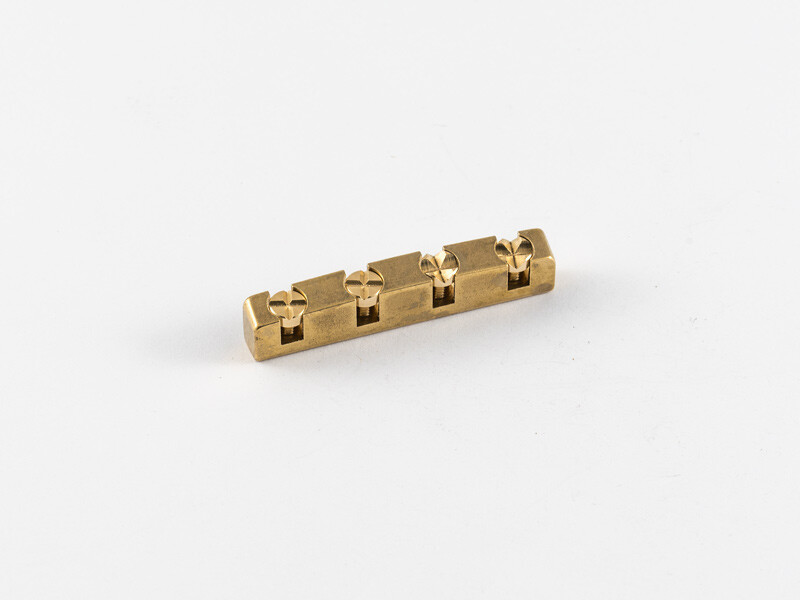
It’s not only the brass material, but the easy adjustment that I really like!
For zero fret, no adjustment is necessary. Ever. It makes total sense to me…
So, actually I was thinking of leaving the nut as is (yes, miracles happen!) … but @DeadPixels terrific bass got me thinking…
I was hoping for some arguments against it … but now my brain is brooding…
3 Likes
- it only affects four notes on the entire bass
- you may not notice significant improvement even on those four notes
- it’s throwing more cash into a Harley Benton
8 Likes
Done
In case anyone is wondering about this, it’s one of the nicer setup things you can do for the instrument, and it’s super easy.
First, check it to see if it is high. The way I do this is fret in the third fret up against the second fret wire (i.e. in the notes G/C/F/A#, but on the other side of the fret).
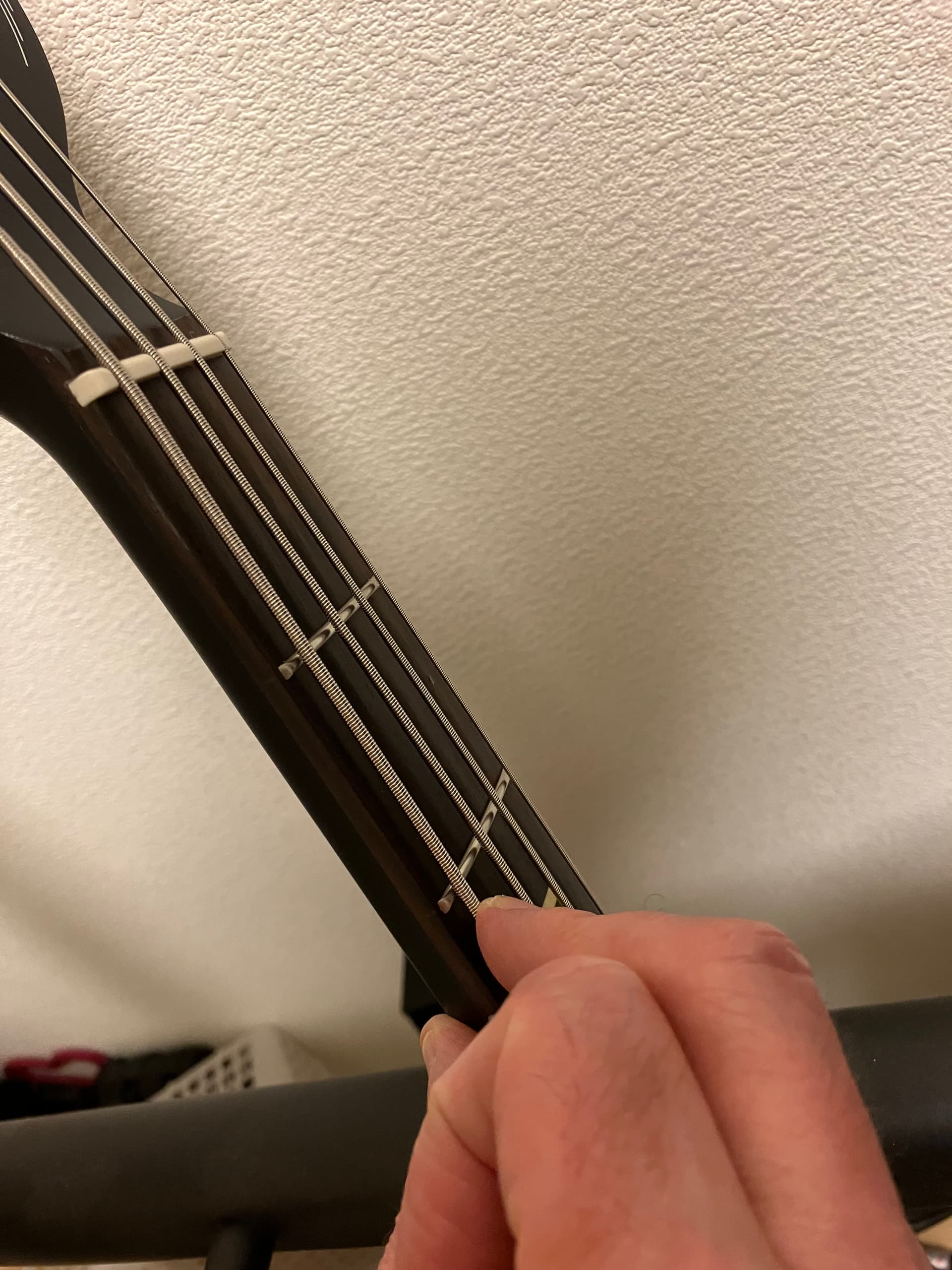
The string should barely clear the first fret, just a tiny amount. I usually just tap it with my index finger over the first fret wire, it should move but just barely move. If there’s significant play, the nut is too high. Check all the strings; if they are all too high, as is usual, then you can sand; otherwise you need to file. I’m going to assume they are all high here because that’s the usual case (and was on my BB tonight).
So, first, loosen the strings and pop off the nut.

For new instruments this should pop out easy as most manufacturers barely tack them in. Used ones you might get a case where a prior owner glued them in with a lot of glue. That sucks. There’s youtube videos to help you there, I like StewMac’s.
The next step is to lower the nut by sanding material off the bottom. This nut is flat on the bottom. That’s good, that makes this much easier. For flat nuts like this, simply put a piece of 150-220grit sandpaper flat on a table and go at it a while.
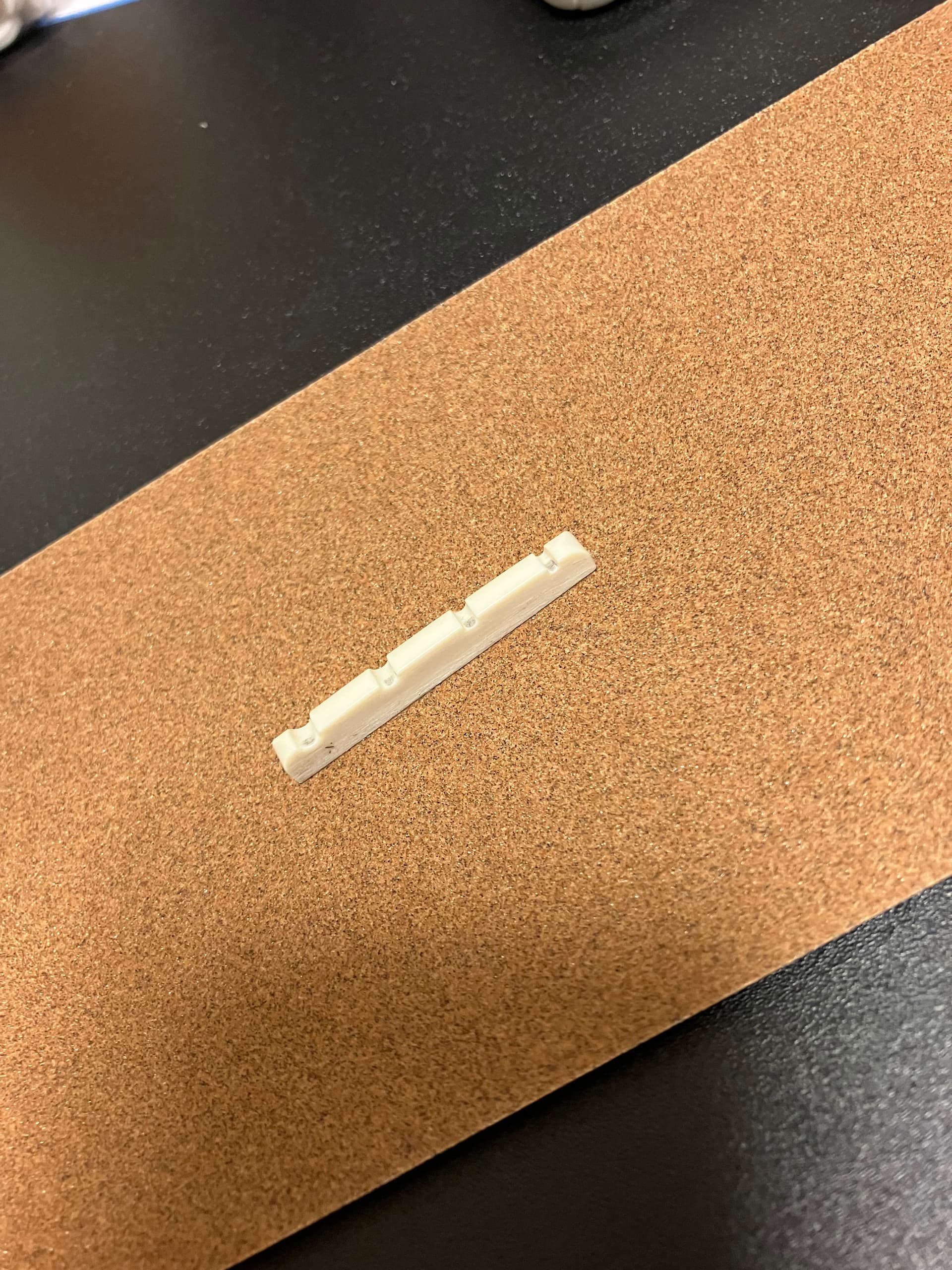
Just apply even pressure and sand the bottom of the nut until a little material has come off. Then clean it off, pop it back on the bass, tighten the strings, and check the nut height for all atrings again. Repeat this until it’s the right height for the lowest string:
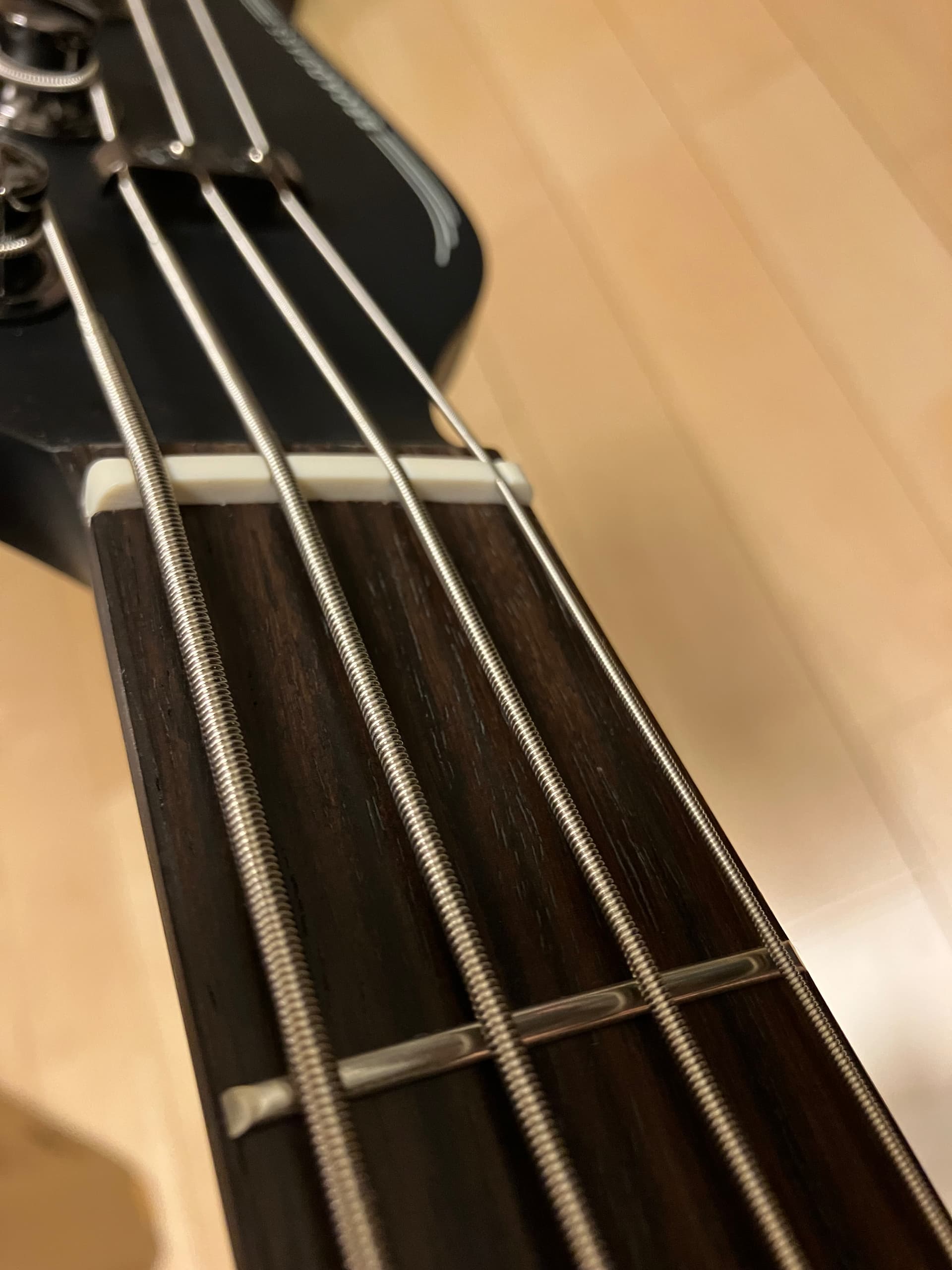
Usually they are all roughly going to end up in the same ballpark so you can stop here. If any are still too high, you can file, but that’s another TED talk.
Much much nicer. Proper nut height makes a really big difference to the feel of the bass. You don’t need to glue it back in, the strings will hold it down nicely. I do like to tack it in place myself with a tiny amount of super glue, but that’s mostly just for convenience so you don’t lose the thing while changing strings. Do not use more than a tiny drop of glue, no more than like a 1mm drop is needed.
If your bass happens to have a radiused (curved) nut, it’s a little trickier. What you do then is use the fretboard as a sanding block and wrap the sandpaper around the fretboard. I recommend checking out a good video on this.
15 Likes
Also, a very good video is this:
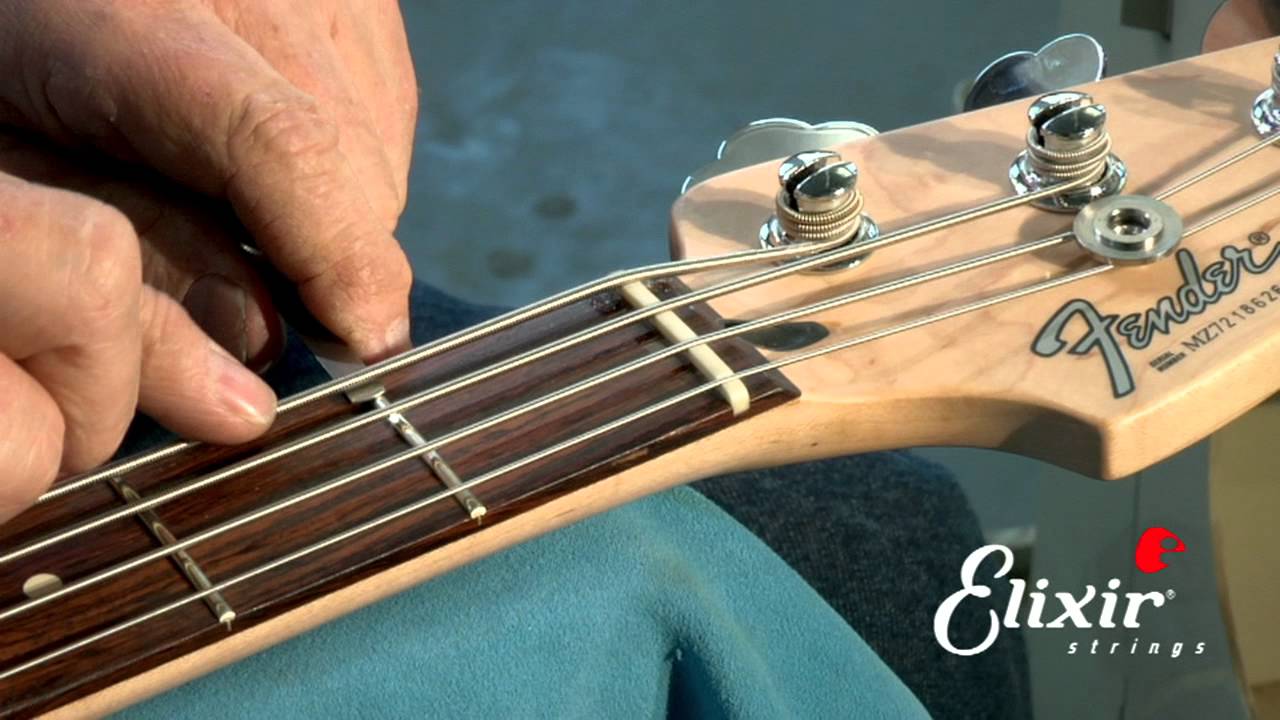
I am more convinced by your method of determining the correct nut height (compared to Carruthers use of fixed height values), as this leaves some room for interpretation and own preferences (lower/higher), though Carruthers is of course the Godfather of bass setup.
4 Likes