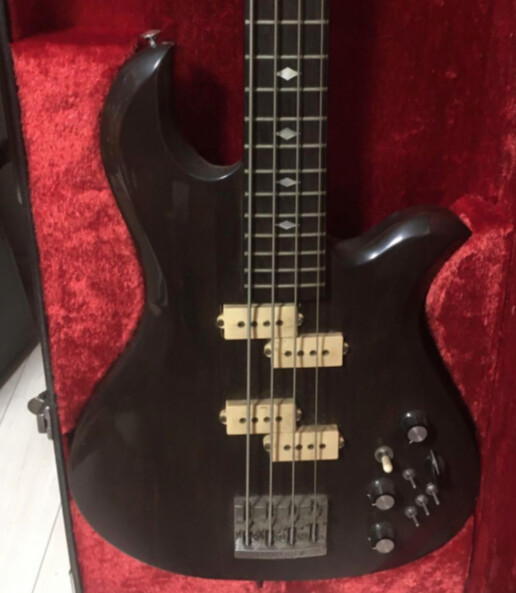
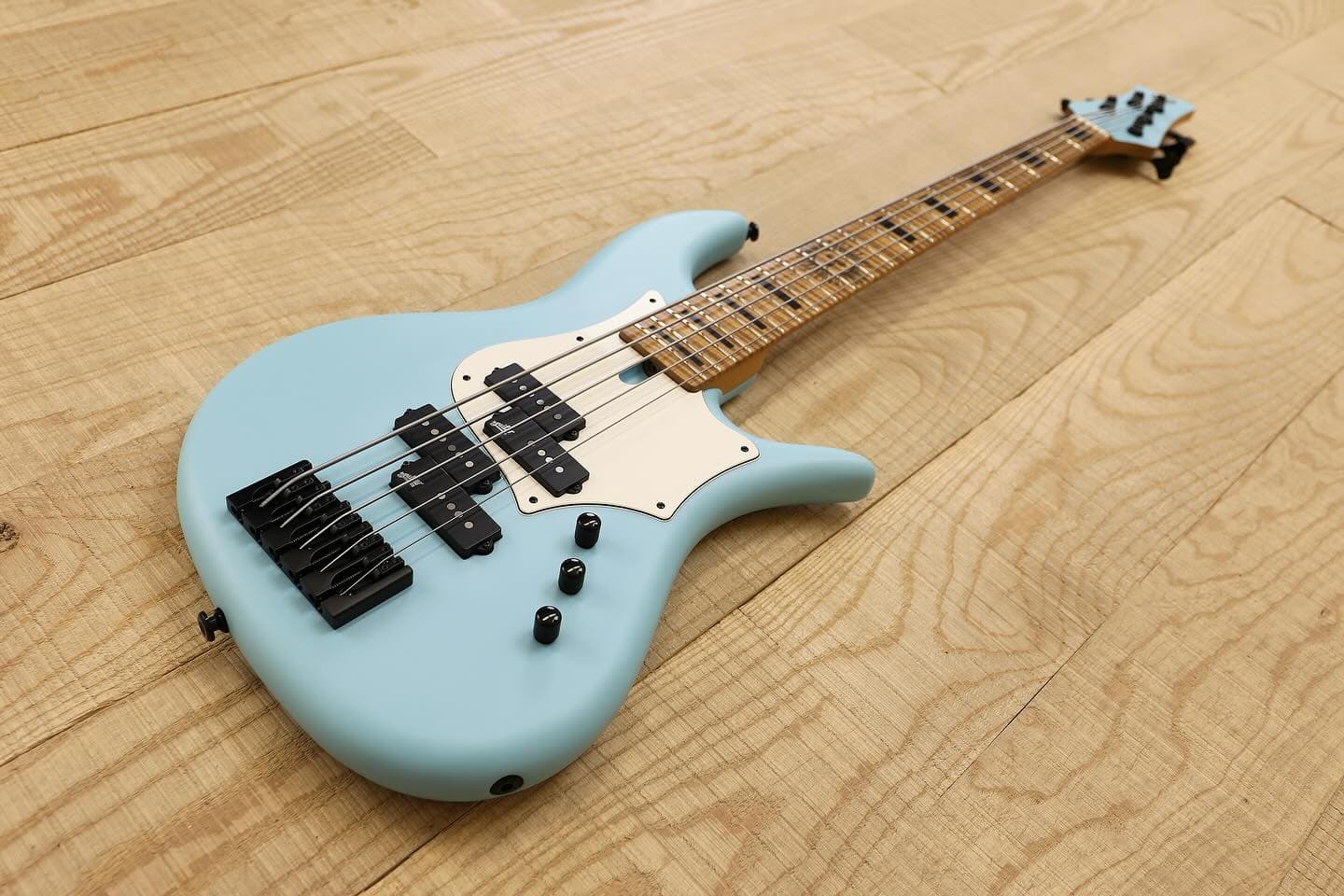
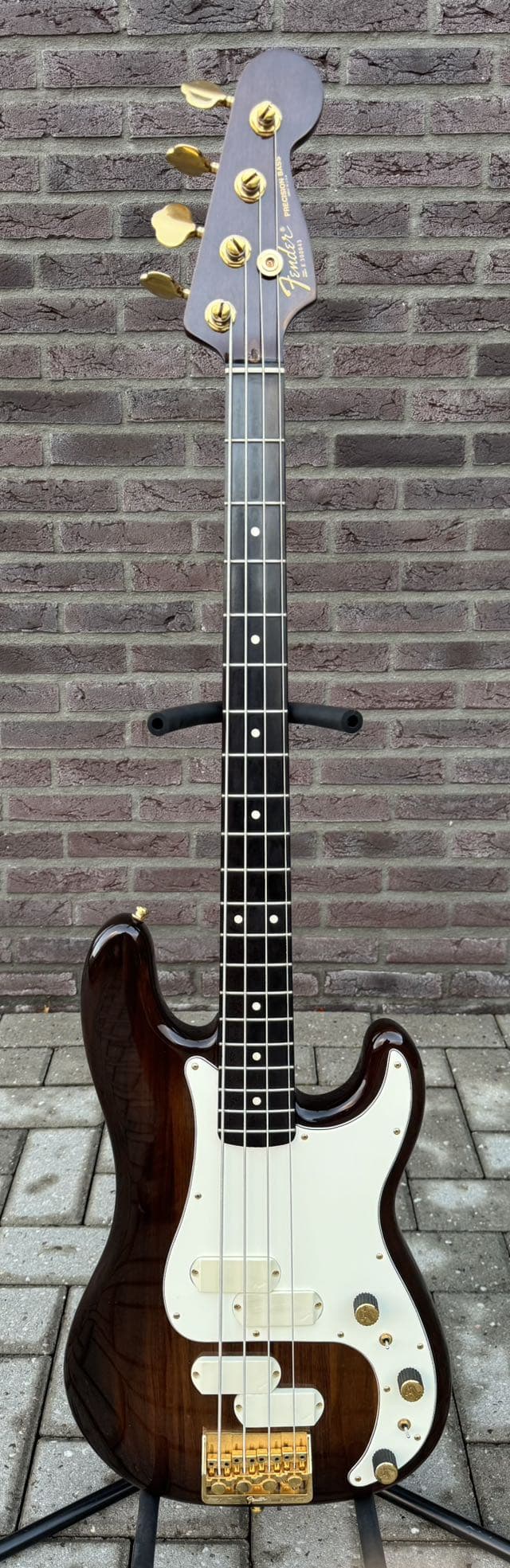
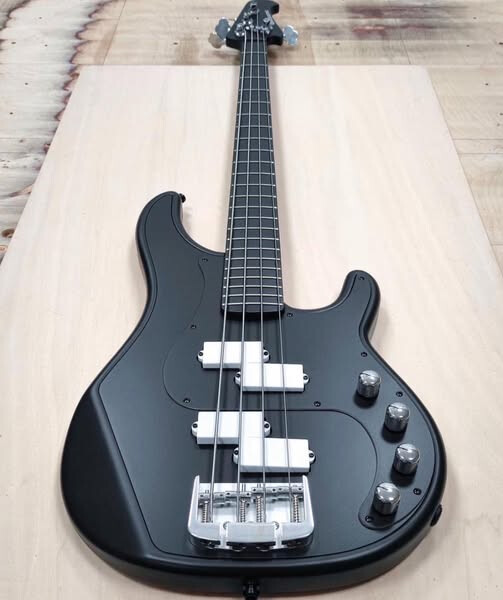
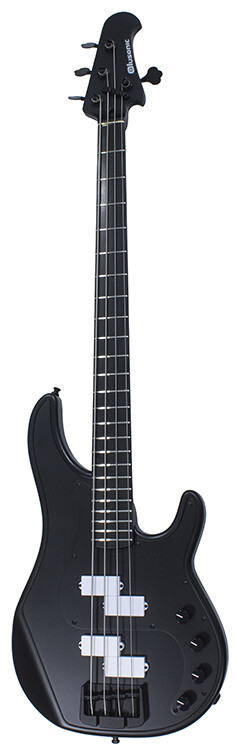
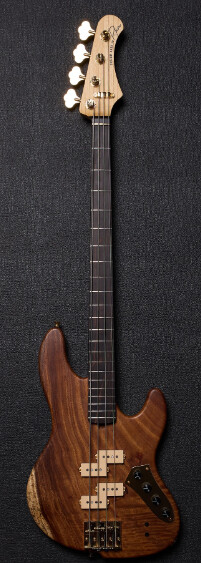
@jonathanhaynes43 I’m really liking the way Dingwall wired the new SP1’s. It’s a PJ, not a double P, but their rotary 4-way switch would work just as well here. One volume. One tone. 4-way: neck, both in series, both in parallel, bridge. From the Dingwall SP-1 webpage:
====
The SP1 is passive, so there are no batteries or EQ boost, but the quality of the tonewoods, alnico-loaded pickups, and the overall construction mean that there’s absolutely no need for them. The front control is volume, and the back is a master tone. Between these is our Quad-Tone Pickup Selector. In its first position, fully clockwise, this selects the front pickup alone; one click clockwise is the front plus the back pickup in series, then in parallel; and finally, the back pickup on its own.
We spent years refining the pickup design for the SP1, and the end result has been so successful that we’re now using the same concept in our Custom Shop Super P.” – Sheldon Dingwall.“
====
Here’s an engineer’s wet dream. I received this from the owner of Stellartone when I was trying to figure out what had been added to the Week One 2007 Gibson SG Supreme that I’d just acquired (it had an original ToneStyler Bass 6 (now the Bass 10)). Maybe you’ll find something enlightening in it.
Stellartone ToneStyler custom tone controls for bass and guitar
=====
Although this is not well-known or universally-respected in instrument designs and wiring: all hi-Z passive tone controls MUST BE hard-wire connected directly to the 100% unattenuated pickup outputs… “pre-volume”, as we say. Otherwise, an attenuated volume pot delivers a reduced voltage signal through the capacitor network, while that same circuit remains connected in parallel to the amplifier input. This signal flow error creates phase cancellation and comb-filtering… commonly call the “mud tone” by Gretsch players.
I would caution you that attempts to educate the masses on a discussion board may be futile. People may never be able to hear the problems, or may feel that this tone circuit defect is “not a bug, but instead a feature”… as the old joke about computer software goes!
The archetypal example of this wiring error is the 1963 Fender Jazz Bass, when they deleted the dual tone pots, properly-wired to the pickups, in favor of a cheaper “master tone pot”, now improperly-wired to the output jack (and therefore the amplifier input at zero ohms).
With this design error, a proper LCR resonance circuit between the pickup and the tone pot is only possible when the selected pickup’s volume pot is set to “10”, creating the required zero ohm parallel connection between the pickup coil(s) and the capacitor. To solve this problem in a three-knob “volume-volume-tone” instrument, with or without a redundant 3-way pickup selector switch, Stellartone offered the DUO SIX, which featured two independent six-position capacitor networks accessed via two cable… one for each hard-wire connection “pre-volume” to each of the J-Bass pickups. With this correct signal flow, either pickup’s volume pot could be set to any level of attenuation while maintaining the required zero ohm connection between the pickup and the capacitor circuit.
There are a variety of “alternate” wiring and switching schemes you might employ to allow your “post-volume” shared ToneStyler to connect at zero ohms to your choice of pickup. Without additional switching, you will be stuck with a “post-volume” improper circuit, which does not allow you to attenuate of blend your pickups without an adverse tonal effect. A popular work-around is a push-pull volume pot for the bridge pickup. Connect the ToneStyler to one half of the DPDT slide switch, and the two output terminals directly to each pickup’s HOT wires. Push the knob IN, and the ToneStyler is hard-wired to the bridge PUP… pull the knob OUT, and the connection changes to the neck PUP.
With that said, please note that the extent of the tonal degradation is proportionate to the amount of attenuation / resistance between the pickup and the “master” ToneStyler or tone pot, as well as any series resistance which might be inserted by a conventional tone pot.
For example, with a “post-volume” ToneStyler connection, and the volume pots set to fairly high loudness (>“8”), there is little phase cancellation introduced, but the high frequency capacitor circuits in the upper third of the ToneStyler’s array will cease to function… due to the volume pot’s inserted series resistance. The high numbered circuits will again become audible when the volume is restored to “10”.
For a worst-case scenario to demonstrate why all tone pots MUST BE CONNECTED “pre-volume”: take any stock Fender J-Bass or Gretsch guitar, set the tone pot to to ZERO (full strength), then adjust the volume between “10” and “4” as a helper compensates for the loudness at the amp’s input. As the volume is attenuated, the flawed wiring flow will demonstrate this “mud tone” defect in a dramatic and nauseating manner.
As far as the unusual wiring in your bass is concerned, note that almost all Gibson six-string guitars incorporate both a 3-way pickup selector switch PLUS dual volumes. However, both of the dual tone pots are properly-wired directly to the 100% hot pickup signals, at the volume pot input lugs. The idea is that either pickup can be pre-set to a desired loudness, then instantly selected via the 3-way switch for dynamic purposes… or alternately, an uneven blend of both pickups may be set and accessed via the 3-way switch’s remaining in the center “both pickups” position. Additionally, because the volume pots are properly-connected with the input on the left #3 terminal, and the output on the center #2 “wiper” terminal, the parallel resistive loading on the pickup is unchanged (at 500kΩ, for example) across the knob’s adjustment range. This maintains a constant DC resistance / Ac impedance value on the pickup, so the pickup’s response does not change with loudness. Conversely, when improperly-wired to the center “wiper” terminal of any volume pot, the pickup’s DC resistance and impedance varies wildly vs volume, so the pickup only sounds “correct” with the volume “on 10”.
You might ask why anyone would ever improperly-wire volume pots to “short out” a pickup to reduce loudness? Quite simply, this is the only way to wire a pair of volume pots without using a 3-way switch, and still be able to “solo” one pickup without muting the entire output. This is why a J-Bass has two “backwards” pots, while a P-Bass has a “normal” volume pot. If a 3-way selector switch was added, the j-Bass pots could be wired normally, and you could solo a pickup via the 3-way switch… like in a Gibson six-string. However, you’d still be stuck with the impossibility of connecting one shared tone pot to either pickup “pre-volume”, as required for proper tone.
So again, please consider the push-pull switch modification above, to solve this issue.
The only way to verify exactly which variation of the #6 tone circuit you might have is via a capacitance meter. A multi-meter set to ohms will not suffice. There are no label markings, or “v1, v2, v3” added to our original product packaging. These tonal changes were very subtle, and unnoticed by the majority of customers… plus, none were sold concurrently, so there was no purchasing option - it was simply the “latest version” of the six-position control sold that year.