Current DSPs should have no issue here.
I need to (over)think your reasoning to make up my mind.
I am not worried about the DAI side of things, more about the DAWs and even more the Plugins.
Don’t kow if all DAWs support 32 bit float … and what’s happening on the plugin side.
Of course you can always normalize to a “good” level and convert to 24bit, before real post production…
Modern audio software generally processes data as 32 or 64 bit floating point, at least for VST, Audio Unit and CLAP plugins. This is the format the DAW will give them the data, which means the DAW has already converted the data regardless of input format.
I haven’t really thought too much about it but my initial take is It’s complicated.
If you don’t need a noise floor below -96dB then they offer nothing over 16-bit fixed point.
The bit depth of an audio sample does not really affect the “accuracy” of a sound, it affects the dynamic range. This manifests as lower and lower noise floors, since we generally fix the upper end of the range at 0dBFS.
So 32bit floats give you a much lower potential noise floor than 16 or 24 bit fixed point samples, but you will never realize this in reality because the noise floor of the preamp hardware will be much higher than this theoretical limit.
Most consumer audio interface preamps have noise floors between -125 and -140dB. For a 24bit fixed point sample the theoretical noise floor is -144dB, easily covering the best that typical preamps in these things will deliver.
So, you may see no gains at all with 32bit float samples, or if you do, it will be very low amplitude noise differences - absolutely inaudible under normal gain.
They may be slightly cheaper to process but may not, it depends on the DAW/driver combo.
My problem is that I have a hate/love relationship with my Motu M4.
It looks absolutely beautiful, with the display and all. And the display is really useful.
But I always fight with ASIO settings (in contrast to the Zoom AMS-24).
I just did a complete reinstall of my Notebook, just cause of the ASIO issues. It’s still there - after three days getting my PC back to it’s old state! Crackling sometimes, I hate it!
Most will not notice - but I do.
With the Zoom, everything is perfect!
So I might be selling the M4…
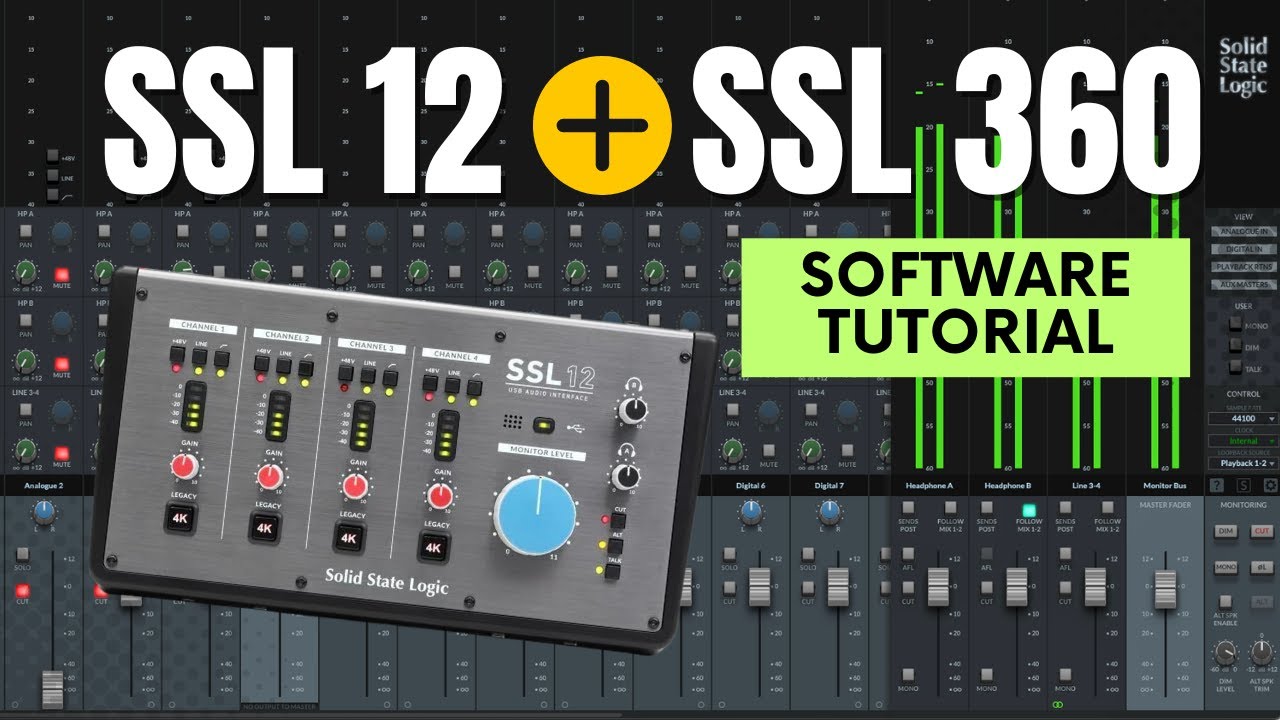
The SSL 12 can be switched to mono in software, which I need for “one ear” monitoring. But the SLL 12 is “old”.
Haven’t found out if the SSL 2+ MKII ca do that, otherwise I would be sold!
Like on a Z80 Spectrum??!
I developed neural networks on an 8086, 640 MByte RAM (that was end of the 80s) … I feel you
Ha, ha, ha. No. I was working for Amoco Oil in the SCADA group (Supervisory Control And Data Acquisition) at the time. All of our in-house designed and developed gear was solar powered for oil field and pipeline applications. My assembler code ran on an NSC800 controller that I designed and laid out on 5 1/4" diameter round PCBs. We could never figure out how to make rectangular cases totally waterproof (they were mounted underground (7 ft in Texas and 11 ft in Alaska) for temperature stability for the radio and analog modem), so I made all of the PCBs and card cage round and installed them in 6" diameter sewer pipe with an 8 VDC battery with high peak current for the radio when it keyed up! I also designed the first memory paging system that I was aware of. I could install up to 176 KB of memory. 16KB ROM for the custom OS. 32 KB RAM for program execution and banks of swappable 16 KB RAM for different applications which were loaded from 16KB ROM personality modules installed above ground along with the I/O termination panel, solar panel, antenna and backup 12V car battery.
I started programming in the 80s, first expert system and later neural networks.
It was still early days - I remember when neural networks recognized words (in audio) with one vowel / hour…
Yeeeeeeeeeeees - it was 640KB. Now it all comes back to me!
In fact, it was 640 + 400, with paging.
It absolutely s#cked to program that, with a mix of C and inline assembler.
Oh, how I miss those days … and I’m happy that those days are gone. A strange feeling!
Yeah - he is a cool guy. Not as LOUD as some others … and he seems to be honest. A hard to find quality nowadays…
I’m rushing now through all his reviews, as my Motu will be sent back.
I will miss the shiny shiny display!
Still undecided with the SSL though. Don’t like the look, and it has merely “normal” LEDs for level.
But the SSL 12 has software routing, which is great. The SSL 2+ MKII is newer and has upgraded hardware, which is also great.
On the other hand, the Motu M4 has very low latency - but that does not matter if it’s crackling.